🔥 Daily Isopod Auctions on WhatsApp! Grab species at auction prices, discover rare finds & join our growing community. Join Here
Cubaris Penguin Isopod
20 in stock
Regular price
£5.00 GBP
Sale price
£5.00 GBP
Regular price
Unit price
per
Tax included.
Shipping calculated at checkout.
Couldn't load pickup availability
- Fully secure checkout
- Trusted by thousands
- Rated and reviewed
Want next day delivery? Be quick!
You just missed it!
Question about this product?
We're happy to help.
Cubaris Penguin Isopods for Sale UK
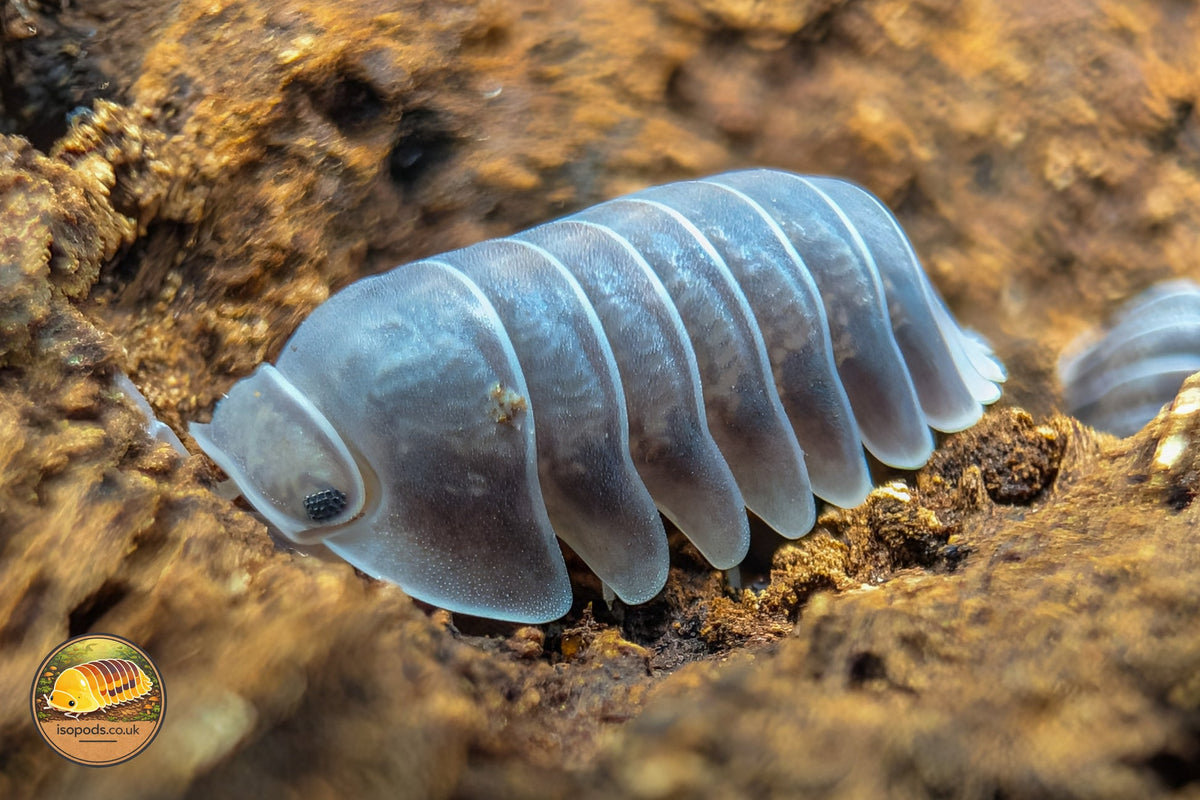
Cubaris Penguin stands out for its strong black-and-white contrast: a dark grey to near-black body, white side skirting, and paler markings around the head, rear, and underside that give it the penguin-like look behind the trade name. If you want a Cubaris with clear visual appeal but do not necessarily want to jump straight into the more expensive ducky-style comparisons, this is an appealing place to start.
In keeper terms, this is still very much a Cubaris. Expect a humid, well-covered setup with plenty of leaf litter, bark hides, rotting wood, a reliable damp refuge, and clean airflow. Once settled, they can be a satisfying species for keepers who enjoy checking under bark and litter for those dark bodies with bright white edging rather than expecting constant open display.
What gives Penguin its appeal
-
Pattern: dark body with white side contrast that reads clearly even in a sheltered enclosure. -
Overall look: pale head, rear, and underside markings add to the "White Side" feel. -
Keeper appeal: a visually distinctive Cubaris that can work well as an early comparison species within the genus. -
Trade context: usually treated broadly as a Southeast Asian Cubaris rather than tied to one confirmed locality.
How they usually behave
Penguin are usually calmer and more shelter-oriented than openly active genera such as Porcellio, and most sightings tend to happen around bark edges, under litter, or in other covered damp areas. That does not make them uninteresting; it just means the reward is often in brief, high-quality sightings and steady enclosure use rather than constant movement on bare substrate.
Many keepers find them a more approachable Cubaris comparison than some ducky-type lines, but they should still be treated as a patient species. Give them time to settle, avoid frequent disturbance, and judge the colony by gradual litter use, quiet feeding under cover, and whether they spread through more than one sheltered area.
Before you order
Prepare the enclosure first. Penguin usually do best when the tub already has bark or cork bark for shaded undersides, plenty of leaf litter across most of the surface, rotting wood, and one damp refuge that stays moist below the surface without turning the whole enclosure wet. If you are still building that balance, the isopod habitat setup guide is the most useful next read.
The dry side should not be bare and harsh. It should still have cover, litter, and places to move without crossing too much open ground. If the whole colony ends up packed into one wet corner, the rest of the enclosure is often too dry, too exposed, or not offering enough safe cover to use.
Feeding and long-term support
This species should be fed as a detritus-first Cubaris. The main diet comes from litter, rotting wood, mature substrate, and the natural food base already inside the enclosure. Fresh foods are extras rather than the foundation, so low dramatic feeding response does not automatically mean something is wrong. If you want a broader refresher, what do isopods eat explains how the enclosure itself supports long-term feeding.
Consistent mineral access is also worth keeping available, and limestone is a simple way to support that. In humid tubs, tropical springtails can help keep leftover food pressure lower, but they are support animals, not a fix for overfeeding or stale enclosure conditions.
Who tends to enjoy this species most
Penguin tends to suit keepers who want a visually distinctive Cubaris and are happy with a quieter, more sheltered style of observation. It is a good fit if you enjoy checking bark, litter, and covered feeding spots and do not mind that the best sightings often come once the colony feels settled and secure.
If you mainly want bold open activity, fast visible food response, or a species that spends a lot of time crossing exposed substrate, this may not be the most satisfying choice.
Compare before you decide
If you want to browse more hidden tropical species with similar broad keeping style, see the Cubaris isopods collection. If you like the idea of Penguin but want to compare a different take on the same look, Cubaris Penguin Albino is the closest next stop. For a softer, more forgiving-looking tropical comparison within the genus, Cubaris Piggy is also worth a look.
Ease of care
Preferred Temperature
Preferred Humidity
Popularity
Care Instructions
Care Instructions