🔥 Daily Isopod Auctions on WhatsApp! Grab species at auction prices, discover rare finds & join our growing community. Join Here
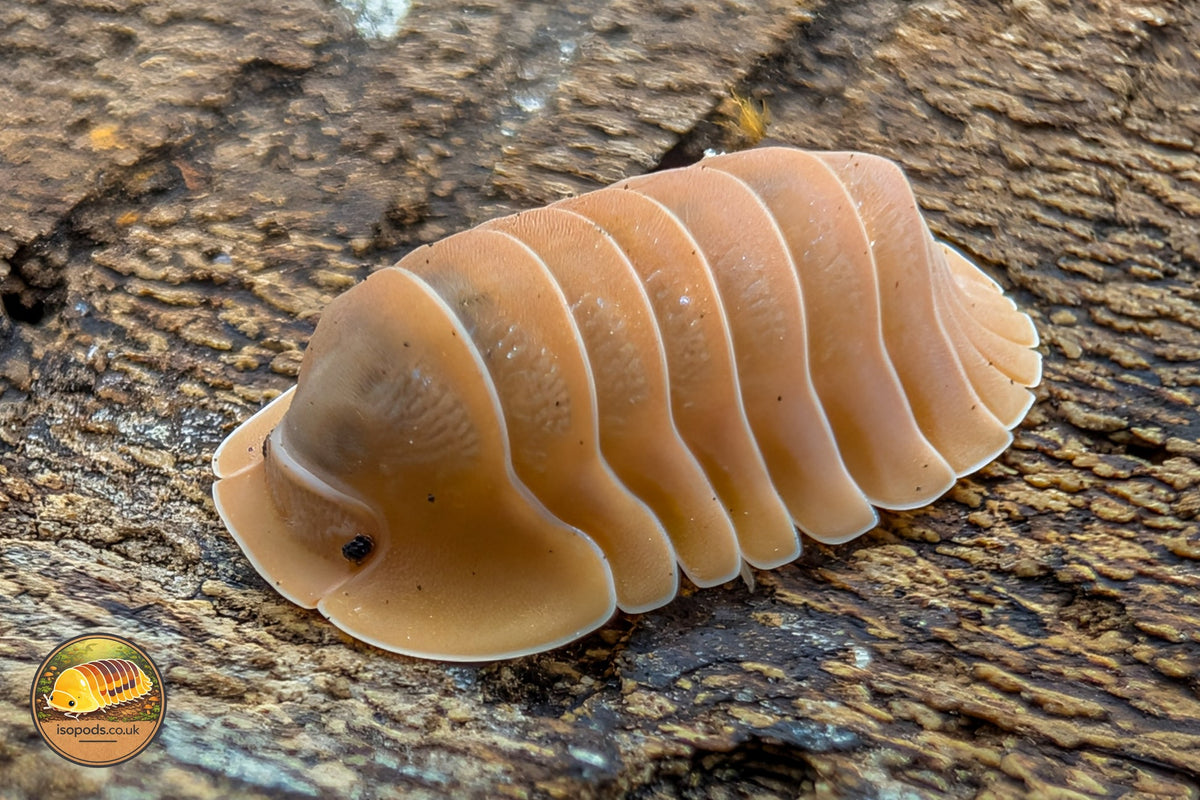
Cubaris Crabby Isopod
Low stock! Only 10 left
Regular price
£50.00 GBP
Sale price
£50.00 GBP
Regular price
Unit price
per
Tax included.
Shipping calculated at checkout.
Couldn't load pickup availability
- Fully secure checkout
- Trusted by thousands
- Rated and reviewed
Want next day delivery? Be quick!
You just missed it!
Question about this product?
We're happy to help.
Cubaris Crabby Isopods for Sale UK
Cubaris Crabby stands out for its unusually crab-like shape and colour. With broad front segments, a chunky body, and vivid orange to reddish-orange tones, it has a heavier, more sculpted look than many smoother, rounder-looking Cubaris. If you want a tropical species with a stronger visual presence, this is one of the more distinctive options to consider.
In enclosure terms, it should still be treated like a shelter-loving Cubaris rather than an always-visible display species. Once settled, you are most likely to spot it around bark edges, under leaf litter, near damp cover, and at sheltered feeding spots. The appeal here is the combination of bold looks and collector-style behaviour, not constant open roaming.
What makes Crabby different
-
Look: broad-fronted, chunky, and noticeably crab-like in stance. -
Colour: bright orange to reddish-orange rather than a muted tropical brown. -
Presence: a larger-looking Cubaris type with more visual weight in the enclosure. -
Behaviour: usually more often found around cover than out on bare substrate.
What you will usually see
This species often spends much of its time under cork, bark, litter, and other covered humid areas, especially while settling in. That does not make it a poor colony. Healthy behaviour often looks like brief sightings around bark undersides, quiet feeding under cover, gradual use of more than one hiding place, and occasional movement around sheltered food once the enclosure feels secure.
If the whole colony stays packed into one wet corner, the issue is usually not that they want the whole tub soaked. It more often suggests that the rest of the enclosure is too dry, too open, or too stale to use comfortably.
Enclosure style that suits them
Cubaris Crabby does best in a humid tropical setup with depth, cover, and choice. Start with a moisture-holding substrate, then add a thick layer of leaf litter, several pieces of cork bark, and sheltered pockets of decomposing material such as rot wood. This gives them places to hide, graze, and move without crossing too much exposed ground.
Keep one damp refuge reliable below the surface, often with some sphagnum moss, but avoid turning the whole enclosure into a wet block. A covered drier side still matters. Good airflow is important as well, because humid does not mean stale. If the substrate smells sour or the enclosure stays heavily wet across most of the surface, conditions have usually drifted too far.
If you need a refresher on balancing humidity, cover, and ventilation, the isopod habitat setup guide is the best next read before ordering.
Feeding and mineral support
Like other Cubaris, Crabby should be treated as detritus-first. The main food base should come from leaf litter, mature substrate, and decomposing wood rather than frequent fresh food. Visible feeding can be modest, especially in a newly settled colony, so quiet under-cover feeding is not unusual.
Steady calcium access is worth providing. A small piece of limestone can stay in the enclosure as ongoing mineral support. Fresh foods can still be offered in small amounts, but they should stay secondary to the long-term detritus base.
Before you order
This species is a better match if your enclosure already has deep substrate, heavy cover, a dependable damp refuge, and a clean-smelling humid setup. It is less satisfying if you want an isopod that spends long periods out in the open or if the tub is sparse, flat, or allowed to swing between too dry and too wet.
Compare before you choose
If you want to browse more tropical species with similar sheltered behaviour, visit our Cubaris isopods collection. If the larger-bodied appeal is the main draw, Cubaris Giant Mandarin is another strong comparison. If you prefer something odd-looking but still distinctly Cubaris, Cubaris Catfish is also worth a look.
Ease of care
Preferred Temperature
Preferred Humidity
Popularity
Care Instructions
Care Instructions