🔥 Daily Isopod Auctions on WhatsApp! Grab species at auction prices, discover rare finds & join our growing community. Join Here
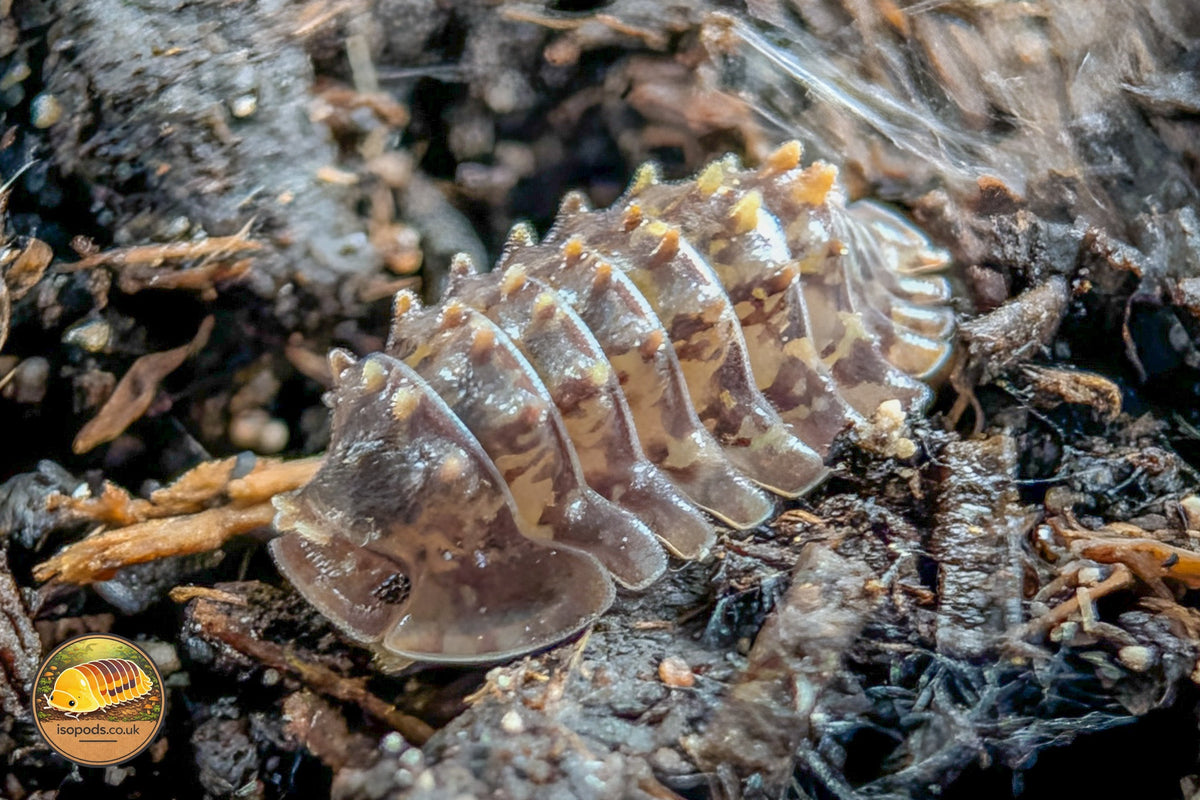
Crocodillo Isopod
Low stock! Only 2 left
Regular price
£175.00 GBP
Sale price
£175.00 GBP
Regular price
Unit price
per
Tax included.
Shipping calculated at checkout.
Couldn't load pickup availability
- Fully secure checkout
- Trusted by thousands
- Rated and reviewed
Want next day delivery? Be quick!
You just missed it!
Question about this product?
We're happy to help.
Crocodillo Isopods for Sale UK
If your Crocodillo isopods spend long periods hidden under bark, moss, or lower cover, that is usually normal rather than disappointing. This species is best approached as a quiet, disturbance-sensitive isopod that tends to do more of its feeding and resting out of sight. It suits keepers who enjoy building a calm, stable enclosure and reading subtle changes in colony behaviour.
Key Traits
-
Visibility: Usually low; often found under bark, moss, or within deeper covered areas. -
Behaviour: Quiet and cautious; tends to avoid exposed open ground. -
Growth rate: Gradual; better judged over time than by quick visible expansion. -
Sensitivity: Sensitive to disturbance and enclosure imbalance. -
Difficulty: Better suited to keepers comfortable managing moisture, cover, and airflow carefully.
Behaviour and Enclosure Use
Crocodillo isopods are usually easiest to find under firm cover rather than out on the surface. Bark undersides, tight shaded gaps, moss pockets, and deeper leaf-litter zones tend to be used more than bare open substrate. Slow, hidden movement is not a bad sign on its own.
More useful signals are where the colony concentrates. If individuals are spread through several sheltered areas, the setup is usually giving them enough choice. If most of them are packed into one damp corner or pressed under a single hide, the rest of the enclosure may be too dry, too exposed, or too stale to use comfortably.
Habitat and Setup
This species generally does better in an enclosure with a deep substrate, a clearly usable damp refuge, and plenty of cover across the surface. A flat tub with one hide often leaves too little safe space. Bark pieces, a heavy layer of leaf litter, and sheltered routes between wetter and drier areas help the colony move without crossing bare ground.
cork bark works well here because it creates shaded undersides and tighter edges to sit against. Moss can help hold a damp refuge, and sphagnum moss is useful when you want one area to stay reliably moist without soaking the whole enclosure.
The damp area should stay moist below the surface, but the whole tub should not be wet. If the enclosure turns stagnant, muddy, or sour-smelling, hidden behaviour can become stress behaviour rather than normal caution. A humid setup still needs enough fresh air to avoid stale conditions. If you want a broader walkthrough of moisture, cover, and airflow, see the isopod habitat setup guide.
Feeding
The main food base should come from leaf litter, decomposing wood, and a mature substrate rather than frequent rich feeding. Rot wood is useful as both shelter and long-term grazing material, especially for a species that spends much of its time feeding under cover.
Fresh foods and occasional protein can be offered in small amounts, but they are support foods rather than the foundation of the diet. If supplements sit untouched while litter and wood are still being used gradually, that is not automatically a problem. Keep a steady calcium source available as support, and limestone is a simple option for continuous access.
Common Failure Points
-
Whole enclosure kept wet: This can leave the colony with no real moisture choice and may lead to clustering, stale smells, or inactivity. -
Too little cover: If the tub is open and flat, the isopods may retreat almost entirely and seem absent because most of the enclosure feels exposed. -
Overfeeding fresh foods: Leftovers in a humid setup can foul quickly and increase mould pressure before the colony uses them. -
Frequent checking and disturbance: Repeated lifting of hides can keep a sensitive colony compressed and harder to read. -
Weak airflow in a damp tub: Moisture without enough air exchange can leave the enclosure heavy and stale rather than safely humid.
Who This Species Suits
Crocodillo is likely to suit patient keepers who enjoy subtle enclosure behaviour, hidden feeding, and slower, steadier colony progress. It can be a good fit for someone who prefers carefully built humid setups with bark, moss, litter, and a clear damp-to-drier pattern.
It may be frustrating for buyers who want frequent open activity or a species that gives obvious daily feedback on the surface. If you are still deciding what style of isopod suits you, the isopod care guide can help frame the differences between quieter and more openly active species.
Why Choose This Species
The appeal of Crocodillo is not constant display. It is the way the colony uses sheltered space, settles into firm cover, and responds to a well-balanced enclosure. For keepers who enjoy reading how isopods use bark edges, damp refuges, and covered feeding zones, this species can be especially satisfying.
Related Species and Next Steps
If you want a comparison with other humid-loving choices, browse tropical isopods. If you are looking for something with a different style of covered, crevice-based enclosure use, Troglodillo Glass Skeleton may be a useful contrast.
Ease of care
Preferred Temperature
Preferred Humidity
Popularity
Care Instructions
Care Instructions