🔥 Daily Isopod Auctions on WhatsApp! Grab species at auction prices, discover rare finds & join our growing community. Join Here
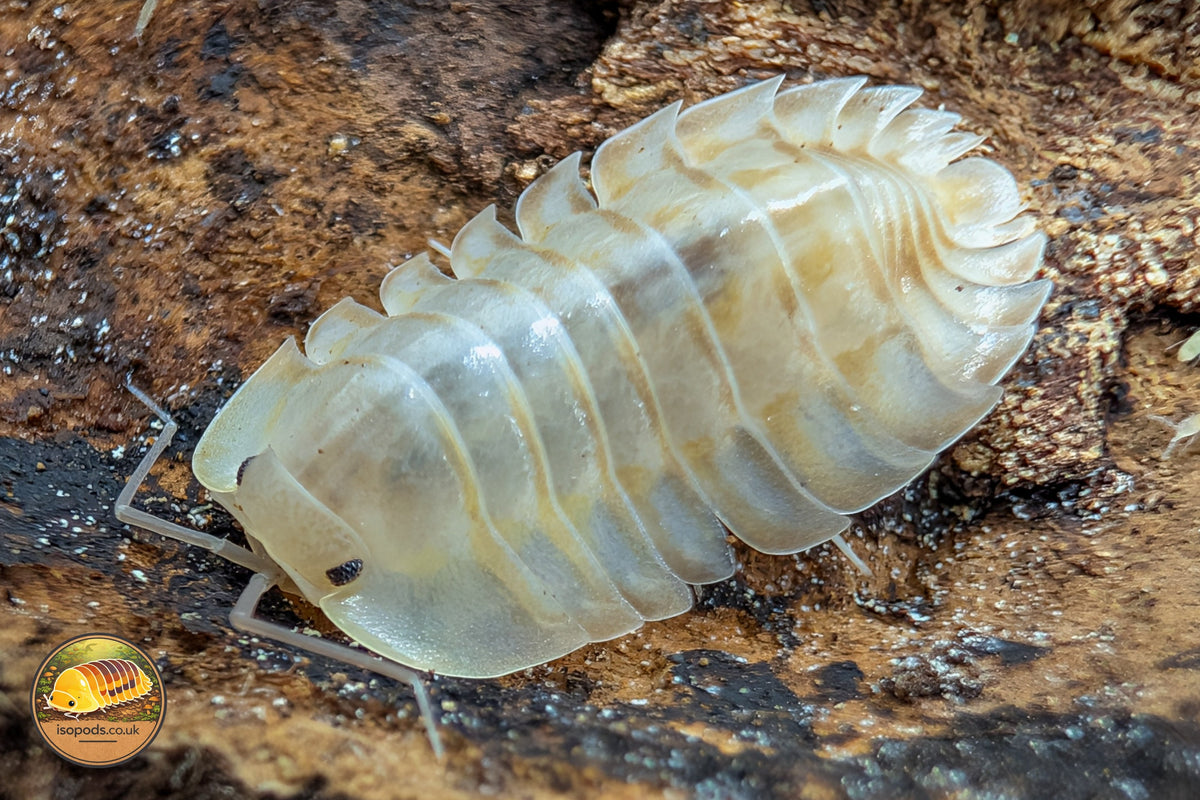
Troglodillo Glass Skeleton Isopod
Out of stock
Regular price
£150.00 GBP
Sale price
£150.00 GBP
Regular price
Unit price
per
Tax included.
Shipping calculated at checkout.
Couldn't load pickup availability
- Fully secure checkout
- Trusted by thousands
- Rated and reviewed
Want next day delivery? Be quick!
You just missed it!
Sorry, it's out of stock.
But we can let you know when it's back in.
Question about this product?
We're happy to help.
Sold out
Troglodillo Glass Skeleton Isopods for Sale UK
Troglodillo Glass Skeleton stands out for its pale, ghostly look: a skeletal, opaque-translucent appearance that feels very different from heavier solid-coloured isopods. For collectors drawn to unusual cave-style species, this is the appeal straight away.
In the enclosure, though, it should still be treated as a Troglodillo. Expect a secretive colony that prefers bark gaps, cork edges, shaded hard cover, and dark humid hiding places over open wandering. This is usually a better choice for keepers who enjoy occasional sightings and subtle behaviour than for buyers wanting constant display activity.
What makes Glass Skeleton different
-
Look: pale, skeletal-looking body tones with a distinctly ghostly overall impression. -
Behaviour: cautious and shelter-focused, usually staying close to tight covered spaces. -
Visibility: more likely to be found under bark, along cork edges, or in damp crevices than out on bare substrate. -
Keeper appeal: strongest for collectors who enjoy unusual appearance and patient observation. -
General care direction: humid hiding places with fresh air, not a sealed wet tub.
Enclosure style that suits them
Glass Skeleton usually does best in a setup with a reliable damp refuge, deep cover, and several tight shaded places to choose from. A thick layer of leaf litter, pieces of cork bark, and sheltered feeding areas help the colony move and rest without crossing too much exposed ground.
This species is better approached as a humid crevice user than as an open-floor isopod. Slanted bark, bark edges, narrow gaps, and dark covered corners usually matter more than open walking space. The enclosure should stay humid, but still smell fresh rather than stale.
Before you order
Prepare the enclosure before the colony arrives. The safest approach is a mature, covered setup with leaf litter already in place, damp areas that stay reliable below the surface, and decomposing wood such as rot wood built into the enclosure rather than added as an afterthought.
Keep calcium available consistently. A separate piece of limestone suits this kind of setup well. Disturbance should stay low, especially early on, because repeated checking can make a newly settled colony retreat further into its favoured gaps and hides.
Visibility and normal behaviour
Low open visibility is normal here. A healthy settled colony may still spend long periods tucked into bark gaps, under hard cover, or in the darker humid parts of the tub. That does not automatically mean something is wrong.
More useful signs are whether they use more than one sheltered spot, whether litter and wood are being grazed gradually, and whether the enclosure stays clean-smelling. If the whole colony ends up compressed into one wet corner, the rest of the setup may be too dry, too exposed, or too stale to use comfortably.
Feeding approach
Feeding should stay detritus-first. Leaf litter, decomposing wood, and mature substrate should carry most of the diet, with fresh foods kept modest and secondary. Troglodillo often feed quietly under cover, so a dramatic response to added foods is not the best way to judge whether the colony is doing well.
If you are unsure how to balance the enclosure food base with occasional extras, this isopod feeding guide is a useful next step.
Who will enjoy this species most
Glass Skeleton is likely to suit keepers who enjoy unusual morphology, cave-style appeal, and slower, more hidden enclosure behaviour. It makes more sense for someone who likes checking bark edges, crevices, and sheltered zones than for someone expecting frequent activity across the open surface.
If your main priority is constant visibility, this Troglodillo may feel too reserved. If your priority is a strange, pale collector species with a very different look from standard solid-coloured isopods, it is a much stronger fit.
Compare before you choose
If you want another same-genus comparison, Troglodillo Lomina is a useful next species to view. For broader browsing, the Troglodillo isopods collection helps you compare other cave-leaning Troglodillo types with different visual styles.
Ease of care
Preferred Temperature
Preferred Humidity
Popularity
Care Instructions
Care Instructions