🔥 Daily Isopod Auctions on WhatsApp! Grab species at auction prices, discover rare finds & join our growing community. Join Here
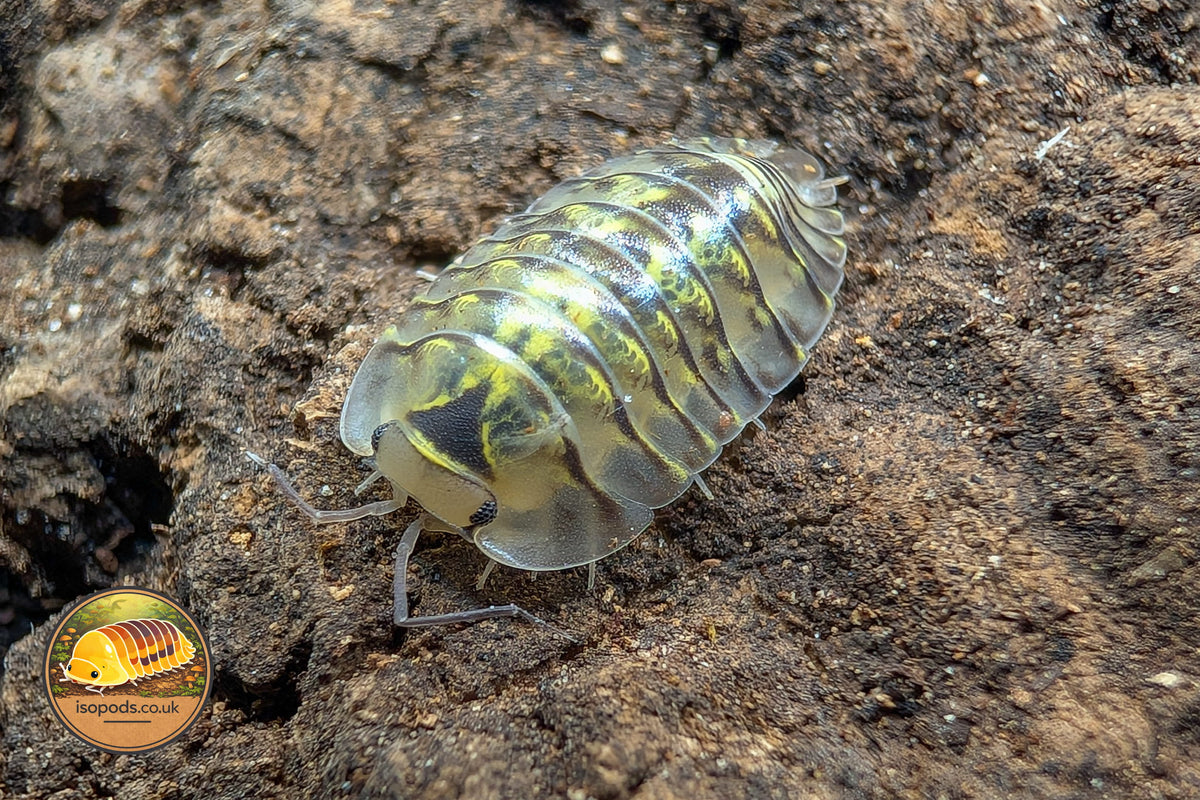
Troglodillo Lomina Isopod
Out of stock
Regular price
£150.00 GBP
Sale price
£150.00 GBP
Regular price
Unit price
per
Tax included.
Shipping calculated at checkout.
Couldn't load pickup availability
- Fully secure checkout
- Trusted by thousands
- Rated and reviewed
Want next day delivery? Be quick!
You just missed it!
Sorry, it's out of stock.
But we can let you know when it's back in.
Question about this product?
We're happy to help.
Sold out
Troglodillo Lomina Isopods for Sale UK
Troglodillo Lomina stands out best for its unusual body form and the way a settled colony uses the darker, tighter parts of an enclosure. Rather than behaving like an open-surface display isopod, this collector line is more likely to appear around bark crevices, cork edges, leaf litter, and the shaded spaces where firm cover meets damp substrate.
If that is the behaviour you want to watch, Lomina can be a very interesting Troglodillo to keep. If you want constant open visibility, a sparse setup, or an isopod that still reads well in a flat tub, this is likely to feel more specialised than expected.
What makes Lomina appealing
The appeal here is less about bold unsupported colour claims and more about shape, posture, and enclosure use. In a well-settled setup, Troglodillo Lomina can make bark seams, shaded undersides, and covered substrate layers feel active in a way that more open species do not. It suits keepers who enjoy subtle movement, careful observation, and a species that rewards enclosure design rather than bare visibility.
How you are likely to see them
-
Most sightings: around bark gaps, cork edges, leaf litter, and tight humid hiding places -
Open-floor activity: usually less important than use of crevices and hard cover -
After disturbance: likely to retreat quickly and stay tucked in -
Best sign of a settled colony: animals using more than one sheltered area rather than one cramped refuge
Low open visibility on its own is not the main warning sign with Troglodillo. More useful signals are whether the colony is spread between several covered spots, whether the enclosure smells fresh rather than sour, and whether the damp refuge is usable without the whole tub becoming wet and stale.
Before ordering, prepare the enclosure around cover
Lomina should be treated as a humid crevice-using Troglodillo, not as a simple wet tropical isopod. Give them a setup with deep enough substrate to hold lower moisture, plenty of leaf litter, several pieces of cork bark, and more than one tight shaded hiding place. Slanted bark, cork edges, and covered routes usually work better than one flat hide in the middle of the tub.
Keep one reliable damp refuge, but do not soak the whole enclosure. Troglodillo usually do better with humid hiding places and fresh air than with a sealed wet box. Rot wood is especially useful here because it adds both food value and extra sheltered contact areas near the substrate.
Calcium should also be available consistently. A simple piece of limestone can support long-term mineral access without turning feeding into guesswork.
Feeding and day-to-day expectations
The enclosure should do most of the feeding work. Leaf litter, rotting wood, mature substrate, and decomposing organic matter should be carrying the colony, with fresh foods used as small extras rather than the foundation. Troglodillo often feed more confidently near cover than in an exposed feeding patch.
If fresh foods get the only obvious response, the enclosure food base may be too weak. If food fouls quickly, the tub may be too wet, too stale, or overfed for a species that prefers quieter under-cover feeding.
Who usually enjoys this species most
This line makes the most sense for keepers who enjoy specialist-leaning tropical isopods, are happy to provide heavy cover and steady humidity, and do not need constant surface activity to feel the colony is doing well.
It is less suited to buyers who want easy open viewing, frequent handling, or a simple sparse setup with one damp corner and one hide.
Common ways Troglodillo setups go wrong
-
Too open: most of the tub looks available, but only one dark corner feels safe enough to use -
Wet everywhere: humidity rises, but choice disappears and the enclosure becomes stale -
Too little detritus: not enough litter or wood, so feeding depends too heavily on added foods -
Too much checking: repeated lifting of bark and hides can keep a new colony defensive
Compare before you decide
If you want another cave-style option in the same broader group, browse the Troglodillo isopods collection. If you want a direct same-genus comparison, Troglodillo Porcelain is a useful next look. For buyers still planning the enclosure first, the isopod habitat setup guide is the best next step before ordering.
Ease of care
Preferred Temperature
Preferred Humidity
Popularity
Care Instructions
Care Instructions