🔥 Daily Isopod Auctions on WhatsApp! Grab species at auction prices, discover rare finds & join our growing community. Join Here
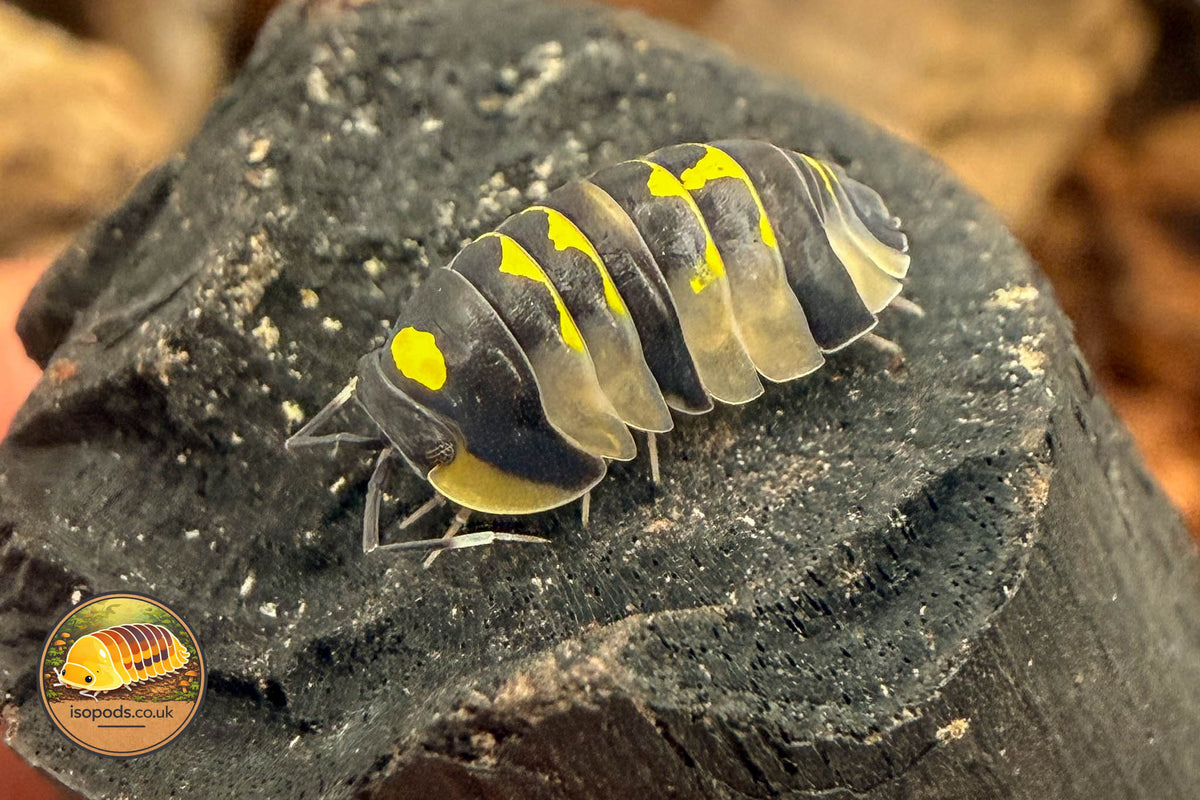
Ardentiella inarius Isopod
Out of stock
Regular price
£100.00 GBP
Sale price
£100.00 GBP
Regular price
Unit price
per
Tax included.
Shipping calculated at checkout.
Couldn't load pickup availability
- Fully secure checkout
- Trusted by thousands
- Rated and reviewed
Want next day delivery? Be quick!
You just missed it!
Sorry, it's out of stock.
But we can let you know when it's back in.
Question about this product?
We're happy to help.
Sold out
Ardentiella inarius Isopods for Sale UK
Ardentiella inarius has the kind of named-line appeal that draws collector interest, but it makes the most sense when that appeal is matched with the right enclosure. Rather than treating it like a simple floor-dwelling tropical isopod, it is better approached as an Ardentiella that shows best around bark faces, cork edges, branches, decaying wood, and other sheltered raised surfaces where its patterning and contrast can be appreciated properly.
That combination of visual interest and enclosure behaviour is the main reason to choose this species. A settled colony can be far more engaging on bark, lichen-bearing surfaces, and shaded vertical routes than on bare substrate, but it also comes with more serious setup expectations: high humidity pockets, fresh airflow, plenty of cover, a strong leaf-litter and wood base, steady mineral access, and as little disturbance as possible.
What makes Inarius different
-
Collector feel: Better positioned as a premium Ardentiella choice than a casual starter species. -
Where you see them: More likely around bark, cork, mossy cover, and sheltered raised surfaces than crossing open floor. -
Behaviour style: Semi-arboreal use of bark, branches, cover edges, and elevated routes suits keepers who enjoy enclosure detail. -
Setup sensitivity: Can lose normal bark use if the tub becomes flat, stale, overly wet, or too exposed. -
Pace: Best approached with patient expectations rather than fast-growth assumptions.
Collector appeal and visibility
Inarius is most rewarding when you want an Ardentiella that looks right in a more layered tropical setup. The visual appeal is not just the animal on its own, but how it sits against cork, aged bark, mossy edges, and lichen-bearing surfaces. That gives it a very different feel from species chosen mainly for obvious open-floor activity.
Visibility is still best treated carefully. This is not a species to buy with the expectation of constant display behaviour. It is usually easier to spot when the enclosure offers enough bark, cover, and sheltered routes for the colony to feel secure using them normally.
How it tends to use the enclosure
Ardentiella inarius often makes better sense in a setup with angled or upright cork bark, bark slabs, branches, decaying wood, and plenty of lower leaf cover than in a flat humid tub with one hide. It may rest along cork edges, graze on aged surfaces, move through covered raised areas, or stay close to the line where bark meets damp litter below.
If the colony is hard to find on bark at all, compressed into one damp corner, or only using a single cramped refuge, that usually points to a setup problem rather than a need to keep the whole enclosure wetter. The common causes are stale air, too little usable cover, or a tub where only one area still feels safe enough to use.
Before you order
Prepare this species as a humid but breathable Ardentiella enclosure, not a sealed wet box. A good baseline is a reliable damp refuge, a drier but still covered side, heavy leaf litter across much of the surface, and enough bark, wood, and raised cover that the colony can move without feeling forced onto bare ground.
Rot wood should be part of the enclosure rather than an occasional extra, and accessible lichen sticks make more sense here than decorative lichen placed where the isopods cannot really use it. Mineral support is also worth keeping available on an ongoing basis, using limestone. If you want a broader reference for moisture balance and airflow, the isopod habitat setup guide is the best next read.
Feeding priorities
This species should be fed through the enclosure first. Leaf litter, mature substrate, rotting wood, microbial films, and sheltered grazing surfaces should carry most of the diet. Fresh foods can be used lightly, but if the colony only seems interested when extras are added, the base of the enclosure is usually too weak.
Lichen-bearing and aged bark surfaces appear to matter in practice for how Ardentiella feed and settle, so they are better treated as part of the habitat rather than as decoration. Low-disturbance feeding works better than frequent checking, especially with a collector species that may retreat more when overhandled.
Who will enjoy this species most
Ardentiella inarius is a better fit for keepers who already enjoy tropical setups with bark, cover, airflow, and a bit of vertical interest. If you like watching isopods use cork faces, sheltered edges, branches, and humid raised surfaces, this species has a more distinctive feel than many lower-cover tropical types.
It is less suited to buyers who want a simple low-input setup, very frequent handling, or an isopod that is judged mainly by open-floor visibility. This one is better judged by how well it uses bark, cover, and grazing surfaces once settled.
Compare before you decide
If you want to browse within the same genus first, start with the Ardentiella isopods collection. For another collector-facing same-genus comparison, Ardentiella Pink Lambo is a useful next look. If you want a softer visual contrast in the same genus, Ardentiella Pastel may help you decide which Ardentiella style fits your collection better. If recurring mould is one of your main concerns in humid setups, how to prevent mould in isopod enclosures is the most relevant troubleshooting follow-up.
Ease of care
Preferred Temperature
Preferred Humidity
Popularity
Care Instructions
Care Instructions