🔥 Daily Isopod Auctions on WhatsApp! Grab species at auction prices, discover rare finds & join our growing community. Join Here
Lotus Pods for Isopod Enclosures
48 in stock
Regular price
£2.50 GBP
Sale price
£2.50 GBP
Regular price
Unit price
per
Tax included.
Shipping calculated at checkout.
Couldn't load pickup availability
- Fully secure checkout
- Trusted by thousands
- Rated and reviewed
Want next day delivery? Be quick!
You just missed it!
Question about this product?
We're happy to help.
Lotus Pods for Isopod Enclosures
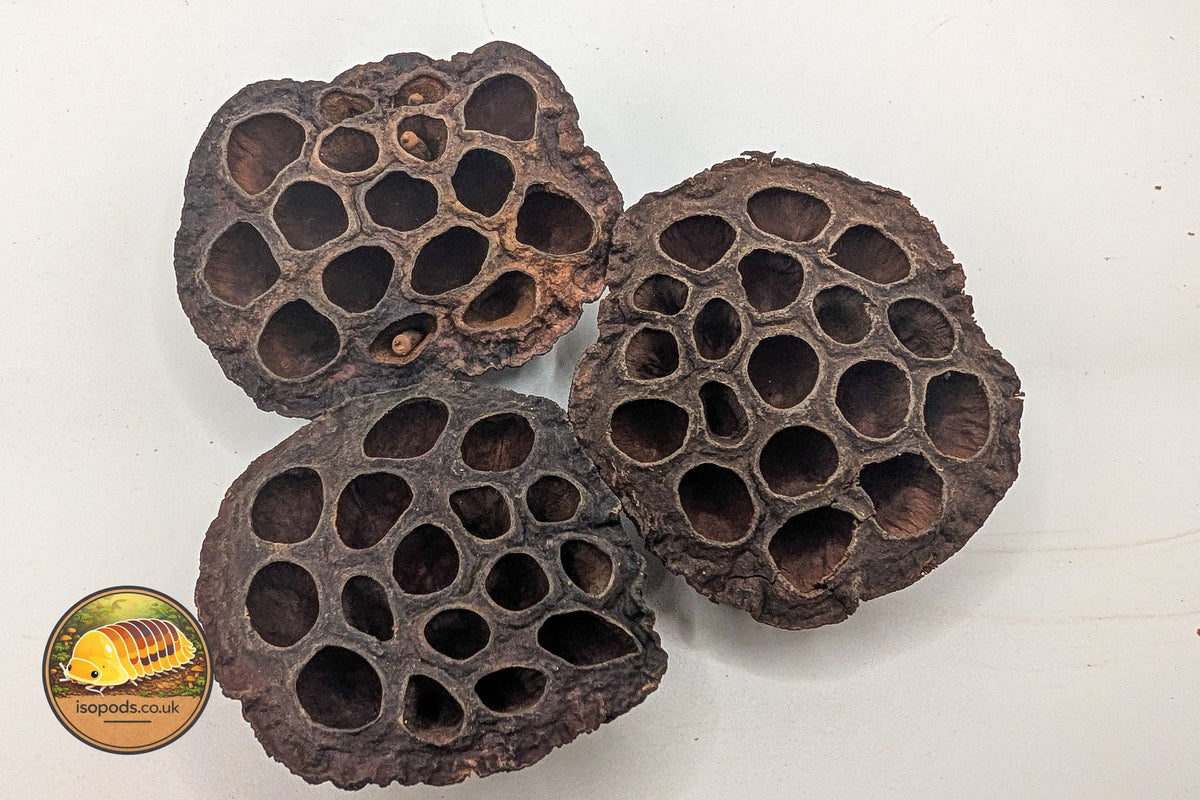
Lotus pods add small hollows, rough surfaces, and covered pockets that isopods can use for shelter and quiet feeding. They are usually best used as an extra surface feature in an established enclosure, not as a replacement for core items such as leaf litter, bark, or a proper damp refuge.
What lotus pods do
The chambers in lotus pods create shaded pockets where isopods may rest, graze, or moult with a little more cover. As they age, they can also contribute a small amount of organic material, so they are more than simple decoration, even though their main role is still shelter and surface texture.
How to use them
Place lotus pods on the surface where the colony can reach them easily. They tend to work best beside other cover, such as tree bark, or in sheltered parts of the enclosure rather than out on bare open substrate.
- Leave most of the pod above the surface so the hollows stay open and usable.
- Place them where isopods can move into and out of cover without crossing too much exposed ground.
- Let them soften gradually instead of pushing them deep into wet substrate.
- Replace them once the chambers have collapsed or the pod has broken down heavily.
Where they fit in a setup
Lotus pods are most useful when the enclosure already has the basics in place: a stable substrate, a real surface layer of cover, and a workable moisture pattern. They can sit near the transition between the damp refuge and the drier side, adding another sheltered stopping point for resting and feeding.
If the enclosure still feels bare, start with stronger foundation items first. Rot wood and a proper layer of leaf litter usually do more for long-term grazing and cover than decorative hardscape on its own.
When they are worth adding
These pods are optional, but they can be useful if you want more small hiding spaces and more textured surfaces across the enclosure. They make the most sense in setups that already function well and just need a few more sheltered pockets at floor level.
You may not need them in a very small enclosure, in a setup that is already crowded with cover, or in a tub that is still missing basic items such as moss, bark, litter, or a mature substrate base.
Common mistakes
-
Burying them fully: this can leave the cavities too wet and less usable. Keep most of the pod above the surface. -
Using them as the main hide: lotus pods work better as an extra shelter item. The enclosure still needs broader cover from litter, bark, and a proper damp refuge. -
Adding too many: if pods take over the surface, they can reduce usable floor space and make it harder to see how the colony is using the rest of the enclosure.
Who they suit
Lotus pods suit keepers who want to add more small covered spaces without changing the whole enclosure layout. They can work especially well in natural-looking setups where extra shaded pockets help break up open surface areas.
If you are still building the basics, the isopod habitat setup guide is a better place to start, because moisture balance, litter depth, and shelter layout matter more than any one decorative item.
Why choose lotus pods
Lotus pods give an enclosure extra hidey pockets and textured surfaces in a simple natural form. Used well, they can help make the surface feel less flat while giving the colony a few more sheltered places to stop, feed, and rest.
For broader enclosure care and long-term colony management, see the Isopod Husbandry Guide for Healthy Colonies.
Ease of care
Preferred Temperature
Preferred Humidity
Popularity