🔥 Daily Isopod Auctions on WhatsApp! Grab species at auction prices, discover rare finds & join our growing community. Join Here
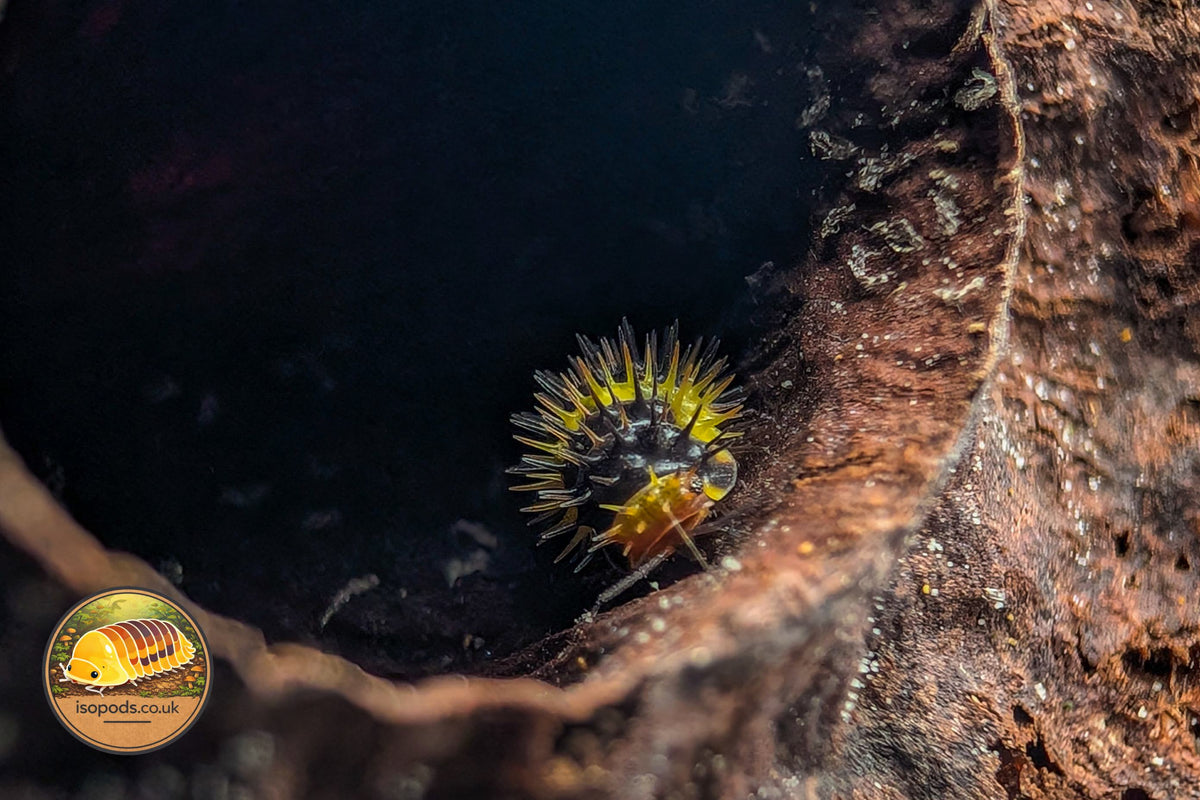
Laureola Lemon Spiky Isopod
Low stock! Only 5 left
Regular price
£125.00 GBP
Sale price
£125.00 GBP
Regular price
Unit price
per
Tax included.
Shipping calculated at checkout.
Couldn't load pickup availability
- Fully secure checkout
- Trusted by thousands
- Rated and reviewed
Want next day delivery? Be quick!
You just missed it!
Question about this product?
We're happy to help.
Laureola Lemon Spiky Isopods for Sale UK
Laureola Lemon Spiky stands out for its vivid lemon-yellow colour and sharply textured, spiky look. That combination gives it a very different silhouette from smoother isopods, so it appeals most to keepers who want a smaller tropical species with strong visual character rather than a plain detritivore colony.
In the enclosure, this is usually a bark-and-cover Laureola rather than an open-floor roamer. Expect most sightings around cork edges, curled leaves, bark faces, and shaded damp cover once the colony has settled. If you want something unusual to watch in a bark-rich tropical setup, this morph makes more sense than a species chosen mainly for constant open visibility.
What makes Lemon Spiky different
-
Look: bright lemon tones paired with a sharp-looking spiky texture. -
Silhouette: a more striking outline than many smoother tropical species. -
Visibility style: usually seen around bark, leaf litter, and covered edges rather than crossing bare substrate. -
Setup fit: best treated as a humid, well-ventilated Laureola with layered shelter and several tight hiding spots. -
Keeper expectation: more rewarding for patient observation than for frequent open display.
Where you are likely to see them
This species often makes best use of bark faces, cork edges, leaf curls, and the sheltered route between a moist refuge and a drier covered side. They are not best approached as deep burrowers, but they also should not be expected to sit out on exposed ground for long periods.
Low open-floor visibility is not automatically a problem. Better signs of a settled colony are animals turning up in more than one covered area, gradual wear on litter, and steady use of bark and shaded surfaces without the whole group compressing into one emergency corner.
Setup before ordering
Prepare a humid but breathable enclosure with a substantial layer of leaf litter across most of the surface. Add bark or cork so the colony has shaded undersides, firm edges, and sheltered routes to move through instead of having to cross bare substrate.
A reliable moist refuge matters, but the tub should not be wet everywhere. One side can be kept damper with sphagnum moss, while the rest of the enclosure stays usable with cover in place. Angled pieces of cork bark are especially useful here because they create more bark faces and tighter covered gaps than a single flat hide.
If you want a broader look at how moisture, cover, and airflow should work together, the isopod habitat setup guide is the best preparation read before the colony arrives.
Feeding and enclosure support
Like other isopods, Lemon Spiky should feed mainly from the enclosure itself: leaf litter, mature substrate, decomposing organic matter, and sheltered grazing surfaces. Fresh foods are useful as extras, but they should not replace the detritus base.
Rot wood is worth including because it adds both feeding value and more protected places to sit and graze under cover. Consistent mineral access is also sensible in a stable setup, with limestone placed somewhere accessible on the drier side.
Who tends to enjoy this species most
This morph is a strong fit for keepers who enjoy unusual texture, bright colour, and watching isopods use bark-rich covered spaces properly. It makes more sense for someone willing to build a layered tropical enclosure than for someone wanting a sparse tub or a very forgiving first species.
If your ideal colony spends lots of time roaming in the open, this one may feel quieter than you want. Lemon Spiky is better chosen for its look and enclosure behaviour around cover than for constant surface activity.
Common setup mistakes
-
Too flat and exposed: one hide and lots of bare floor often pushes the colony into the only safe corner. -
Wet but stale conditions: humid does not mean sealed; sour smell and heavy clustering usually suggest poor airflow. -
Too little litter: a thin scattering of leaves weakens both cover and long-term feeding. -
Overchecking: repeated lifting of bark can keep a newly settled colony hidden for longer. -
Soaking the whole tub: this removes choice and can leave the enclosure unusably wet.
Compare before you decide
If you like the spiky Laureola look but want a lighter contrasting option, Laureola Ivory Spiky is the closest same-style comparison. If you want to browse more bark-using tropical options in the genus, see the Laureola isopods collection. For a more openly patterned, less tropical-looking visual contrast, Armadillidium maculatum 'Yellow Zebra' is a useful comparison point.
Ease of care
Preferred Temperature
Preferred Humidity
Popularity
Care Instructions
Care Instructions