🔥 Daily Isopod Auctions on WhatsApp! Grab species at auction prices, discover rare finds & join our growing community. Join Here
Qilin Isopod | Isopoda sp. Qilin
15 in stock
Regular price
£125.00 GBP
Sale price
£125.00 GBP
Regular price
Unit price
per
Tax included.
Shipping calculated at checkout.
Couldn't load pickup availability
- Fully secure checkout
- Trusted by thousands
- Rated and reviewed
Want next day delivery? Be quick!
You just missed it!
Question about this product?
We're happy to help.
Qilin Isopods for Sale UK
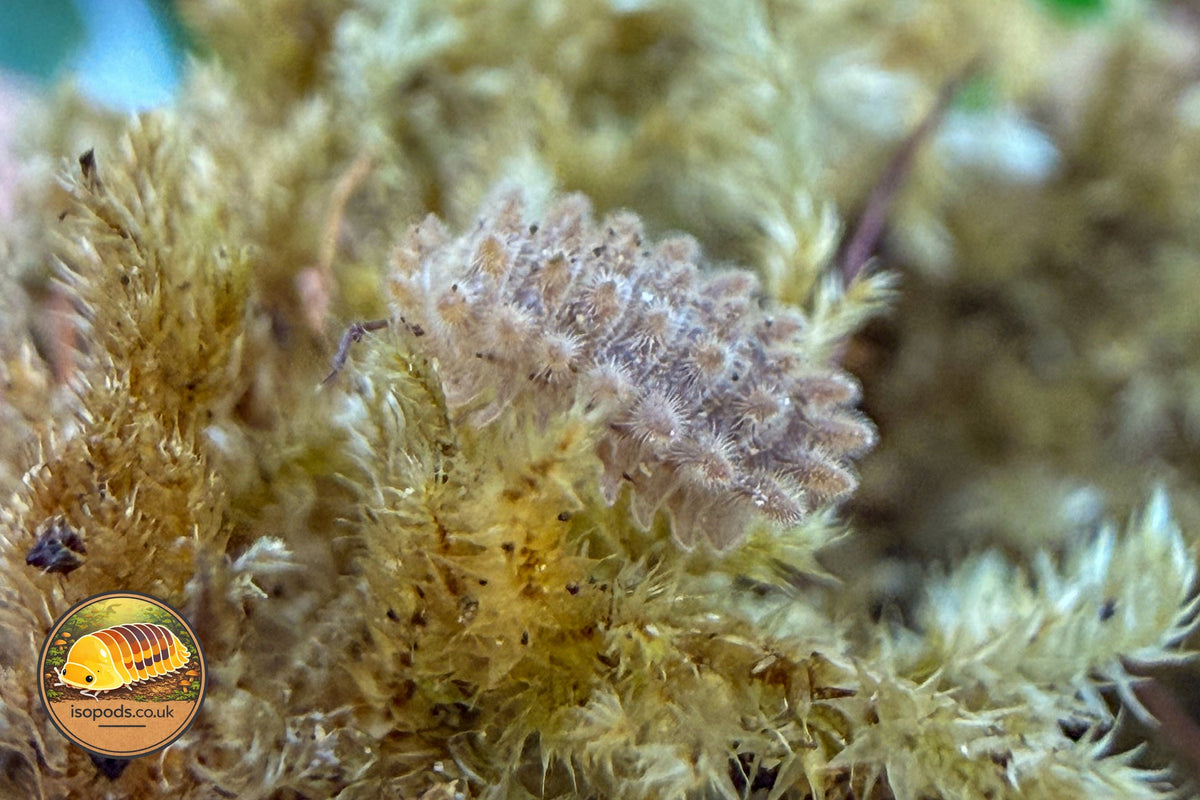
Qilin is best chosen for texture and form. This Isopoda sp. has a small, spiky outline, fine hair-like surface detail, and a sculpted shell that gives it a very different look from smoother tropical isopods. After moulting, tiny particles can cling to those hairs and create the soft dusted appearance that gives this form much of its collector appeal.
The legendary Qilin name suits it well: unusual, highly textured, and more striking up close than across the room. It is not a species to buy for constant open-floor activity. Instead, it suits keepers who enjoy specialist tropical isopods, close observation, and an enclosure built around bark, leaf litter, humid shelter, and low disturbance.
What stands out about Qilin
-
Look: small-bodied, spined, and unusually sculptural. -
Surface detail: fine hairs can give some individuals a soft dusted or teddy-bear look when particles cling after moulting. -
Style in the enclosure: usually more likely to be found around bark, litter, and covered humid areas than out on bare substrate. -
General feel: specialist, collector-facing, and better appreciated for form and subtle behaviour than for bold display activity.
How to expect them to behave
Qilin is safer to treat as a cover-focused tropical isopod. A settled colony may be noticed under bark, around cork edges, in leaf litter, or near damp sheltered areas, but open visibility is likely to stay limited compared with more surface-active types. Small size also makes them easier to miss even when they are using the enclosure normally.
That does not automatically mean something is wrong. More useful signs are gradual wear on leaf litter, quiet feeding under cover, and use of more than one sheltered area. If the whole colony stays packed into one wet corner, the rest of the tub may be too dry, too exposed, or too stale to use comfortably.
Setup that suits this species
Prepare Qilin with a stable substrate, generous leaf litter, bark or cork cover, and some rot wood so the enclosure works as both shelter and food base. This species is unlikely to do well in a sparse tub with one hide and a lot of bare ground.
A damp refuge should stay reliable without turning the whole enclosure wet. Sphagnum moss can help hold that humid pocket, while bark pieces and covered areas let the colony move and rest without feeling exposed. Good airflow matters here as well. Humid does not need to mean stale, and a sour, wet enclosure is usually a worse direction than a fresh one with one dependable moist area.
If you want to check your enclosure before ordering, the isopod habitat setup guide gives a broader explanation of moisture, cover, and airflow.
Feeding and mineral support
The main diet should come from leaf litter, decaying wood, and mature enclosure surfaces rather than frequent fresh feeding. Qilin should be treated as a detritus-first species, with fresh foods used as extras rather than the foundation of the setup.
Consistent calcium access is also worth providing. A small piece of limestone can support long-term stability, especially in a humid setup where you want the colony to have steady access without overhandling the enclosure.
Who tends to enjoy Qilin most
This one makes the most sense for keepers who buy with their eyes first, then build around the animal properly. If you enjoy unusual shell texture, fine detail, and the more collector-led side of tropical isopods, Qilin has a very distinct appeal.
It is likely to be less satisfying if you want a large, obvious species that stays easy to spot in the open, or if your usual setup style is flat, sparse, or checked too often. Qilin is better treated as a species to settle in and watch patiently rather than one to keep lifting hides for.
Before you choose
If you want another unusual tropical option with a strong collector feel, Laureola Durian is a useful comparison for buyers drawn to more specialist-looking species. If your priority is preparing the enclosure rather than comparing species first, start with cork bark and then review the wider tropical isopods guide to see whether this more humid, cover-heavy style fits how you like to keep isopods.
Ease of care
Preferred Temperature
Preferred Humidity
Popularity
Care Instructions
Care Instructions