🔥 Daily Isopod Auctions on WhatsApp! Grab species at auction prices, discover rare finds & join our growing community. Join Here
Filipinodillo Labo Yellow Isopod
Out of stock
Regular price
£150.00 GBP
Sale price
£150.00 GBP
Regular price
Unit price
per
Tax included.
Shipping calculated at checkout.
Couldn't load pickup availability
- Fully secure checkout
- Trusted by thousands
- Rated and reviewed
Want next day delivery? Be quick!
You just missed it!
Sorry, it's out of stock.
But we can let you know when it's back in.
Question about this product?
We're happy to help.
Sold out
Filipinodillo Labo Yellow Isopods for Sale UK
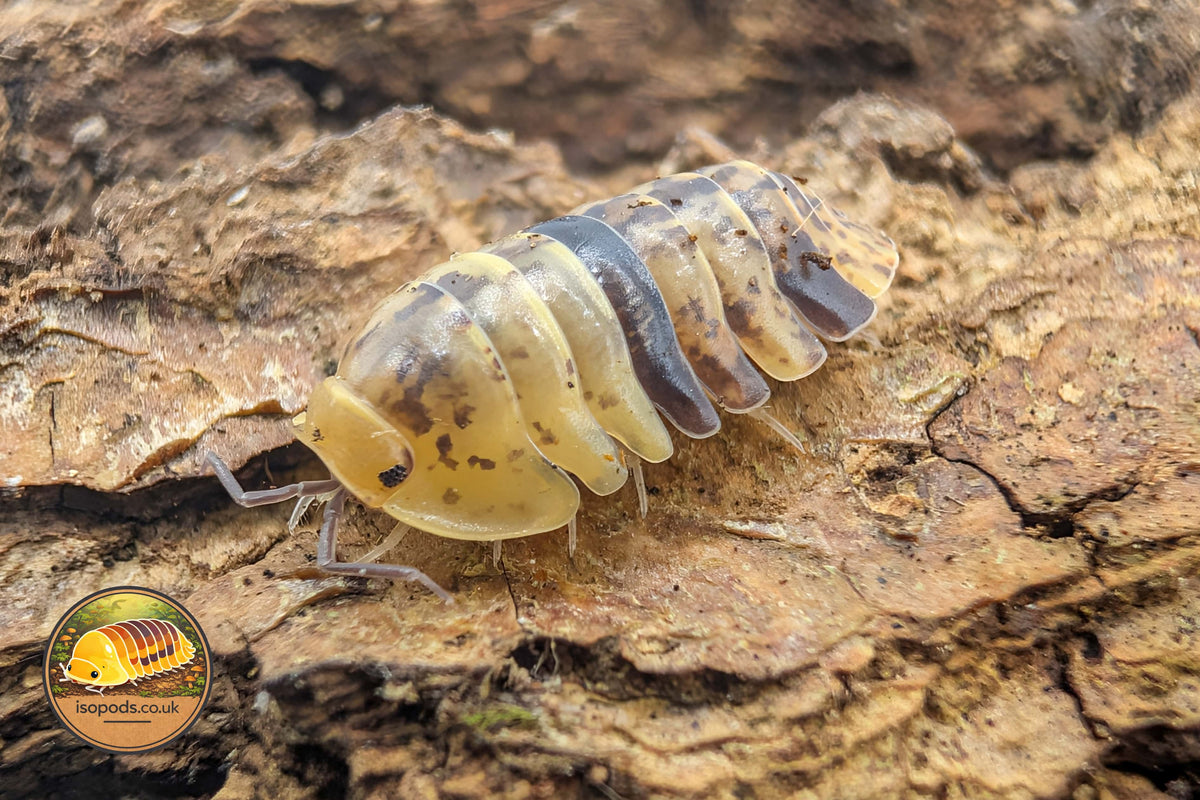
Filipinodillo Labo Yellow stands out for its broad, sturdy shape and yellow dorsal patterning, giving it a very different look from smaller, smoother tropical species. In keeper terms, this is a Philippine Filipinodillo that tends to feel more substantial and collector-led, with the yellow flecking or dorsal decoration doing most of the visual work.
It can be an appealing choice if you want a tropical species with real display interest but do not expect constant open roaming. A settled colony may be seen around bark, leaf litter, wood, and humid sheltered areas, especially when the enclosure gives them enough cover and fresh air instead of forcing them into one wet corner.
What makes Labo Yellow different
-
Overall look: wider, flatter, and sturdier in appearance than many small smooth tropical isopods. -
Pattern: yellow dorsal marking or flecking is the main visual hook. -
Enclosure use: often more interesting around bark edges, litter, and covered surfaces than on bare open substrate. -
Setup style: humid shelter matters, but so does airflow and a usable drier retreat. -
Keeper appeal: better suited to collector-minded keepers who enjoy balancing visibility with careful setup.
How they are usually seen
Labo Yellow should not be judged only by open-floor activity. They may spend long periods under cover, but that does not automatically mean the colony is not doing well. Better signs are individuals using more than one hide, feeding near cover, and appearing around bark, wood, or litter edges rather than all staying compressed into a single damp pocket.
If they vanish completely into one wet corner, the enclosure is often too bare, too dry elsewhere, or too stale. If they can move between humid cover and a drier sheltered area without crossing lots of exposed ground, their behaviour is usually easier to read over time.
Setup that suits this Filipinodillo
This species makes more sense in a well-covered tropical enclosure than in a flat tub with one hide. Use plenty of leaf litter, bark or cork for firm shaded cover, and enough depth in the substrate for the enclosure to hold moisture without turning muddy.
cork bark works well for creating broad undersides and sheltered edges, which suits a wide-bodied Filipinodillo better than a sparse setup with only open floor. Adding rot wood also helps by giving the colony sheltered grazing surfaces as well as another covered place to rest.
Keep one refuge reliably damp, ideally with moss or damp lower substrate, but avoid soaking the whole tub. This is best treated as a humid tropical species with fresh air, not a wet-only species. If you need help balancing damp cover with airflow, the isopod habitat setup guide is the most useful next read.
Feeding and mineral support
The main diet should still come from the enclosure itself: leaf litter, decomposing wood, mature substrate, and other detritus. Fresh foods are useful as extras, but they should not replace the long-term food base. Quiet feeding under cover is more informative than whether they rush exposed food.
Consistent calcium access is also worth providing. Limestone is a practical option for a species like this, especially in a collector setup where long-term stability matters. For a broader feeding overview, see what do isopods eat.
Who tends to enjoy this species
Labo Yellow is a good fit for keepers who like tropical species with a stronger visual presence, but who are still happy to watch behaviour around cover rather than expect nonstop display. It suits buyers who enjoy bark, litter, wood, and humidity-balanced enclosures and who do not mind giving a colony time to settle in properly.
It is less likely to satisfy someone looking for a very forgiving first colony, a sparse minimal setup, or a species that should always be visible in the open.
Compare before you choose
If you want to stay within the same genus, browse Filipinodillo isopods or compare this listing with Filipinodillo Giant Banaho for another larger-bodied Filipinodillo route. If you want broader genus-level setup guidance before deciding, the Filipinodillo care guide is the best next step.
Ease of care
Preferred Temperature
Preferred Humidity
Popularity
Care Instructions
Care Instructions