🔥 Daily Isopod Auctions on WhatsApp! Grab species at auction prices, discover rare finds & join our growing community. Join Here
Filipinodillo Giant Bumblebee Isopod
Low stock! Only 3 left
Regular price
£85.00 GBP
Sale price
£85.00 GBP
Regular price
Unit price
per
Tax included.
Shipping calculated at checkout.
Couldn't load pickup availability
- Fully secure checkout
- Trusted by thousands
- Rated and reviewed
Want next day delivery? Be quick!
You just missed it!
Question about this product?
We're happy to help.
Filipinodillo Giant Bumblebee Isopods for Sale UK
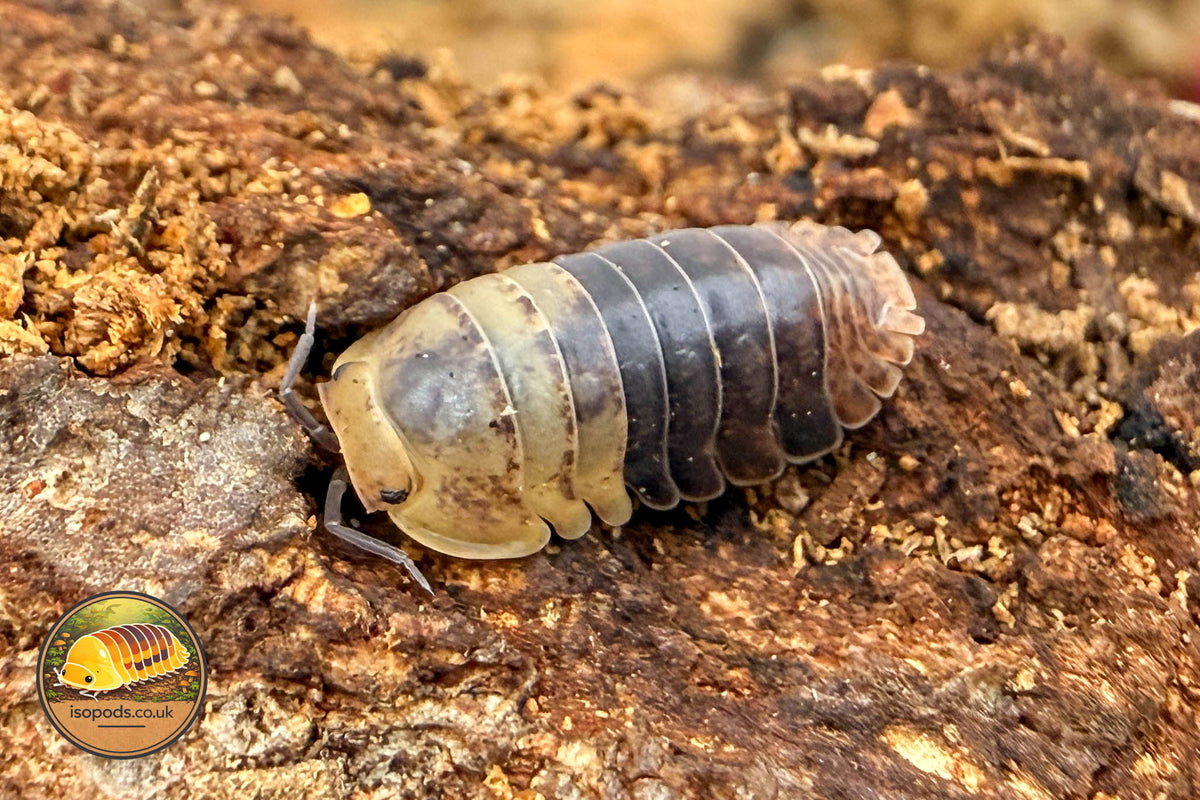
Filipinodillo Giant Bumblebee stands out for its large tropical build and bold yellow-and-black bumblebee contrast, giving it more visual weight than smaller bee-patterned isopods. If you want a Filipinodillo with stronger display presence and a more substantial look under bark, cork, and leaf litter, this is the appeal.
It is still best treated as a collector-focused species rather than an easy display animal. A settled colony may show satisfying movement around covered areas and feeding spots, but it still needs humid conditions, deep cover, a reliable damp refuge, rotting wood, calcium, and enough airflow to stay fresh rather than stale.
What makes Giant Bumblebee stand out
-
Visual impact: large-bodied Filipinodillo with strong yellow-and-black contrast. -
Presence in the enclosure: can give more noticeable sightings than smaller, quieter bee-patterned types, especially around bark edges and covered feeding areas once settled. -
Setup style: humid tropical enclosure with plenty of leaf litter, bark or cork, rotting wood, and a clear damp refuge. -
Keeper expectations: more specialist than beginner-friendly species, with slower-looking colony progress and less tolerance for unstable conditions.
Display value with realistic expectations
This species is worth choosing for size and pattern first. The broad yellow front and dark banding give it a bold collector look, and that visual appeal tends to carry well in a properly furnished enclosure with bark, litter, and shaded cover.
That does not mean constant open roaming. Like other Filipinodillo, Giant Bumblebee may still spend a good amount of time under cover, especially after disturbance or in a fresh setup. The better sign is seeing individuals use more than one sheltered area, appear around bark or litter edges, and feed quietly without the whole colony being trapped in one damp corner.
How to set the enclosure up before ordering
Prepare a humid tropical enclosure with a deep, usable substrate, heavy coverage of leaf litter, bark or cork bark, and pieces of rot wood for both grazing and shelter. One side should stay reliably damp below the surface, while the rest of the tub stays covered and usable rather than soaked.
A patch of sphagnum moss can help hold a stable damp refuge, but the whole enclosure should not be wet. This species usually does better with humidity and fresh air together: humid, covered, and buffered, not sealed, swampy, or sour-smelling. If you need a broader enclosure refresher, the isopod habitat setup guide is the best next read.
Calcium should be available continuously on an accessible patch. Limestone is a practical long-term option for a large tropical species like this.
Feeding and colony pace
Giant Bumblebee should still be treated as detritus-led. The enclosure food base matters more than dramatic feeding reactions, so keep leaf litter, decomposing wood, and mature substrate doing most of the work. Fresh foods can be offered in small amounts, but they are support rather than the foundation.
Do not expect fast visible multiplication. This is better approached as a slower, more collector-led colony where stability matters more than quick breeder expectations. If fresh food is not rushed in the open, that is not automatically a problem; feeding may happen under cover instead. For a broader diet overview, see what do isopods eat.
Who usually enjoys this species most
Giant Bumblebee tends to suit keepers who want a larger tropical Filipinodillo with bold patterning, who enjoy building a well-covered enclosure, and who do not mind patient colony development. It makes more sense for buyers choosing with their eyes and husbandry in mind, not for someone chasing fast production or constant surface activity.
If you want a species that forgives setup swings, breeds quickly, or stays out in the open most of the time, this may feel demanding. It is a better fit for patient keepers who can maintain humidity, airflow, cover, and calcium access consistently.
Compare before you decide
If you want to stay within the same genus, browse the Filipinodillo isopods collection or compare this species with Filipinodillo R5 Giant for another larger collector-focused Filipinodillo. If you prefer a related comparison with a different look, Filipinodillo Leopard Bee is another useful next step.
For keepers weighing up the extra patience and setup stability that more collector-facing species need, the rare isopod guide is also worth reading before you choose.
Ease of care
Preferred Temperature
Preferred Humidity
Popularity
Care Instructions
Care Instructions