🔥 Daily Isopod Auctions on WhatsApp! Grab species at auction prices, discover rare finds & join our growing community. Join Here
Cubaris Jupiter Isopod
Low stock! Only 10 left
Regular price
£40.00 GBP
Sale price
£40.00 GBP
Regular price
Unit price
per
Tax included.
Shipping calculated at checkout.
Couldn't load pickup availability
- Fully secure checkout
- Trusted by thousands
- Rated and reviewed
Want next day delivery? Be quick!
You just missed it!
Question about this product?
We're happy to help.
Cubaris Jupiter Isopods for Sale UK
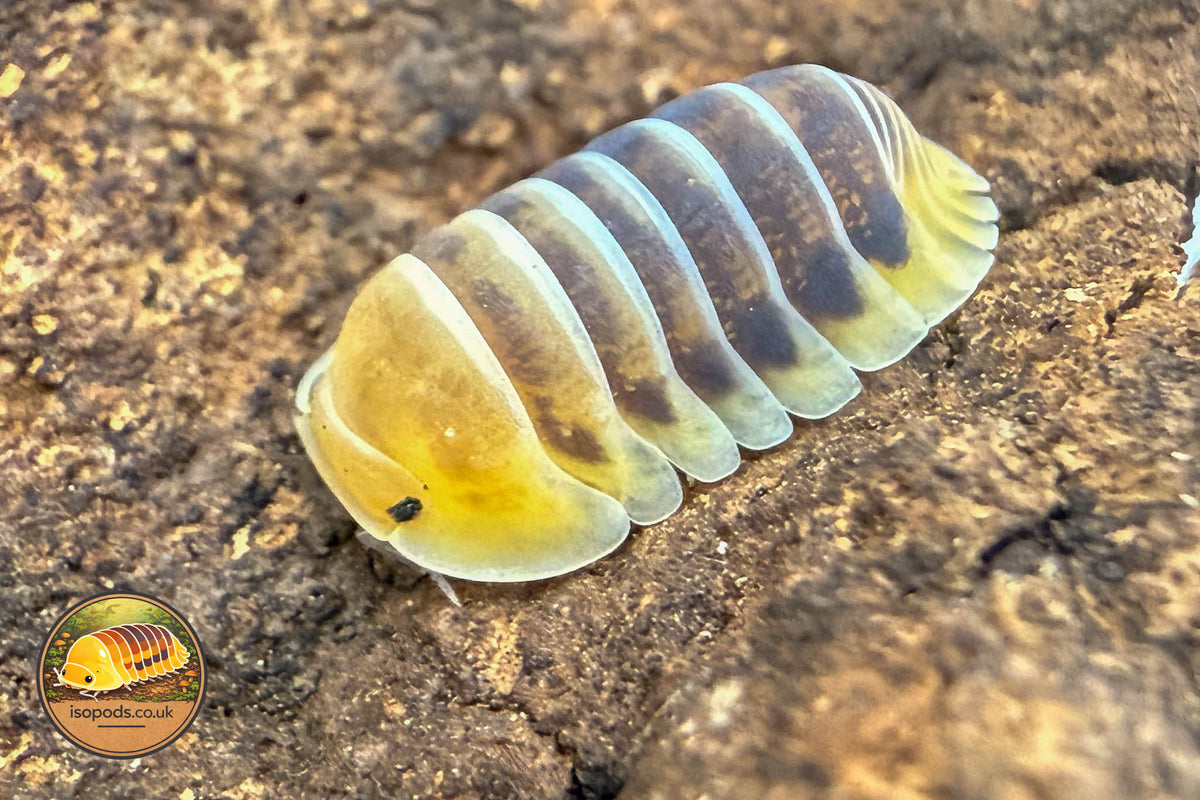
Cubaris Jupiter stands out for its stormy, planet-like patterning: swirling bands, earthy browns, greys, creams, paler outer margins, and darker central areas that give each individual a slightly different "Jupiter surface" look. If you are choosing with your eyes first, this is a patterned collector Cubaris with far more visual character than a plain brown tropical species.
In keeper terms, though, Jupiter should still be approached as a true Cubaris. Expect a humid enclosure with deep substrate, plenty of leaf litter, bark or cork hides, decaying wood, and steady calcium access. They are usually more rewarding for keepers who enjoy checking bark undersides and covered feeding spots than for buyers expecting constant open activity.
What gives Jupiter its appeal?
-
Pattern: mottled banding and storm-like contrast rather than a flat single tone -
Colour balance: earthy browns, greys, creams, lighter skirts, and darker centres -
Variation: individuals can differ, which adds to the colony's collector interest -
Look in the enclosure: often most appreciated when seen against bark, litter, and shaded cover rather than on bare open substrate
Behaviour you should actually expect
This is not a Cubaris listing to buy for constant display. A settled colony may spend long periods under bark, within leaf litter, around decaying wood, or near the damp refuge. You may see brief movement around food or covered edges, but quiet, moderate-paced behaviour is normal.
That lower visibility does not automatically mean something is wrong. Jupiter is better judged by gradual leaf wear, quiet feeding under cover, and use of several sheltered spots over time. It becomes more concerning if the whole colony is packed into one wet corner or one cramped hide, because that usually suggests the rest of the enclosure is too dry, too exposed, or too stale.
Before you order
Have the enclosure ready first. Jupiter does best when it arrives to a setup with a reliable damp refuge, deep substrate, heavy surface cover, and enough leaf litter for both hiding and grazing. A moist moss pocket made with sphagnum moss can help keep one humid area dependable, while pieces of cork bark give shaded undersides and tighter resting spots.
The rest of the enclosure should not be left bare. Even the drier side is more useful when it still has litter and cover, so the colony can move without crossing too much exposed ground. If you want a broader picture of how to balance moisture, cover, and airflow, the isopod habitat setup guide is a practical next read.
Feeding and long-term support
Like other Cubaris, Jupiter should be treated as detritus-first. The main diet comes from the enclosure itself: decaying leaf litter, rotting wood, and mature organic substrate. Fresh foods can be offered in moderation, but they should support the enclosure food base rather than replace it.
A generous layer of leaf litter should always be present, and steady calcium access is worth providing as part of normal long-term care. Limestone is a simple way to keep that mineral support available.
Who tends to enjoy this species most
Jupiter makes most sense for keepers who want a patterned tropical Cubaris and do not mind a quieter colony style. It suits buyers who enjoy individual variation, sheltered behaviour, and the process of building a humid enclosure that works well over time.
If you mainly want frequent open movement, easy surface checks, or a species that reads like a more active Porcellio or a more open Armadillidium, this one may feel understated.
Locality and keeper context
In hobby terms, Jupiter is best kept within the broad Southeast Asian Cubaris care model rather than tied to an exact documented locality. The practical takeaway is simple: keep it humid but not swampy, heavily covered, and rich in litter and wood, with enough fresh air to stop the enclosure becoming stale.
Compare before you decide
If you like the Jupiter look but want to compare a related variation, Cubaris Frosty Jupiter is the closest next stop. If you would rather browse the wider group first, see the full Cubaris isopods collection.
Ease of care
Preferred Temperature
Preferred Humidity
Popularity
Care Instructions
Care Instructions