🔥 Daily Isopod Auctions on WhatsApp! Grab species at auction prices, discover rare finds & join our growing community. Join Here
Cubaris Frosty Jupiter Isopod
Low stock! Only 1 left
Regular price
£60.00 GBP
Sale price
£60.00 GBP
Regular price
Unit price
per
Tax included.
Shipping calculated at checkout.
Couldn't load pickup availability
- Fully secure checkout
- Trusted by thousands
- Rated and reviewed
Want next day delivery? Be quick!
You just missed it!
Question about this product?
We're happy to help.
Cubaris Frosty Jupiter Isopods for Sale UK
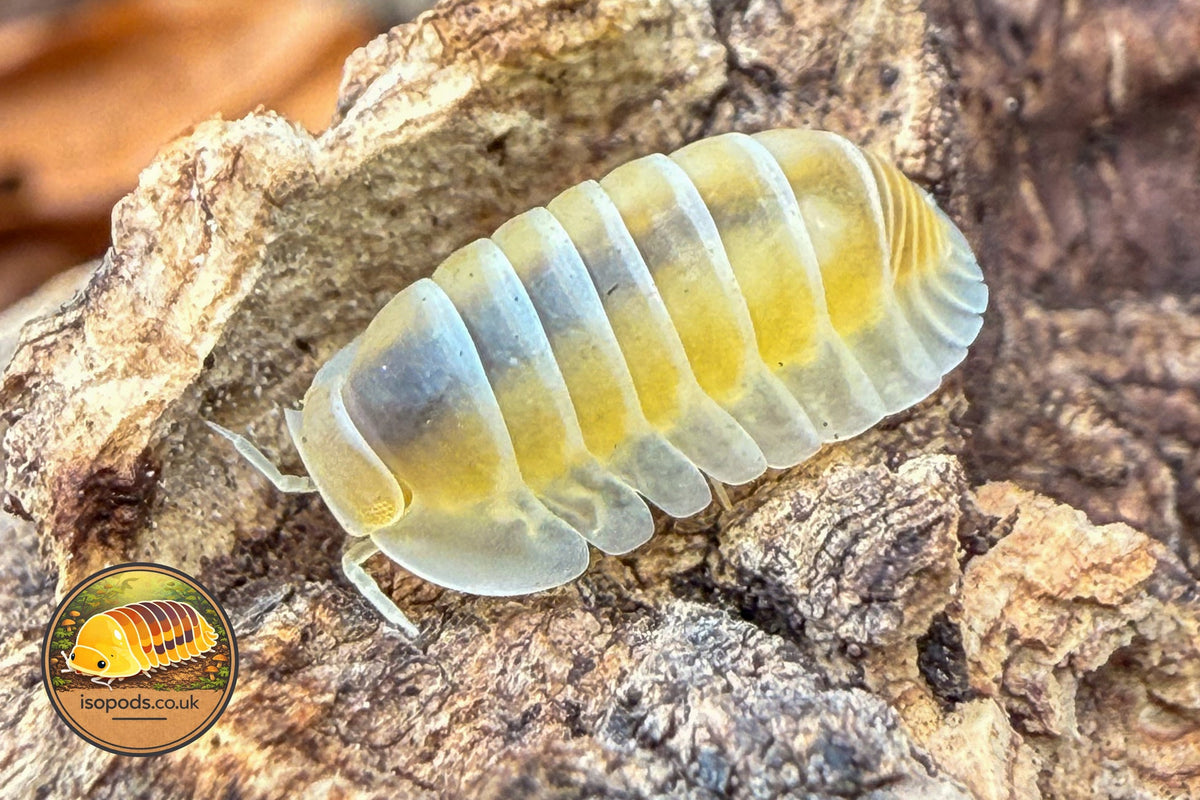
Cubaris Frosty Jupiter stands out for its pale, reduced-pigment take on the Jupiter look. Instead of louder contrast, this morph leans into frosted cream and grey-white tones, with lighter Jupiter-style banding, pale skirts, darker central sections, and bright segment edges that give it a softly mineral, icy appearance.
That makes it a strong choice for keepers drawn to subtle collector colour rather than constant open display. In enclosure terms, it should still be approached as a shelter-oriented Cubaris: more likely to spend time under bark, among leaf litter, and around humid lower cover than walking openly across bare substrate, especially while settling in.
What gives Frosty Jupiter its appeal
The attraction here is not bright saturation but muted contrast. Frosty Jupiter keeps the recognisable Jupiter-style patterning, but in a lighter, washed, almost stone-like palette. The pale outer areas and brighter segment edges help the darker middle sections stand out without making the isopod look harsh or overly bold.
For buyers already familiar with Jupiter-style Cubaris, this version offers a softer, colder-looking presentation. If you enjoy morphs with a cleaner, frosted finish rather than heavy colour, this is where Frosty Jupiter earns its place.
How this Cubaris usually behaves
Like many animals sold as Cubaris, Frosty Jupiter is usually best judged by where it hides and feeds rather than by how often it sits out in the open. Expect most sightings around bark edges, under cover, within leaf litter, or in humid lower areas of the enclosure. Open activity can stay limited even when the colony is doing well.
A settled colony may still be quiet. Better signs are gradual use of more than one sheltered area, steady wear on litter and wood, and occasional appearances around covered feeding spots. If you want to browse similar sheltered tropical types, the Cubaris isopods collection is the best broader comparison point.
Before ordering: enclosure style that suits them
-
Go deeper, not flatter: Frosty Jupiter usually does better with deeper substrate and a reliable damp refuge than with a shallow tub that swings between wet and dry. -
Cover most of the surface: A proper layer of leaf litter gives them food and cover at the same time. -
Add firm hiding places: Pieces of cork bark help create shaded undersides, tight gaps, and safer resting places. -
Include decomposing wood: Rot wood helps support long-term grazing and quieter feeding under cover. -
Keep one side reliably damp: The moist area should stay usable below the surface without turning the whole enclosure soggy.
Although Jupiter-type Cubaris are often linked in hobby discussion to Thai cave or limestone-associated contexts, the practical takeaway is simpler: keep the enclosure humid, sheltered, and clean-smelling rather than sealed, stale, or wet everywhere.
Feeding and mineral support
Frosty Jupiter should be treated as a detritus-first isopod. The main food base should come from leaf litter, rotting wood, and mature organic substrate, with fresh foods used as support rather than the centre of the diet. Quiet under-cover feeding is normal, so you do not need a dramatic surface response to know the colony is using the enclosure.
Consistent calcium access is also worth building in from the start. A steady source such as limestone suits the kind of long-term setup many Cubaris keepers prefer. If you want a broader feeding reference before ordering, what do isopods eat explains the food base in more detail.
Who tends to enjoy this species most
Frosty Jupiter is more likely to satisfy buyers who enjoy morph detail, enclosure building, and patient observation than buyers who want constant visible movement. If you like checking under bark, watching subtle colony spread over time, and keeping humid tropical setups with litter, wood, and covered damp areas, this morph makes sense.
If your priority is frequent open-floor activity and instant visual feedback, a quieter Cubaris like this may feel more reserved than expected.
Good to know while the colony settles
Lower visibility at first is common. Repeated lifting of hides, drying the enclosure too quickly, or keeping only one tiny damp pocket can make them retreat even more. If the whole colony is pressed into one wet corner, the rest of the tub may be too dry, too bare, or too exposed rather than "less preferred".
The aim is not a wet tub. The aim is a dependable humid refuge, a drier but still covered side, and enough bark, litter, and wood that the colony can spread without crossing too much bare ground.
Compare before you decide
If you want the same general look in a more standard form, Cubaris Jupiter is the closest comparison. If the frosted, pale finish is the main draw, Frosty Jupiter is the more distinctive choice. For buyers planning a longer-term colony project rather than a display-first purchase, the Ultimate Guide to Isopod Colonies is a useful next read.
Ease of care
Preferred Temperature
Preferred Humidity
Popularity
Care Instructions
Care Instructions