🔥 Daily Isopod Auctions on WhatsApp! Grab species at auction prices, discover rare finds & join our growing community. Join Here
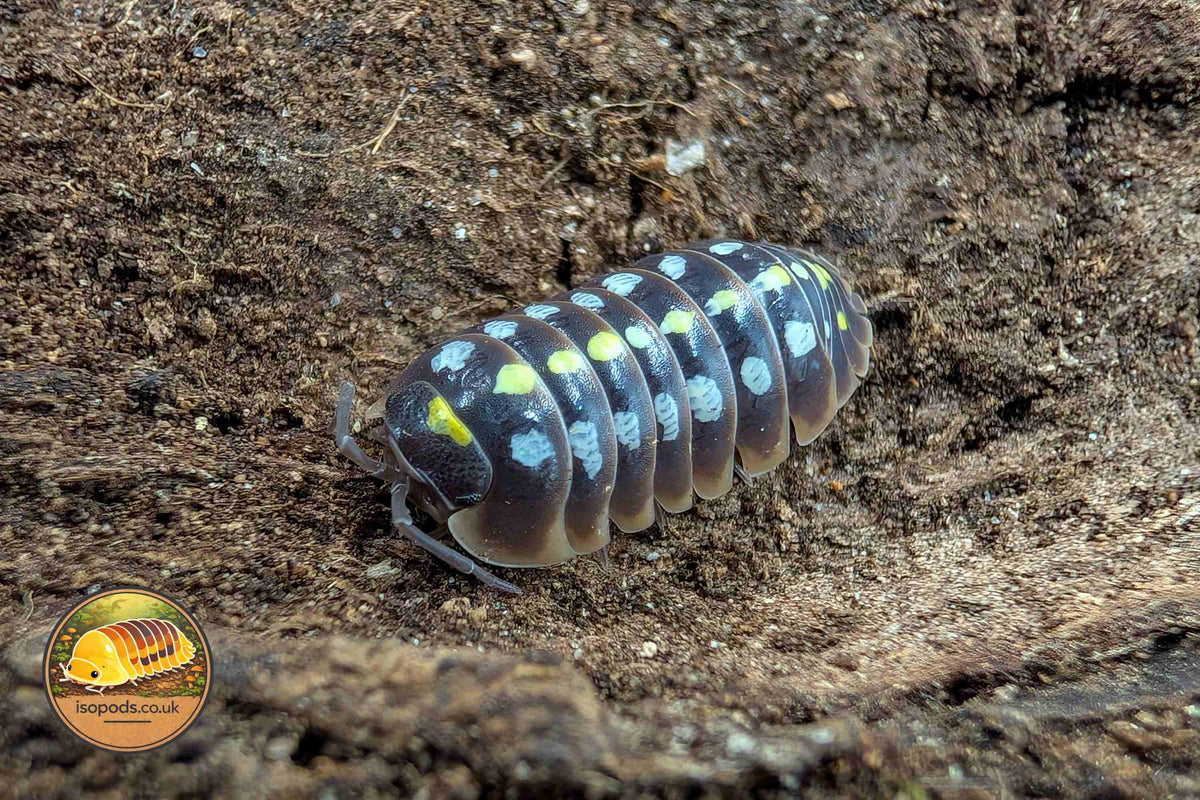
Armadillidium Klugii "Pudding" Isopod
Out of stock
Regular price
£10.00 GBP
Sale price
£10.00 GBP
Regular price
Unit price
per
Tax included.
Shipping calculated at checkout.
Couldn't load pickup availability
- Fully secure checkout
- Trusted by thousands
- Rated and reviewed
Want next day delivery? Be quick!
You just missed it!
Sorry, it's out of stock.
But we can let you know when it's back in.
Question about this product?
We're happy to help.
Sold out
Armadillidium Klugii "Pudding"
Armadillidium Klugii "Pudding" is best approached as a temperate roller isopod that usually shows more readable enclosure behaviour than many hidden tropical species, but still does better with cover than with a bare, exposed setup. If you enjoy watching isopods move between leaf litter, bark, and sheltered feeding spots rather than expecting constant open activity, this kind of Armadillidium can be a very satisfying choice.
Key Traits
-
Visibility: Often easier to observe than many hidden tropical genera, though not constantly out in the open. -
Behaviour: Usually uses hides, litter, bark edges, and the damp-to-drier gradient rather than staying in one place. -
Growth rate: Best treated as steady rather than assumed fast. -
Sensitivity: Usually benefits from good airflow, a reliable damp refuge, and steady calcium access. -
Difficulty: Moderate if you can maintain a clear moisture gradient without letting the tub become stale or uniformly wet.
Behaviour and Enclosure Use
Like other Armadillidium, this isopod is usually more visible around cover than in open exposed patches. You are most likely to find it under bark, within leaf litter, around hide edges, and moving between the damp refuge and the drier side once the colony has settled.
That pattern matters. If the animals use several covered areas, feed near shelter, and do not stay compressed into one wet corner, the enclosure is usually giving them enough choice. If they only ever crowd into one damp patch, the rest of the tub may be too dry, too bare, or too stale to use comfortably.
As a roller type, brief curling up after disturbance is normal. That does not mean the setup is wrong on its own. It is more useful to judge the colony by whether it spreads through sheltered parts of the enclosure over time.
Habitat and Setup
This species is safer to keep in an airy enclosure with a clear damp-to-drier pattern than in a wet tub from end to end. A good setup usually includes a moist refuge on one side, a drier but still usable side, and plenty of surface cover so the isopods can move without crossing too much bare ground.
Deep enough substrate helps hold moisture below the surface while keeping the top from turning muddy. A thick layer of leaf litter and pieces of cork bark give them shaded resting places and feeding cover. Adding some rot wood also helps build a longer-term grazing base into the enclosure rather than relying only on added foods.
For the damp refuge, a patch of sphagnum moss can help hold moisture, but it should stay damp rather than soaked. The drier side should still have litter and cover, not just empty floor space. Armadillidium often use airier ground well when it still feels sheltered.
Fresh air matters here. If the whole enclosure stays wet and stale, Armadillidium often become less readable, cluster more heavily, and make poorer use of the space.
Feeding
The main diet should come from leaf litter, decaying plant matter, mature substrate, and wood-based detritus. Fresh foods are useful as support, but they should not become the foundation of the colony's diet. If the isopods only seem active when treats are added, the enclosure food base is usually too weak.
As with many Armadillidium, steady mineral access is worth providing. A simple source such as limestone can be left available as ongoing support rather than added only when something seems wrong.
If you want a broader overview of detritus-first feeding, see what do isopods eat.
Common Failure Points
-
Whole enclosure kept wet: The colony may cluster, hide more, or avoid using much of the tub because there is no real dry-to-moist choice. -
Drier side left bare: If the airier side has little litter or cover, the isopods may stay packed into the damp refuge because the rest feels too exposed. -
Weak airflow: A sour smell, stale wet patches, or poor enclosure use often points to moisture sitting without enough fresh air. -
Too little leaf litter: This reduces both cover and food, often leading to over-reliance on supplements. -
No steady calcium source: Mineral support is usually better treated as standard long-term care than as an occasional extra.
Who This Species Suits
This species can suit keepers who want a more readable roller isopod and who enjoy building an enclosure with a proper moisture gradient, useful hides, and long-term detritus food. It may be less satisfying for buyers who want constant open activity or who prefer very humid tropical-style tubs.
If you are comfortable maintaining fresh air, litter cover, and a damp refuge without soaking the whole enclosure, this is a sensible Armadillidium to consider.
Why Choose This Species
The appeal here is the mix of classic Armadillidium behaviour and the visual character of the "Pudding" line. In practice, that usually means a colony that can be easier to follow than very hidden tropical isopods, while still rewarding a thoughtful setup with bark, litter, shelter, and mineral support.
For many keepers, that balance is the point: visible enough to enjoy, but still natural in how it uses cover, hide edges, and the damp-to-drier gradient.
Related Species and Next Steps
If you want to compare within the same genus, Armadillidium klugii 'Clown' is a closely relevant alternative, while Armadillidium hauseni "Triceratops" offers another Armadillidium option with its own look and enclosure feel.
For broader browsing, see our Armadillidium isopods collection. If you want more setup detail for this genus, the Armadillidium care guide explains airflow, moisture gradients, feeding, and common mistakes in more depth.
Ease of care
Preferred Temperature
Preferred Humidity
Popularity
Care Instructions
Care Instructions