🔥 Daily Isopod Auctions on WhatsApp! Grab species at auction prices, discover rare finds & join our growing community. Join Here
Armadillidium gestroi Zinger Isopod
Low stock! Only 10 left
Regular price
£12.00 GBP
Sale price
£12.00 GBP
Regular price
Unit price
per
Tax included.
Shipping calculated at checkout.
Couldn't load pickup availability
- Fully secure checkout
- Trusted by thousands
- Rated and reviewed
Want next day delivery? Be quick!
You just missed it!
Question about this product?
We're happy to help.
Armadillidium gestroi Zinger Isopods
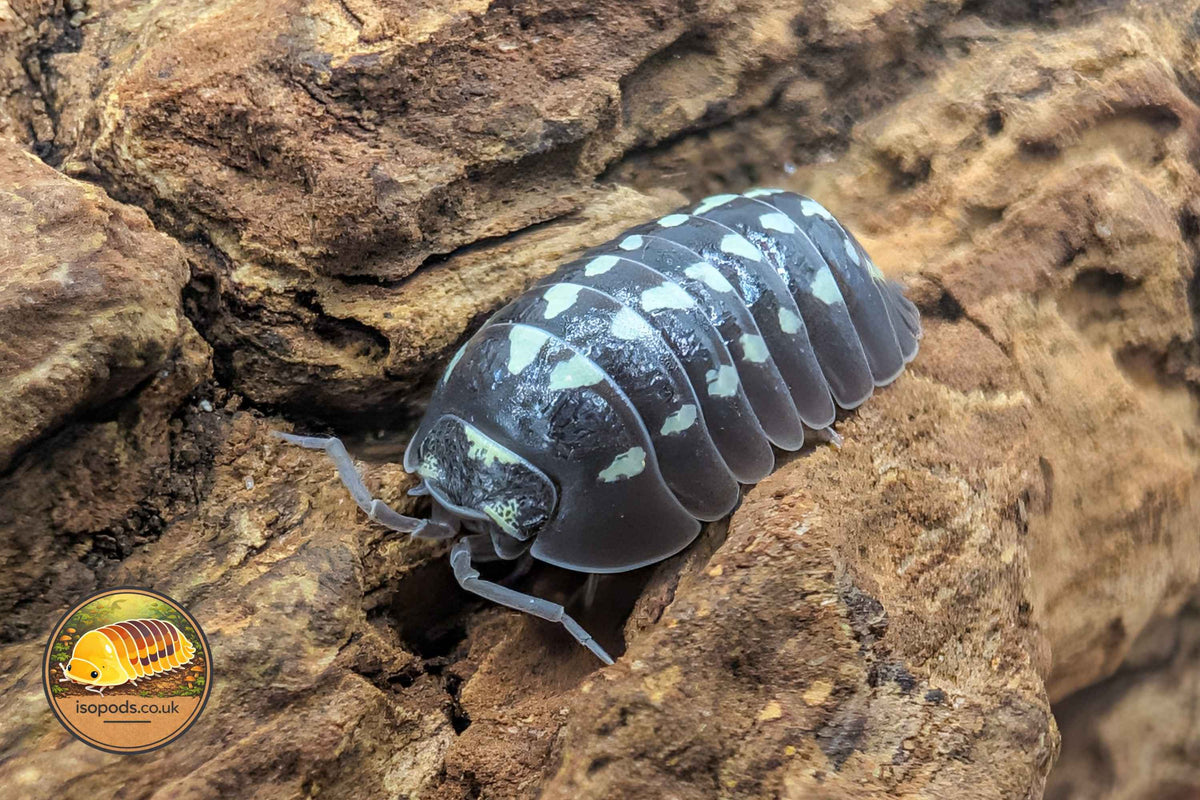
Armadillidium gestroi Zinger stands out for its brighter, more high-impact yellow patterning. Against the darker body, the markings read far more boldly than standard gestroi, giving this form a stronger display feel while still keeping the large, solid Armadillidium shape that many keepers enjoy.
This is a good choice if you want a visually striking roller isopod with more punch than classic gestroi, but without drifting into tropical-style care. Zinger still does best in the usual Armadillidium way: fresh air, plenty of leaf litter and cover, a damp refuge on one side, a drier usable side on the other, and steady access to calcium.
What makes Zinger different?
The main draw here is contrast. Zinger is best approached as the brighter yellow gestroi form, with a stronger visual hit than a more standard look. That makes it especially appealing for keepers who like bold markings and larger Armadillidium, but still want the familiar rolling defence behaviour and readable enclosure use of this genus.
-
Look: brighter yellow to neon-yellow style markings over a dark base -
Overall impression: larger-bodied, bolder-looking, and more eye-catching than standard gestroi -
Body type: classic Armadillidium roller shape with conglobation -
Viewing style: often seen around litter, bark edges, and hides rather than permanently out on bare floor
Behaviour in the enclosure
When settled, this form is often easier to spot than quieter hidden genera, but that should not be confused with constant open display. Expect them to spend time under bark, in leaf litter, and around hide edges, with movement across the ground when the enclosure feels balanced. Like other Armadillidium, they can roll up when disturbed, which is normal defensive behaviour rather than a sign that something is wrong.
A working setup usually shows them using more than one area of the tub: resting under cover, feeding around littered patches, and moving between the damp refuge and the drier side. If the whole colony is packed into one wet corner, the rest of the enclosure may be too exposed, too dry, or too stale.
Setup that suits them
Zinger should be kept as an airy Armadillidium, not as a wet tropical species. The enclosure should give them a real moisture choice: one damp refuge that stays moist underneath, plus a drier side that still has cover and leaf litter rather than bare exposed substrate.
Before ordering, it helps to have the basics ready: a strong layer of leaf litter, flat cover such as cork bark, and a steady calcium source such as limestone. If you are still building the enclosure, the isopod habitat setup guide is the best place to check moisture, airflow, and cover balance.
- Keep one side reliably damp, but do not soak the whole tub.
- Cover much of the surface with leaf litter so they can feed and move without feeling exposed.
- Add bark, cork, or flat hides for shaded undersides and shelter edges.
- Make sure the drier side is still usable, not harsh and empty.
- Provide ongoing calcium support as part of normal care.
Feeding notes
The main diet should come from the enclosure itself: leaf litter, mature substrate, and decomposing organic matter. Fresh foods are better treated as extras than as the main event. A colony like this is usually better judged by gradual grazing, litter use, and steady enclosure behaviour than by dramatic feeding rushes.
Rot wood is a useful addition because it gives them another sheltered place to sit and graze while also strengthening the long-term food base. If supplements disappear quickly but litter is running low, the enclosure is asking for more detritus, not just more treats.
Who tends to enjoy this form most?
Zinger is likely to appeal to keepers who want a brighter, more display-led Armadillidium without giving up practical, temperate-style husbandry. It suits someone who enjoys visible contrast, larger rollers, and the kind of enclosure behaviour that shows up around bark, litter, and hide edges.
It may be a weaker fit for buyers expecting nonstop open activity or for anyone planning to keep everything evenly damp. The colour is the hook here, but the colony still needs shelter, airflow, and a usable dry-to-moist gradient to show normal behaviour.
Compare before you choose
If you want to browse similar options, start with our Armadillidium isopods. If you like the gestroi look but want to compare another patterned Armadillidium with strong visual appeal, Armadillidium gestroi Milky Way is a natural next view. For broader genus-level care, the Armadillidium care guide explains how airflow, cover, moisture, and calcium work together.
Ease of care
Preferred Temperature
Preferred Humidity
Popularity
Care Instructions
Care Instructions