🔥 Daily Isopod Auctions on WhatsApp! Grab species at auction prices, discover rare finds & join our growing community. Join Here
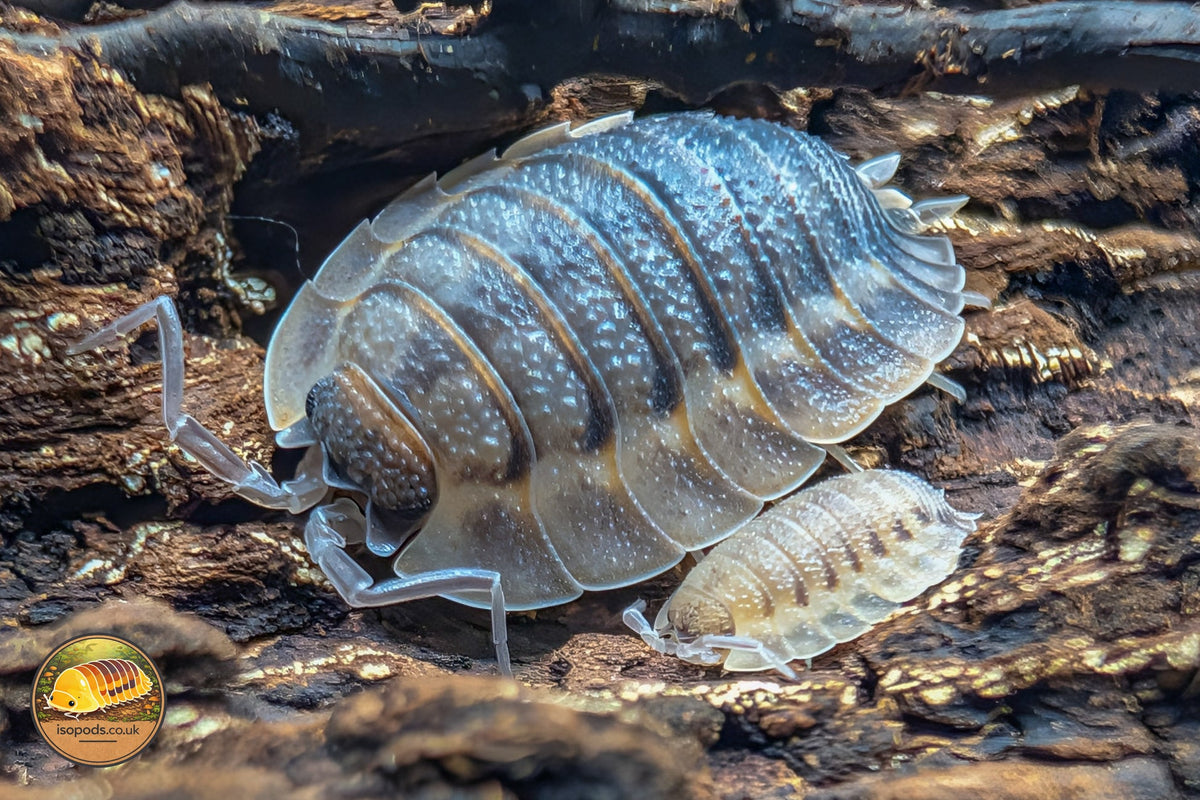
Porcellio spatulatus coros Isopod
15 in stock
Regular price
£8.00 GBP
Sale price
£8.00 GBP
Regular price
Unit price
per
Tax included.
Shipping calculated at checkout.
Couldn't load pickup availability
- Fully secure checkout
- Trusted by thousands
- Rated and reviewed
Want next day delivery? Be quick!
You just missed it!
Question about this product?
We're happy to help.
Porcellio spatulatus coros Isopods for Sale UK
Porcellio spatulatus coros stands out for shape and locality more than loud pattern. This Coros, Sardinia form has the broad, flattened, elongated look that makes spatulatus so distinctive, with a skirted outline, subtle earthy tones, contrasting margins, and occasional warmer orange highlights where present.
In practical terms, this is a Mediterranean-style Porcellio that can be rewarding to watch when settled, but it still does best in a properly ventilated enclosure with cover, leaf litter, a dependable damp refuge, and plenty of usable drier ground. If you want a Porcellio with characterful form and locality appeal rather than a bright high-contrast morph, Coros is an easy one to appreciate.
What makes Coros appealing
-
Locality interest: positioned here as a Coros, Sardinia form with distinct collector appeal. -
Body shape: notably flat, elongated, and skirted rather than rounded or chunky. -
Colour style: earthy, restrained tones with contrasting edge detail rather than loud patterning. -
Enclosure presence: often easier to observe than hidden tropical genera, especially around cover edges and food. -
Setup style: better suited to a semi-arid Porcellio approach than a wet tropical tub.
How they usually behave
This type is best approached as an active but cover-using Porcellio. When the enclosure is working well, they may be seen moving across litter, bark edges, and sheltered feeding areas rather than staying buried for long periods. That usually makes their day-to-day enclosure use easier to read than with quieter tropical genera such as Cubaris.
That said, they should not be expected to sit out constantly in the open. If the tub is too bare, too wet, or too stale, open activity often drops quickly. A colony that uses both the drier side and the damp refuge, without all packing into one hide, is usually giving better signs than one forced into a single corner.
Enclosure style that suits them
Porcellio spatulatus coros makes most sense in a ventilated setup with a clear moisture gradient. Think drier overall, but never bone dry: one reliable damp refuge, a broader drier side with cover, and enough floor space for movement.
A thick layer of leaf litter helps with both grazing and cover. Add bark or similar firm hides such as cork bark so they have shaded undersides, tight edges, and places to sit without being fully exposed. A little sphagnum moss can help keep the moist side stable, but the whole enclosure should not be kept wet.
Because this is a flatter, surface-using Porcellio style, usable space matters. A cramped tub with one wet corner and one hide usually gives poorer behaviour than an enclosure with several covered areas, dry-to-moist choice, and room to move between them.
Before you order
- Prepare a ventilated enclosure rather than a sealed humid tub.
- Set up one damp refuge and keep the rest drier but still covered.
- Use leaf litter generously, not as a light scatter.
- Add bark, cork, or stone-like hides so they can rest and feed under cover.
- Keep a calcium source available, such as limestone.
Feeding notes
The main diet should still come from detritus in the enclosure: leaf litter, decaying organic material, and a mature substrate base. Rot wood is also useful as part of the long-term food base and shelter value.
Like many Porcellio, this form may show a stronger visible response to supplemental foods than more hidden genera, including interest in richer items. That can be useful for observation, but it is also where overfeeding starts. Small amounts are safer than heavy feeding, especially near the damp side. If you want a broader feeding refresher, see what do isopods eat.
Who will enjoy this more
This is a good match for keepers who like Mediterranean Porcellio character, locality-based variation, and body shape that looks distinctive even without bright colour. It also suits buyers who prefer an enclosure they can read: movement around bark edges, feeding response, and visible use of the dry-to-moist gradient can all tell you a lot about how the colony is settling.
It may be less satisfying if your preference is for very humid tropical setups, very sparse tubs, or isopods chosen mainly for bold colour. Coros is more about form, structure, and subtle detail.
Compare before you choose
If you want to stay within the same genus, browse our Porcellio isopods. If you like the spatulatus shape but want a brighter alternative, Porcellio spatulatus White is the closest direct comparison. If you want a locality-led Porcellio with a different overall look, Porcellio expansus Prades is another worthwhile next step. For broader setup guidance, the Porcellio care guide explains how airflow, cover, feeding, and moisture balance usually work in this genus.
Ease of care
Preferred Temperature
Preferred Humidity
Popularity
Care Instructions
Care Instructions