🔥 Daily Isopod Auctions on WhatsApp! Grab species at auction prices, discover rare finds & join our growing community. Join Here
Porcellio spatulatus White Isopod
Low stock! Only 10 left
Regular price
£20.00 GBP
Sale price
£20.00 GBP
Regular price
Unit price
per
Tax included.
Shipping calculated at checkout.
Couldn't load pickup availability
- Fully secure checkout
- Trusted by thousands
- Rated and reviewed
Want next day delivery? Be quick!
You just missed it!
Question about this product?
We're happy to help.
Porcellio spatulatus White Isopods
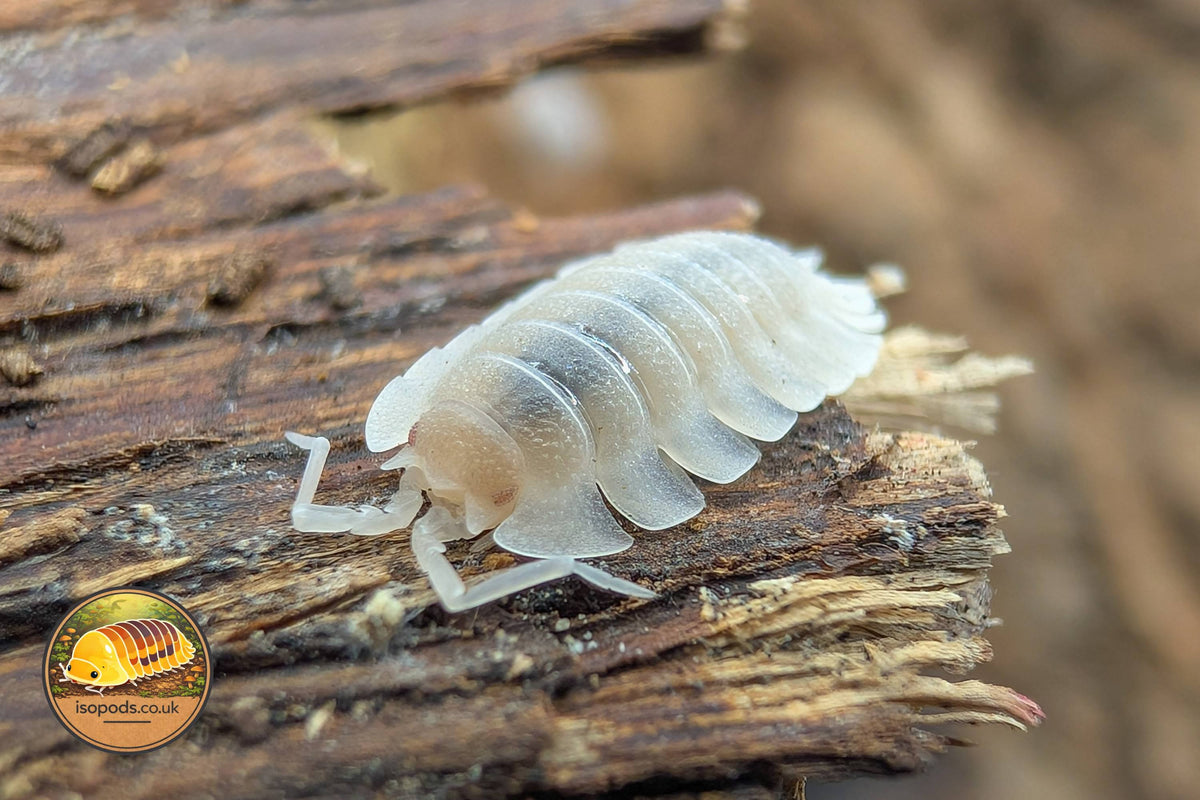
Porcellio spatulatus White stands out for its pale white colour and broad, flattened shape, giving it a clean shield-like look that contrasts strongly against dark substrate, bark, and leaf litter. If you want a Porcellio that feels visually crisp rather than heavily patterned, this is the main draw.
In the enclosure, this type is best treated as a ventilated Porcellio rather than a tropical humidity species. Expect movement around bark, leaf litter, hides, and feeding spots once settled, with a small moist refuge for hydration and moulting and mostly usable drier ground across the rest of the tub.
What makes this one different
-
Colour: clean pale white tones that stand out well against darker enclosure materials -
Shape: broad, flat Porcellio profile with a skirted, shield-like look -
Visibility style: often easier to spot around cover and feeding areas than hidden tropical genera, but not a constant open-display species -
Setup style: good airflow, bark or stone-like hides, leaf litter, mineral access, and a clear dry-to-moist gradient
How they usually use the enclosure
This is the kind of Porcellio that can be rewarding to watch when the tub gives it enough choice. Rather than sitting out on bare open substrate all day, they are more likely to move between hide edges, litter, feeding areas, and the transition between the drier side and the damp refuge.
If the enclosure is working well, you should see use of more than one covered area instead of the whole colony being compressed into one wet corner. If they only remain in the dampest patch, the rest of the tub is often too bare, too dry, or too stale to use comfortably.
Setup that suits Porcellio spatulatus White
A good setup for this species is airy, cover-rich, and not saturated. Use a substantial layer of leaf litter across much of the surface, with bark, cork, or similar hides so they can feed and move without crossing long stretches of exposed ground. cork bark works especially well for shaded undersides and hide edges.
Keep one side reliably damp below the surface, but avoid making the whole enclosure wet. The rest of the tub should stay drier on top while still offering cover and usable floor space. If you want a fuller breakdown of how to balance airflow, cover, and moisture, the isopod habitat setup guide is the best next read.
Steady mineral support is worth providing too. Limestone is a simple way to keep calcium available alongside the normal detritus-based food base.
Feeding notes
Like other Porcellio, this species should be fed as a detritivore first. The main diet should come from leaf litter, rotting organic matter, and mature substrate, with rot wood adding both grazing value and sheltered feeding spots.
They may show a clearer response to added foods than many hidden tropical isopods, but that should not tempt you into overfeeding. If leftovers spoil fast or the feeding spot turns sour, the portion is too large or the enclosure is staying too wet around food. For a broader overview, see what do isopods eat.
Who tends to enjoy this species most
This one makes the most sense for keepers who like Porcellio behaviour but want a paler, cleaner visual look than darker or more heavily marked forms. It suits setups with good ventilation, clear moisture zoning, and enough bark, litter, and hides to make the enclosure usable beyond one damp patch.
It is less likely to satisfy buyers who prefer very humid tropical tubs or who expect a species to stay in the open constantly through the day.
Before you order
- Make sure the enclosure has a true damp refuge rather than overall wet substrate.
- Add bark or cork hides before the colony arrives.
- Cover much of the surface with leaf litter instead of leaving bare substrate exposed.
- Keep calcium available from the start.
Compare next
If you want to stay within the same genus, browse the Porcellio isopods collection or compare this form with Porcellio spatulatus coros for another spatulatus option. For broader genus-level care and troubleshooting, the Porcellio care guide is the most useful next step.
Ease of care
Preferred Temperature
Preferred Humidity
Popularity
Care Instructions
Care Instructions