🔥 Daily Isopod Auctions on WhatsApp! Grab species at auction prices, discover rare finds & join our growing community. Join Here
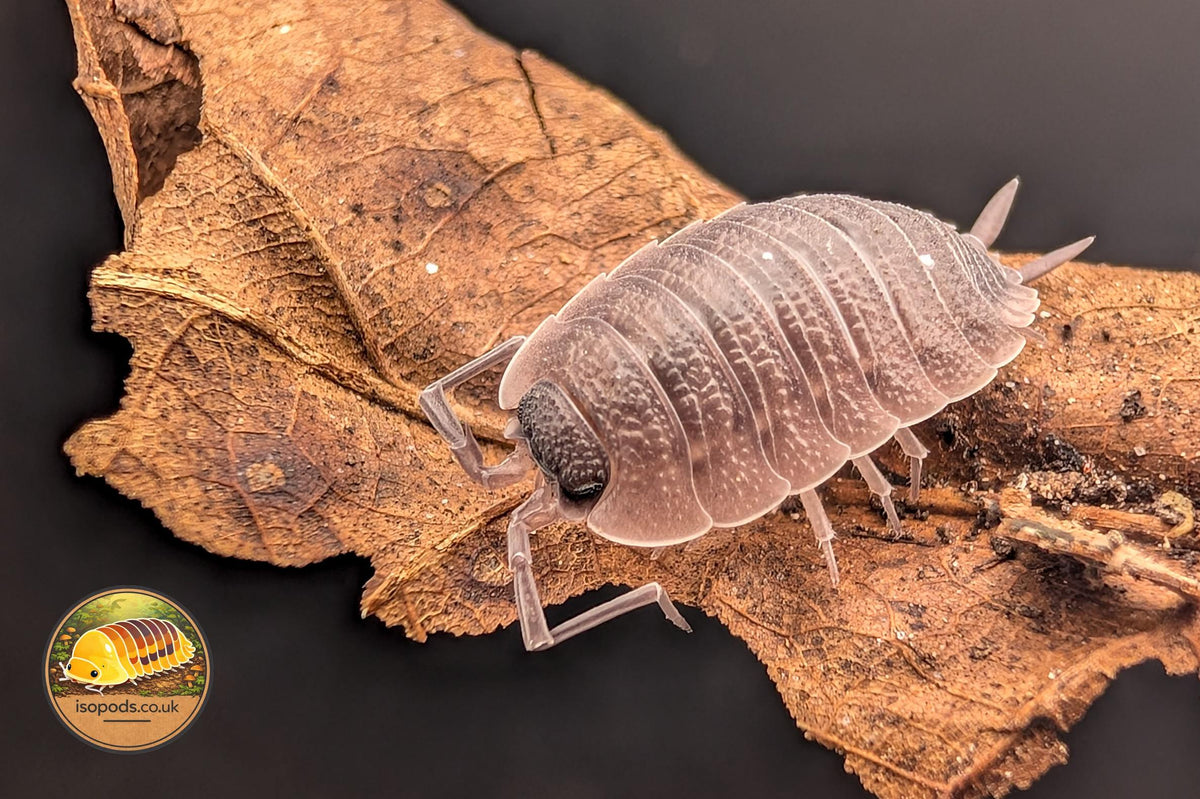
Porcellio "Silvestri" Isopod
Low stock! Only 2 left
Regular price
£15.00 GBP
Sale price
£15.00 GBP
Regular price
Unit price
per
Tax included.
Shipping calculated at checkout.
Couldn't load pickup availability
- Fully secure checkout
- Trusted by thousands
- Rated and reviewed
Want next day delivery? Be quick!
You just missed it!
Question about this product?
We're happy to help.
Porcellio "Silvestri"
Porcellio "Silvestri" stands out for its warm orange Porcellio look and the cleaner, more readable behaviour many keepers want from this genus. Once settled, they are often noticed around bark edges, leaf litter, and feeding spots more readily than hidden tropical species, while still benefiting from plenty of cover rather than a bare open tub.
This is a better fit for keepers who enjoy active enclosure use, visible food response, and a Mediterranean-style setup with airflow, a usable drier side, and a smaller stable moist refuge. It is less suited to sealed, uniformly damp tubs, which can quickly flatten their normal movement and make the colony retreat into the least bad area.
Key Traits
-
Visibility: Often easier to spot than shelter-heavy tropical genera, especially once the colony is settled and using bark, litter, and feeding areas. -
Behaviour: Active, food-aware, and more likely to use surface routes than many hidden isopods, though not constantly out in the open. -
Growth rate: Not confirmed from species-specific data; best treated as variable. -
Sensitivity: Usually less forgiving of stale, wet-everywhere tubs than of an airy setup with a clear dry-to-moist choice. -
Difficulty: Best treated as moderate, especially if you are still learning how to maintain airflow without letting the moist refuge dry out.
What makes this species appealing
The main draw here is the warm-toned Porcellio appearance. Orange shades can make the colony look brighter and cleaner in a well-balanced setup, and some keepers may also notice variation between individuals, with males sometimes appearing stronger in colour while females can look duller or greyer. That natural contrast can add interest without changing the overall care approach.
Just as important is the body shape and behaviour pattern. This is not a tropical, lower-layer species chosen for hidden life under constant humidity. It is better treated as a Porcellio that rewards a ventilated setup, covered floor space, and patient observation of how the colony moves between dry cover, transition areas, and the damp refuge.
Enclosure style that suits Porcellio "Silvestri"
A ventilated enclosure with a clear gradient usually makes the most sense here. Keep one area reliably moist for hydration and moulting, but leave the rest of the tub drier on the surface while still covered with litter, bark, or hides. If the whole enclosure stays wet, these isopods often lose the choice that makes Porcellio behaviour easier to read in the first place.
Useful setup materials include cork bark, a generous layer of leaf litter, decaying wood, and a steady calcium source such as limestone. The drier side should still feel usable, with shelter rather than empty exposed floor, so the colony can move about without being forced back into one damp corner.
If you are unsure how to balance airflow, cover, and a moist refuge without over-wetting the tub, the isopod habitat setup guide is the most useful next step.
Feeding and day-to-day care
Like other Porcellio, this species should still be fed as a detritus-first isopod. Leaf litter, decaying plant matter, mature substrate, and wood should do most of the long-term work, with fresh foods and richer items used as support rather than the foundation of the diet.
Porcellio often give a clearer feeding response than hidden genera, which can make them enjoyable to keep but also easier to overfeed. If richer foods are left too long in a humid patch, they can foul quickly. Small portions, good airflow, and a strong litter base are usually safer than trying to drive activity with frequent heavy feeding.
What to watch for after settling in
-
Good signs: use of more than one part of the enclosure, visible movement around bark or litter, and feeding that does not force the whole colony into one wet refuge. -
Check the setup if: they cluster only in the dampest corner, avoid most of the tub, or the substrate starts smelling sour or turning muddy. -
Do not assume a problem too quickly: newly arrived colonies may hide more at first, especially after shipping or rehousing.
Who is likely to enjoy this species
Porcellio "Silvestri" suits buyers who want a more readable Porcellio with warm visual appeal and a setup that feels airy rather than tropical. It can be a satisfying choice if you like watching surface movement, food response, and how a colony uses bark, litter, and open routes once it has settled.
It may be a weaker fit if you want a species for a simple wet tub, expect constant open display, or prefer very hidden tropical isopods kept in heavier humidity. For broader browsing, you can compare other options in our Porcellio isopods range or look at Porcellio despaxi if you want another same-genus comparison.
Next comparison
If you are choosing between active, visible species rather than hidden tropical types, our display isopods collection is a useful place to compare how different colonies may suit your enclosure style and expectations.
Ease of care
Preferred Temperature
Preferred Humidity
Popularity
Care Instructions
Care Instructions