🔥 Daily Isopod Auctions on WhatsApp! Grab species at auction prices, discover rare finds & join our growing community. Join Here
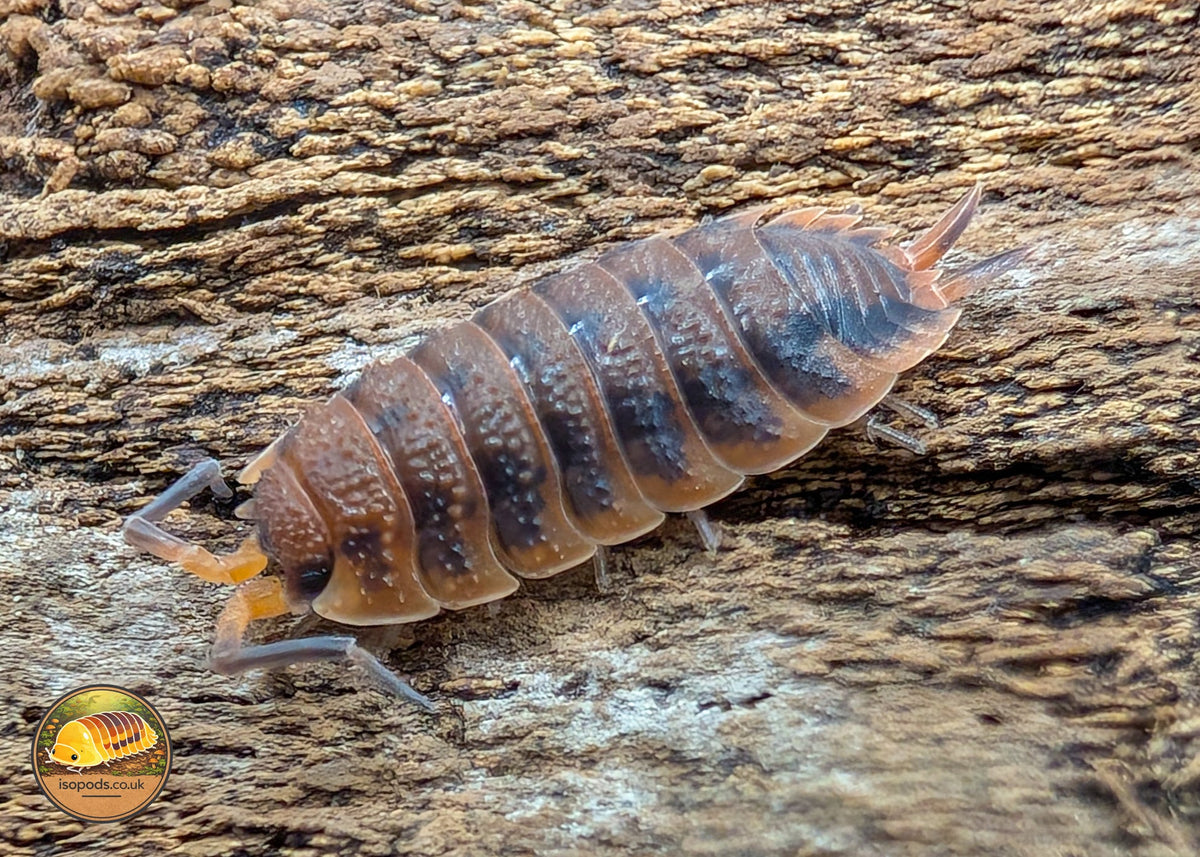
Porcellio scaber "Rusty" Isopod
20 in stock
Regular price
£8.00 GBP
Sale price
£8.00 GBP
Regular price
Unit price
per
Tax included.
Shipping calculated at checkout.
Couldn't load pickup availability
- Fully secure checkout
- Trusted by thousands
- Rated and reviewed
Want next day delivery? Be quick!
You just missed it!
Question about this product?
We're happy to help.
Porcellio scaber "Rusty" Isopods for Sale UK
Porcellio scaber "Rusty" stands out for its warm, natural colour rather than a high-contrast designer look. This morph usually shows reddish-brown, orange-brown, and weathered rust tones across the rough scaber texture, giving it an autumn-leaf, iron-stained appearance that suits keepers who like earthy colour with plenty of visible enclosure activity.
In practice, Rusty is best approached as a practical Porcellio scaber morph: often easier to spot than hidden tropical species, usually more readable around food and hide edges, and well suited to a ventilated setup with leaf litter, bark, a damp refuge, and a drier usable side.
What makes Rusty appealing
The main draw here is the combination of colour and behaviour. Rusty has the familiar rough-bodied scaber look, but with a warmer palette that feels more naturalistic than flashy. When settled, they are often seen moving around leaf litter, bark edges, feeding areas, and the transition between the damper and drier parts of the enclosure.
That makes this morph a strong choice for buyers who want a scaber they can enjoy both visually and practically. You are not choosing it for specialist tropical secrecy or novelty claims. You are choosing it for warm colour, useful day-to-day visibility, and classic Porcellio behaviour.
How they usually behave in the enclosure
-
More surface-readable than many tropical genera: often seen around hides, food, and litter rather than staying buried for long periods. -
Good feeding feedback: Porcellio often show a clearer response to food than quieter, more shelter-bound species. -
Best with choice: they usually use the enclosure better when they have cover across both the damp and drier areas. -
Less happy in stale wet tubs: if the whole setup stays soggy, behaviour often becomes more compressed and less natural.
If you want broader genus context before buying, the Porcellio care guide explains how airflow, feeding, and moisture balance affect this type of colony.
Setup before ordering
Prepare this morph like a typical Porcellio rather than like a humid hidden tropical species. The enclosure should have a reliable damp refuge on one side, a drier side that still has cover, and enough airflow to stop the substrate from becoming stale.
A thick layer of leaf litter should cover much of the surface so they can graze and move without sitting on bare substrate. Bark helps create shaded undersides and hide edges, while rot wood adds long-term feeding value and extra shelter. If you are building or correcting the enclosure first, the isopod habitat setup guide is the clearest place to check moisture zoning and airflow.
Keep the goal simple: fresh air, covered ground, a dependable moist area, and dry real estate they can actually use.
Feeding priorities
This is still a detritus-first isopod. The main diet should come from leaf litter, decaying organic matter, mature substrate, and wood-based grazing rather than from constant fresh feeding. Porcellio often respond strongly when richer foods are added, but that visible response can tempt keepers to overfeed.
Offer supplements in modest amounts and remove leftovers if they linger. A steady calcium source is also worth keeping available, and limestone is an easy way to do that without complicating the setup.
Who tends to enjoy this morph most
Rusty tends to suit buyers who want a scaber with a warmer, more natural colour tone and behaviour that is easier to follow than many hidden tropical isopods. It can be a satisfying option if you like seeing where the colony feeds, which hides it prefers, and how it uses the damp-to-dry gradient over time.
It may be a poorer fit if you are specifically building a very humid tropical enclosure, or if you want a species chosen mainly for rarity or very unusual patterning rather than practical display value.
Common setup mistakes to avoid
-
Keeping the whole tub wet: this removes the dry-to-moist choice Porcellio usually uses well. -
Leaving the dry side too bare: they may avoid it if it has no litter, bark, or nearby shelter. -
Relying on rich food instead of enclosure food: strong feeding response does not mean fresh food should become the main diet. -
Ignoring airflow: a sour smell, messy food patches, or a colony packed into one damp area often point to stale moisture rather than a lack of humidity.
If you are comparing before buying
If you want to browse more genus-level options with similar broad behaviour, start with the Porcellio isopods collection. If you want a comparison with another commonly chosen, food-responsive Porcellio, Porcellio laevis "Milkback" is another useful one to consider. If you are after a darker, heavier-looking contrast within the genus, Porcellio haasi Dark Form offers a very different visual direction.
Ease of care
Preferred Temperature
Preferred Humidity
Popularity
Care Instructions
Care Instructions