🔥 Daily Isopod Auctions on WhatsApp! Grab species at auction prices, discover rare finds & join our growing community. Join Here
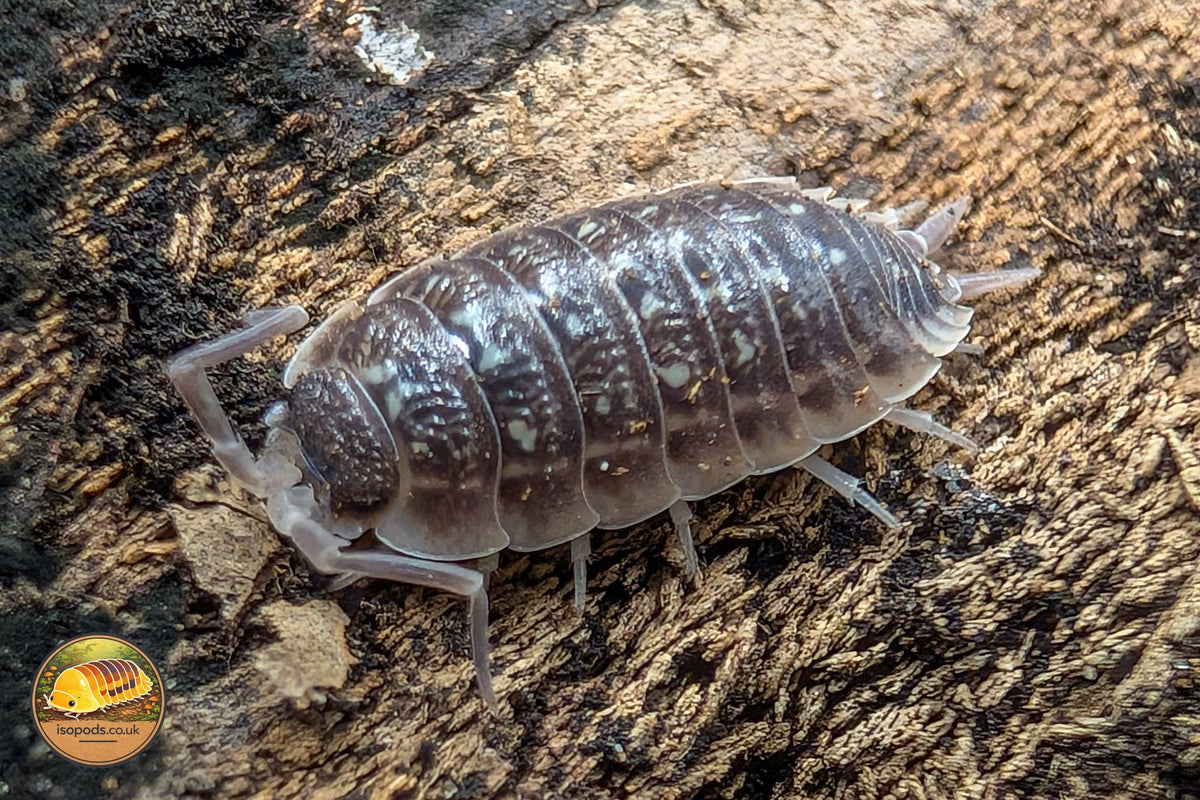
Porcellio haasi Dark Form Isopod
Low stock! Only 10 left
Regular price
£12.50 GBP
Sale price
£12.50 GBP
Regular price
Unit price
per
Tax included.
Shipping calculated at checkout.
Couldn't load pickup availability
- Fully secure checkout
- Trusted by thousands
- Rated and reviewed
Want next day delivery? Be quick!
You just missed it!
Question about this product?
We're happy to help.
Porcellio haasi Dark Form Isopods for Sale UK
Porcellio haasi Dark Form stands out for its large Spanish Porcellio shape, darker silvery body tone, and ornate yellow marking detail. It has the longer-bodied, more substantial look many keepers want from a displayable Porcellio, with males especially noted for their elongated uropods adding to that stretched, showy outline.
When settled well, this form is often easier to observe than hidden tropical species. Rather than spending most of its time deep below the surface, it may be seen moving around bark edges, feeding spots, and the dry-to-damp transition, making it a strong choice for keepers who enjoy visible enclosure behaviour as much as colour and pattern.
What makes this form stand out
-
Look: darker silvery body colour set off by yellow patterned detail -
Build: large, elongated Porcellio shape with a strong surface presence -
Male appearance: longer uropods give mature males a more dramatic outline -
Behaviour: alert, active, and often easier to spot than quieter tropical genera -
Style of setup: airy enclosure with floor space, bark, leaf litter, calcium, and a damp refuge rather than high humidity everywhere
Display character and enclosure use
This is a Porcellio type that suits keepers who like to watch movement. In a balanced enclosure, you may notice individuals crossing open patches, using bark undersides and edges, and appearing quickly around food. That does not mean nonstop visibility, but it is usually a more readable species than forms that stay buried under litter for long periods.
The darker body tone and yellow detail also reward that extra visibility. This is part of the appeal: not just activity, but activity in an isopod with a larger, more ornate look.
Setup style that suits Porcellio haasi Dark Form
This species is best approached as a Spanish Porcellio from drier, hill or mountain-linked habitat patterns rather than as a humid tropical enclosure species. Give it airflow, usable floor space, bark or cork hides, and a clear moisture gradient instead of a wet tub from end to end.
A good enclosure usually includes a substantial layer of leaf litter, bark pieces for shelter, and a lower substrate layer that holds some moisture without becoming muddy. One side should stay reliably damp under cover, while the rest of the enclosure should remain drier on the surface but still usable, with places to hide rather than bare open ground.
Cork bark works well here because it creates shaded undersides, hide edges, and resting spots without closing the whole enclosure up. If you are unsure how to balance cover, airflow, and a damp refuge, the isopod habitat setup guide is the best next read.
Food base and mineral support
Like other Porcellio, this form should not be fed as if fresh food is the whole diet. The enclosure itself should do most of the work. Keep leaf litter available at all times, and include rot wood so the colony has long-term grazing value as well as sheltered feeding areas.
Supplemental foods can bring a clear feeding response, but that should not lead to heavy overfeeding. If leftovers sit too long or the feeding area turns sour, reduce the amount and rely more on the detritus base. Ongoing calcium support is also worth providing, and limestone is a practical option to keep available.
Before you order
This species is a better fit if you already plan to give it room to move, an airier setup, and a proper dry-to-damp gradient. It is less suitable for a flat, uniformly wet enclosure or for buyers who mainly want a hidden tropical style colony.
If your usual setup style is wetter and more enclosed, it may be worth comparing your expectations first with the broader Porcellio isopods range, where the more ventilated Porcellio approach makes more sense across the group.
Common setup mistakes
-
Keeping the whole tub damp: this can reduce normal movement and leave the colony using the least stale area rather than the enclosure properly -
Too little cover on the dry side: even active Porcellio use bark, litter, and hide edges; they are less likely to use a bare exposed surface -
Overfeeding rich foods: visible feeding response is useful, but leftovers can foul an airy enclosure surprisingly quickly -
Not keeping calcium available: mineral support is best treated as routine support, not an occasional extra
Compare before you choose
If you want another large Porcellio with a different overall look, Porcellio werneri is a useful comparison. If you are still deciding whether this active, ventilated style is right for you, the Porcellio care guide gives a broader view of how this genus differs from wetter tropical isopod setups.
Ease of care
Preferred Temperature
Preferred Humidity
Popularity
Care Instructions
Care Instructions