🔥 Daily Isopod Auctions on WhatsApp! Grab species at auction prices, discover rare finds & join our growing community. Join Here
Porcellio werneri Isopod
Low stock! Only 7 left
Regular price
£25.00 GBP
Sale price
£25.00 GBP
Regular price
Unit price
per
Tax included.
Shipping calculated at checkout.
Couldn't load pickup availability
- Fully secure checkout
- Trusted by thousands
- Rated and reviewed
Want next day delivery? Be quick!
You just missed it!
Question about this product?
We're happy to help.
Porcellio werneri Isopods for Sale UK
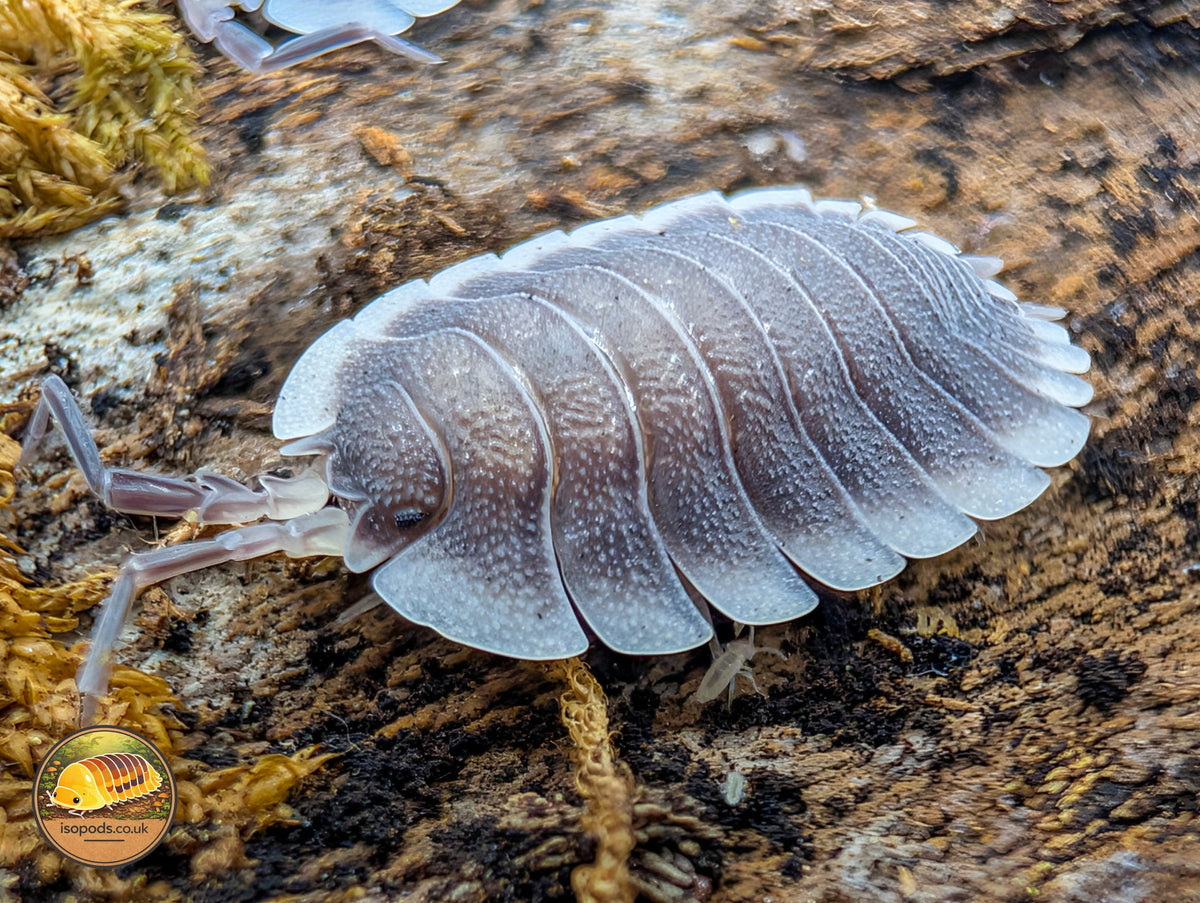
Porcellio werneri, often known as the Greek Shield isopod from Crete, stands out for shape more than colour. The body is unusually broad and flat, with a dark centre framed by a pale white to cream outer skirt, giving the whole animal a distinctive shield-like, almost prehistoric look that few other Porcellio match.
This is a strong choice for keepers who want a showpiece species with readable behaviour rather than a hidden tropical colony. When settled, P. werneri is often seen moving with purpose across leaf litter, around bark or stone-like hides, and along the drier parts of the enclosure, while still relying on a small dependable moist area for hydration and moulting.
The visual draw
-
Classic Greek Shield look: extremely wide, flat body profile rather than a colour-morph style presentation -
Pattern contrast: dark central colour with a pale white or cream edge -
Enclosure presence: often more satisfying when viewed as a moving surface species than as a constantly hidden detritus worker -
Collector appeal: chosen for form, outline, and overall silhouette as much as for behaviour
How they behave in the enclosure
Porcellio werneri is best approached as an active but deliberate Porcellio. It can be easier to observe than many humid tropical genera, but that does not mean it should be expected to sit out in the open all day. Normal sightings are more likely around hide edges, litter cover, food spots, and open routes between sheltered areas than in a bare exposed tub.
If the enclosure suits them, they often make practical use of floor space and surface cover rather than staying packed into one damp corner. If the whole colony spends long periods crammed into the wettest part of the tub, that usually points to too much overall humidity, stale air, or a dry side that feels too bare to use safely.
Setup style that suits P. werneri
This species fits a drier, well-ventilated Mediterranean-style setup better than a humid tropical one. Give them space to move, a clear drier area, bark or stone-like hides, and plenty of leaf litter so they can travel and feed without being forced onto open bare substrate.
A small moist refuge should still be present at all times, but it should stay localised rather than turning the whole enclosure damp. Good airflow matters. A wet, enclosed tub can make this species harder to read, reduce normal movement, and leave the colony gathered in the least bad area instead of spreading naturally.
Tree bark or similar cover works well for shaded undersides and hide edges, while limestone is worth keeping available as a steady calcium source. If you need a broader reference for balancing airflow, cover, and moisture, the isopod habitat setup guide is the most useful next read.
Feeding priorities
The main diet should still come from the enclosure itself: leaf litter, decomposing organic matter, mature substrate, and sheltered grazing surfaces. Fresh foods can be useful support, and many Porcellio show a clear feeding response, but supplements should not replace the detritus base.
If fresh foods disappear quickly while the litter layer stays thin, the food base is probably too weak. If rich foods sit too long in a dry-warm enclosure, they can foul quickly, so smaller amounts are usually safer than heavy feeding.
Before you order
- Prepare a ventilated enclosure with a proper dry-to-moist gradient, not a uniformly damp tub.
- Make sure the drier side still has cover, not just exposed substrate.
- Add leaf litter generously before the colony arrives.
- Include bark or similar firm hides so they can rest and move under cover.
- Keep a small moist refuge reliable rather than soaking the whole setup.
Who usually enjoys this species most
P. werneri tends to appeal most to keepers who like unusual body shape, clear species identity, and enclosure behaviour they can actually watch develop. It suits someone aiming for an airy Porcellio setup with floor space, shelter, and a controlled moist area.
It is less suited to buyers looking for a humid tropical setup, a very sparse enclosure style, or a species chosen mainly for bold colour morph variation.
Compare before you choose
If you want to browse similar options, start with the Porcellio isopods collection. If you like large, striking Porcellio with strong visual presence, Porcellio hoffmannseggii "Yeti" is a useful comparison. If you want to stay within this species line but look at a different presentation, compare with Porcellio werneri Silverback. For broader husbandry background across the genus, see the Porcellio care guide.
Ease of care
Preferred Temperature
Preferred Humidity
Popularity
Care Instructions
Care Instructions