🔥 Daily Isopod Auctions on WhatsApp! Grab species at auction prices, discover rare finds & join our growing community. Join Here
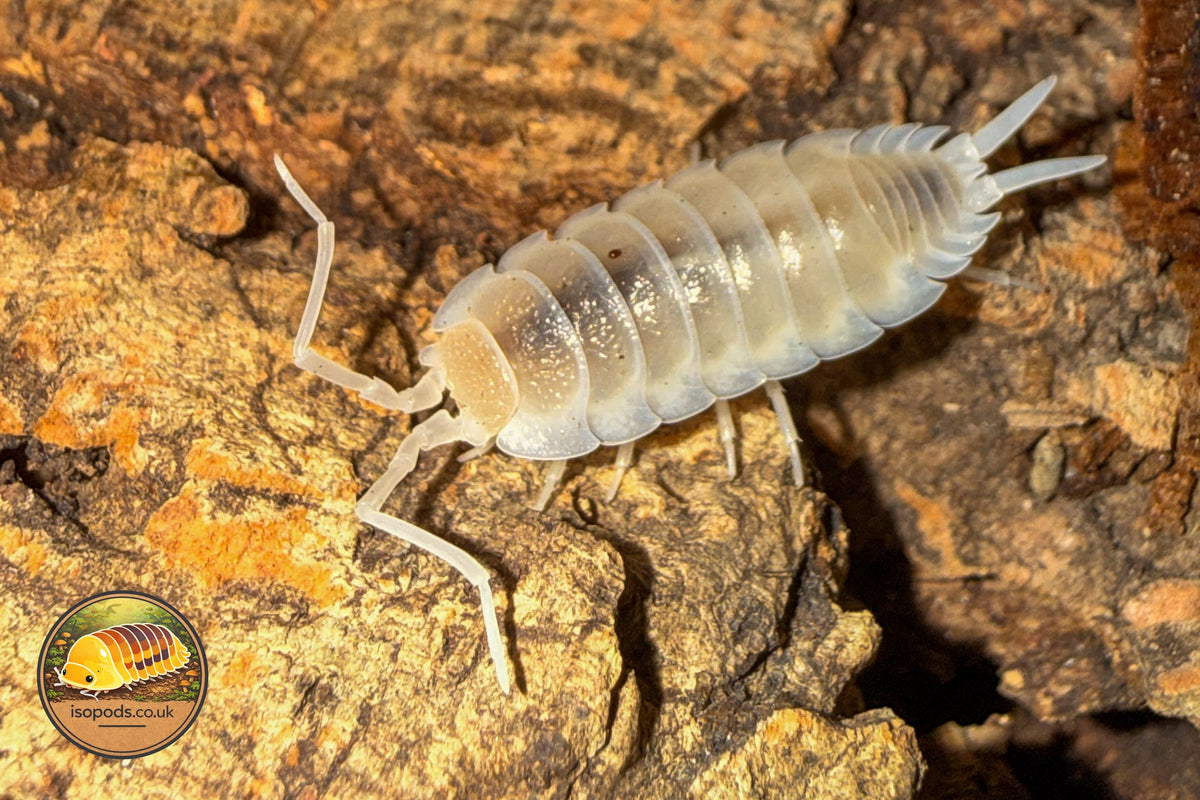
Porcellio hoffmannseggii "Yeti" Isopod
Low stock! Only 4 left
Regular price
£30.00 GBP
Sale price
£30.00 GBP
Regular price
Unit price
per
Tax included.
Shipping calculated at checkout.
Couldn't load pickup availability
- Fully secure checkout
- Trusted by thousands
- Rated and reviewed
Want next day delivery? Be quick!
You just missed it!
Question about this product?
We're happy to help.
Porcellio hoffmannseggii "Yeti" Isopods for Sale UK
Porcellio hoffmannseggii "Yeti" stands out for its giant, elongated Porcellio shape and its icy white look. This pale Iberian titan-style morph is especially striking as adults, with a frosty overall tone, pale yellow highlights, white eyes, and the long-bodied presence that makes hoffmannseggii such a standout in larger Porcellio projects.
In enclosure terms, this is best treated as a large, active Porcellio from the Spanish / Iberian Peninsula side of the hobby rather than a hidden tropical type. It usually suits keepers who want impressive adult size, clearer surface activity than Cubaris, and a species that rewards space, airflow, cover, and a properly managed moisture gradient.
What makes "Yeti" different
-
Look: frosty white overall colour with pale yellow warmth in places, giving an albino-style appearance. -
Presence: large adult size and a long, stretched Porcellio body shape give this morph real visual weight. -
Genus style: more active and more openly readable than many tropical collector isopods, but still not a species for bare tubs. -
Collector appeal: combines giant Porcellio scale with a much paler, colder colour impression than darker titan-style options.
How they use the enclosure
A settled colony may be seen moving around bark edges, leaf litter, feeding spots, and the transition between the drier side and the damp refuge. Large Porcellio often give more obvious movement and feeding feedback than hidden tropical genera, but visibility still depends on the enclosure feeling safe enough to use.
Because this is a large, space-demanding species, cramped or oversaturated tubs tend to read badly. If they spend all their time compressed into one wet corner, avoiding the open floor completely, or clustering only under the dampest hide, the setup is usually too wet, too exposed, or too stale. These isopods tend to do better when they have room to move, several hides, and dry-to-moist choice rather than one soaked zone doing all the work.
Setup that suits a giant Porcellio
Think broad floor space, strong ventilation, and more than one useful hide. Leaf litter should cover much of the surface, with bark, cork, or stone-like shelters giving shaded undersides and tighter edges to rest against. A damp refuge should stay reliable on one side, while the rest of the enclosure stays drier on the surface but still covered enough to use.
For a species like this, the drier side should not be empty display space. It should still hold litter, hides, and routes back toward moisture. If you are building or correcting that balance, the isopod habitat setup guide is the most useful place to start.
Airflow matters more here than it does with tropical Cubaris-style keeping. A sealed wet tub can suppress normal movement and foul food quickly. On the other side, letting the enclosure dry too hard can force the colony into the only damp patch left. Aim for a dependable moist refuge and broad usable drier areas, not a uniformly wet box.
Feeding priorities
The main diet should still come from leaf litter, decaying plant matter, and a mature enclosure base. Fresh foods are support items, not the foundation. Large Porcellio often show a stronger response to richer foods, but that should not be an excuse to overfeed.
Offer protein in moderation and watch how quickly it is used. Leftovers can sour quickly, especially if they are dropped near the moist side or into stale pockets. For the broader feeding logic behind that, see what do isopods eat.
Consistent calcium access is also worth providing for a heavy-bodied species like this. A piece of limestone works well as a long-term mineral source without turning feeding into a supplements-only routine.
Before you order
- Prepare an enclosure with good airflow rather than a sealed humid tub.
- Make sure there is a real damp refuge, not just occasional misting.
- Add bark, cork, or firm hides with shaded undersides.
- Cover much of the floor with leaf litter before the colony arrives.
- Leave enough drier usable ground for a large Porcellio to move and feed confidently.
Who usually enjoys this species most
This is a strong choice for keepers who want a large, visually distinctive Porcellio with obvious adult presence and more readable behaviour than many hidden tropical species. It makes more sense for collectors who enjoy building roomy, ventilated enclosures and paying attention to airflow, feeding response, and how the colony spreads through the tub over time.
It is a poorer fit for buyers who prefer very wet setups, minimal floor space, or species that are expected to thrive in simple sparse tubs. If your usual style is closer to humid tropical keeping, it is safer to adjust the enclosure first rather than treating this like a Cubaris project.
Compare before you choose
If you want to stay within the same genus, browse the Porcellio isopods collection for other active, airflow-loving options. For another premium pale Porcellio comparison, Porcellio Werneri Silverback is worth a look. If you want the broader husbandry picture for this genus before deciding, the Porcellio care guide explains how these larger, more active species usually behave in practice.
Ease of care
Preferred Temperature
Preferred Humidity
Popularity
Care Instructions
Care Instructions