🔥 Daily Isopod Auctions on WhatsApp! Grab species at auction prices, discover rare finds & join our growing community. Join Here
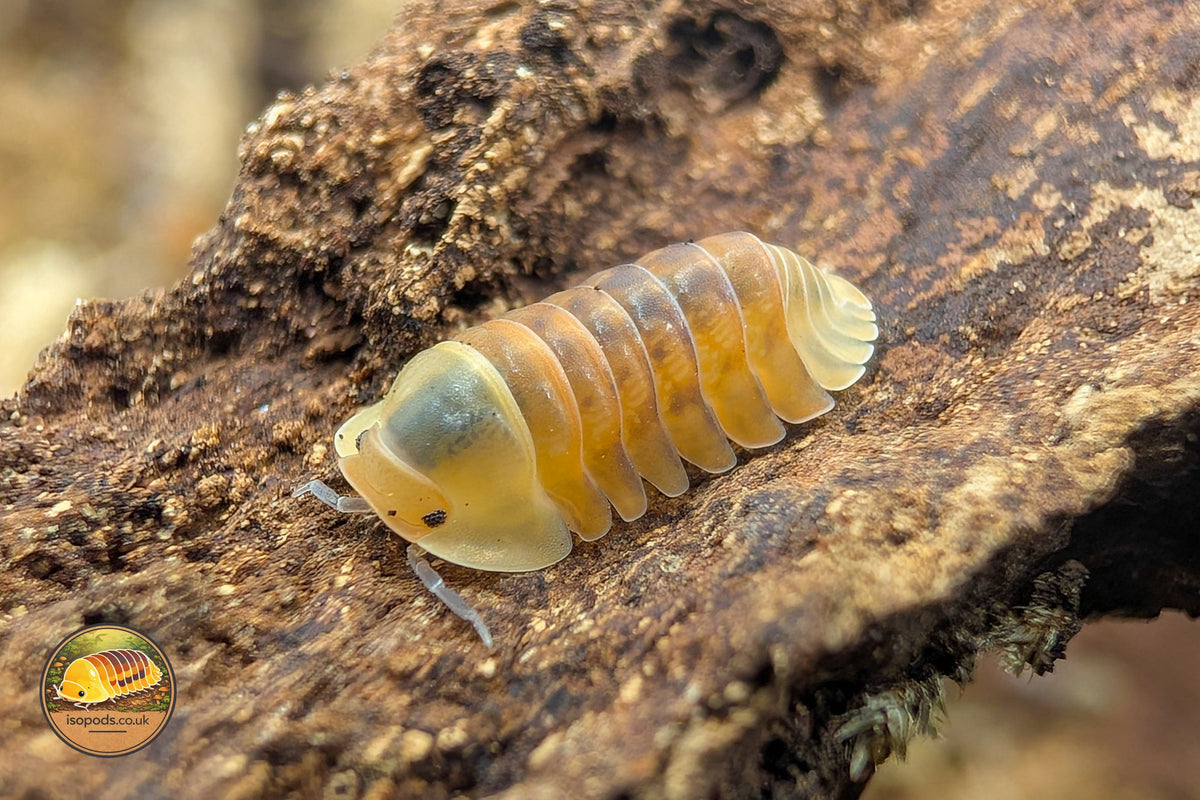
Cubaris Rubber Ducky Blonde Isopod
Low stock! Only 10 left
Regular price
£45.00 GBP
Sale price
£45.00 GBP
Regular price
Unit price
per
Tax included.
Shipping calculated at checkout.
Couldn't load pickup availability
- Fully secure checkout
- Trusted by thousands
- Rated and reviewed
Want next day delivery? Be quick!
You just missed it!
Question about this product?
We're happy to help.
Cubaris Rubber Ducky Blonde Isopods for Sale UK
Cubaris Rubber Ducky Blonde stands out for the same duck-faced silhouette that made Rubber Ducky famous, but with a softer, lighter look. This variation is best approached as a pale, cleaner-toned Rubber Ducky type, with cream, blonde, pale yellow, or almost white-blonde body colour and less of the darker contrast seen in standard darker forms.
That visual appeal is the main reason to choose this morph, but it still behaves like a specialist Cubaris. Expect a colony that spends much of its time under bark, leaf litter, rotten wood, and other covered humid spots rather than out on open substrate. It suits keepers who want a refined collector piece and are happy to build the kind of stable, sheltered enclosure it needs.
What makes Blonde Rubber Ducky different
-
Look: softer blonde, cream, and pale yellow tones with a gentler overall contrast -
Shape: the familiar upturned "duck-like" face that makes Rubber Ducky types so recognisable -
Open visibility: usually limited, especially during the day or while settling -
Colony style: shelter-focused, cautious, and better judged by steady enclosure use than constant sightings -
Keeper appeal: stronger fit for patient collectors than for display-first buyers
Collector appeal
If you already like Rubber Ducky types, this morph offers a lighter and more refined take on that look. The appeal is not just the face shape, but the softer palette around it: less heavy dark banding, more pale body tone, and a cleaner overall impression when viewed under bark or in a feeding pocket.
It is still important to keep expectations realistic. This is not the kind of Cubaris you buy for constant open activity. A settled colony can still spend long periods hidden, and that can be completely normal when the enclosure is humid, covered, and functioning properly.
Setup that suits this species
Blonde Rubber Ducky usually does best in a deeper, humid enclosure with plenty of cover. A good setup should include heavy surface leaf litter, pieces of cork bark for shaded undersides and tight hiding places, and rot wood as both shelter and long-term grazing material.
Keep one damp refuge reliable without soaking the whole tub. A pocket of sphagnum moss can help hold moisture in that safer damp area, while the rest of the enclosure should still include covered, usable ground rather than a bare exposed dry side. Blonde Rubber Ducky is usually easier to settle when it can move between humid cover, litter, and bark without crossing too much open space.
As with many Cubaris, humidity matters, but stale wet conditions are a common mistake. If the enclosure smells sour, stays muddy, or shows heavy condensation across too much of the tub, it is usually better to improve airflow and restore a damp refuge plus a drier covered side than to keep adding water.
Before you order
This species is easier to establish when the enclosure is ready first, not built after arrival. Prepare deep substrate, a thick layer of leaf litter, bark hides, rotten wood, and a dependable calcium source such as limestone before the colony goes in. Repeated rehousing or constant checking can slow settling and make a quiet species seem absent.
Feeding and day-to-day expectations
Like other Cubaris, Blonde Rubber Ducky should be treated as detritus-first. Leaf litter, rotten wood, mature substrate, and decomposing organic matter should carry most of the diet. Fresh foods can be offered in small amounts, but they should stay secondary to the enclosure food base.
Do not assume low visible feeding means the colony is failing. Much of the feeding may happen under bark, under litter, or in other covered damp areas. Consistent mineral access is usually worth providing, and if you run humid enclosures for longer periods, tropical springtails can help keep feeding areas cleaner.
Who usually enjoys this morph most
This is a better match for keepers who enjoy collector Cubaris, slower observation, and carefully prepared tropical setups. If you like opening a hide and finding pale duck-faced isopods tucked into bark edges, moss pockets, or leaf litter, this morph has a lot of appeal.
It may be less satisfying if you want frequent open movement, quick visual feedback, or a species that forgives a sparse or fast-drying enclosure.
Compare before you choose
If you want to browse more sheltered tropical options, the Cubaris collection is the best next stop. If you want a darker standard comparison, view Cubaris Rubber Ducky. If you prefer a different ducky-style variation with its own look, Cubaris Cliff Ducky is also worth comparing. For broader husbandry reading before ordering, the Cubaris care guide explains enclosure balance, feeding, and common settling mistakes in more detail.
Ease of care
Preferred Temperature
Preferred Humidity
Popularity
Care Instructions
Care Instructions