🔥 Daily Isopod Auctions on WhatsApp! Grab species at auction prices, discover rare finds & join our growing community. Join Here
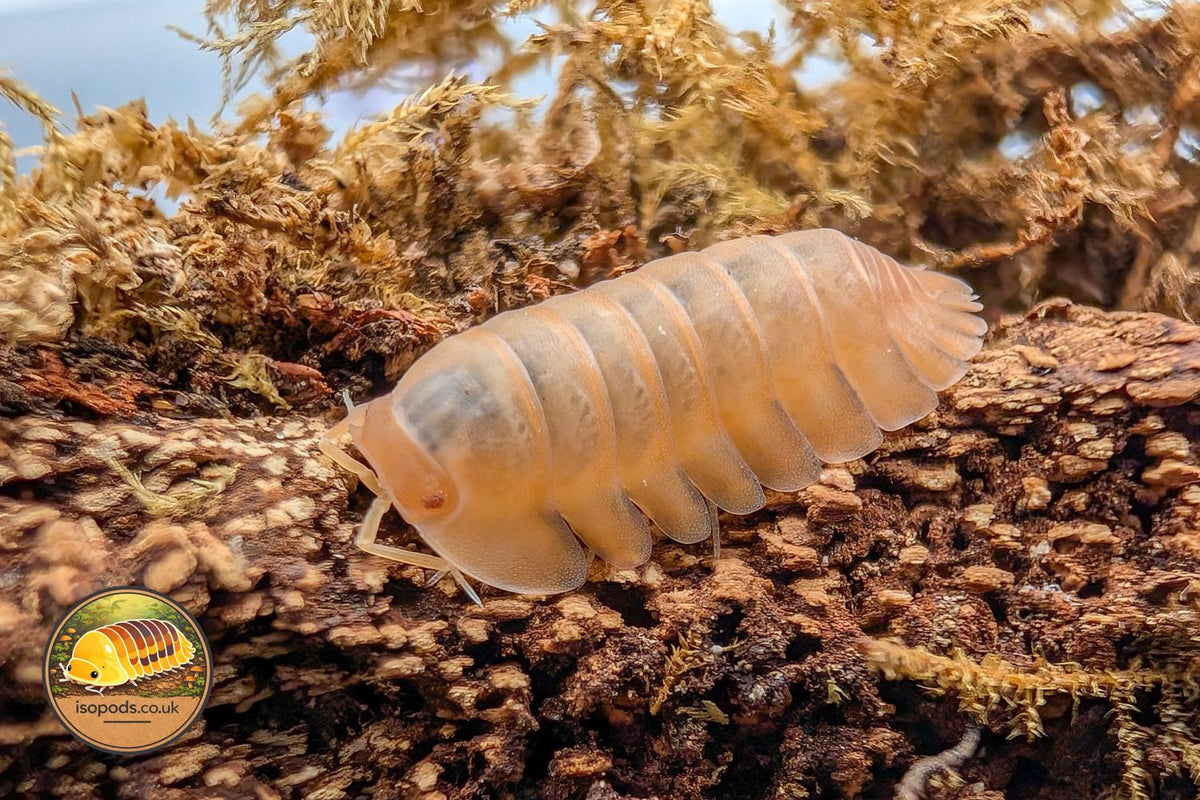
Cubaris "Red Edge Peach" Isopod
Low stock! Only 7 left
Regular price
£25.00 GBP
Sale price
£25.00 GBP
Regular price
Unit price
per
Tax included.
Shipping calculated at checkout.
Couldn't load pickup availability
- Fully secure checkout
- Trusted by thousands
- Rated and reviewed
Want next day delivery? Be quick!
You just missed it!
Question about this product?
We're happy to help.
Cubaris "Red Edge Peach" Isopods for Sale UK
Cubaris "Red Edge Peach" stands out for its softer Red Edge look: peach to pink-peach body tones, gentler blending across the shell, and that distinctive red edging still tracing the outline. Compared with brighter Red Edge forms, this one feels more natural and understated, which is a big part of its appeal for collectors who prefer subtler colour.
In the enclosure, though, it should still be treated like a Cubaris. Expect a humid setup with deep substrate, plenty of leaf litter, decaying wood, bark hides, steady calcium access, and enough airflow to keep the enclosure fresh rather than stale. This is not the right choice if your main goal is constant open visibility.
What makes Red Edge Peach different
The key draw here is tone. Red Edge Peach keeps the defining red skirt or edging that gives the group its outline, but the main body colour is softer and more blended than the sharper, brighter look seen in Cubaris Red Edge Orange. If Orange feels bolder and more contrast-led, Peach is the calmer, more refined version.
-
Colour impression: peach, pink-peach, and softly blended warm tones -
Outline: the red edging still helps define the body shape -
Overall feel: more muted and natural-looking than brighter Red Edge forms -
Viewing expectation: best appreciated as a collector Cubaris rather than a constant display animal
How they usually behave
This type is more likely to be found under bark, among litter, or around damp sheltered areas than walking openly across bare substrate. Brief appearances can happen around food or when the colony is well settled, but quiet enclosure use is more typical than bold surface roaming.
That does not automatically mean anything is wrong. A healthy colony may still stay mostly hidden if it is using several covered areas, the enclosure smells earthy rather than sour, and the damp refuge stays reliable. It is more concerning when the whole group ends up packed into one wet corner because the rest of the tub has become too dry, too bare, or too stale.
Best setup before they arrive
Prepare this species for a sheltered tropical enclosure, not a sparse tub. Deep substrate, bark or cork bark, leaf litter across most of the surface, and decaying wood all help create the covered feeding and hiding areas Cubaris usually use best.
One side should hold a dependable damp refuge, which can be buffered with sphagnum moss, while the rest of the enclosure stays covered but not soaked. The aim is not to keep everything wet. Give them a moist side, a drier usable side with cover, and enough airflow that the enclosure stays humid without turning stagnant.
Consistent mineral access is also worth setting up from the start. Limestone is a practical long-term option for Cubaris colonies.
Who tends to enjoy this one most
Red Edge Peach makes most sense for keepers who buy with their eyes but keep with patience. If you enjoy subtle colour work, sheltered tropical setups, and checking under bark or litter rather than expecting constant open movement, this morph is likely to feel rewarding.
If you mainly want frequent visible activity, faster feedback from the enclosure, or a species that spends more time out in the open, another comparison may suit you better.
Feeding notes worth knowing
Like other Cubaris, this is best treated as detritus-first. Leaf litter, decaying wood, and mature substrate should do most of the feeding work, with fresh foods used more as occasional extras than the foundation. If you want a broader overview of what a colony actually uses over time, see what do isopods eat.
Quiet feeding under cover is normal, so do not judge the colony only by how dramatic its response to fresh food looks.
Compare before you decide
If you like the Red Edge pattern but want something brighter and more contrast-heavy, compare this morph with Red Edge Orange. If you prefer a softer Cubaris look and already keep humid, cover-rich setups, Peach is the more understated choice. You can also browse the wider Cubaris isopods range for other sheltered tropical species with a similar keeper style.
Ease of care
Preferred Temperature
Preferred Humidity
Popularity
Care Instructions
Care Instructions