🔥 Daily Isopod Auctions on WhatsApp! Grab species at auction prices, discover rare finds & join our growing community. Join Here
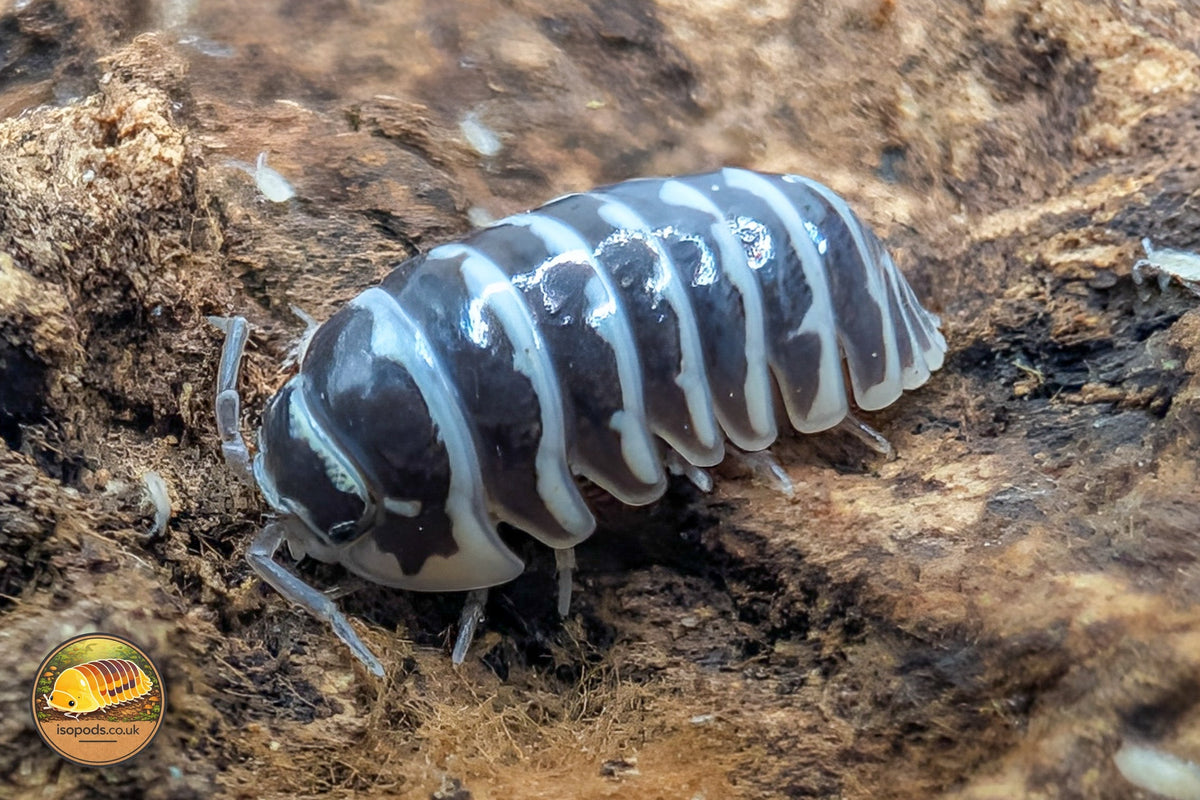
Armadillidium maculatum (White Zebra) Isopod
15 in stock
Regular price
£8.00 GBP
Sale price
£8.00 GBP
Regular price
Unit price
per
Tax included.
Shipping calculated at checkout.
Couldn't load pickup availability
- Fully secure checkout
- Trusted by thousands
- Rated and reviewed
Want next day delivery? Be quick!
You just missed it!
Question about this product?
We're happy to help.
Armadillidium maculatum (White Zebra) Isopods for Sale UK
White Zebra is a paler, high-white take on the classic Armadillidium maculatum zebra look. Compared with darker zebra forms, this morph is usually chosen for its cleaner white body coverage, black striping or reduced dark markings where present, and the way that contrast stands out against dark substrate, bark, and leaf litter.
It keeps the appeal many keepers already like in A. maculatum: a compact roller with readable enclosure behaviour, regular use of leaf litter and hide edges, and a setup style that suits fresh air and a clear damp-to-drier gradient rather than tropical humidity. If you want a zebra-style Armadillidium that looks brighter and more white-led in the enclosure, White Zebra is an easy one to understand at a glance.
What makes White Zebra different?
-
Paler overall look: selected for a whiter, lighter expression than darker zebra-patterned forms. -
Strong contrast: the pale body and dark banding can show especially well over darker substrate and litter. -
Same maculatum appeal: still a zebra-style Armadillidium maculatum, just cleaner and more white-forward in presentation. -
Readable behaviour: often easier to follow than many hidden tropical genera, without promising constant open activity. -
Roller form: like other Armadillidium, they can roll up as a normal defensive behaviour.
How they tend to use the enclosure
Once settled, White Zebra may be seen moving between leaf litter, bark edges, feeding spots, and the line between the damp refuge and the drier side. They are often more readable than shelter-heavy tropical isopods, but they still spend time under cover and should not be treated as an always-out display animal.
If the enclosure is too bare, too wet, or too stale, visibility often drops. A better sign than constant surface activity is seeing them use more than one covered area, with some animals under bark or litter and others appearing around hide edges or food.
Setup that suits this morph
White Zebra fits the usual Armadillidium pattern well: one damp refuge, one drier but still usable side, and plenty of cover across both. A good layer of leaf litter should cover much of the surface so they can feed and move without crossing too much bare ground, while cork, bark, or flat hides give them shaded resting places.
The damp side should stay moist below the surface, but the whole tub should not be kept wet. This species is better matched to fresh air, cover, and choice than to a sealed humid setup. A dry-side calcium source such as limestone is also worth keeping available as part of normal long-term support for Armadillidium.
If you are still building the enclosure, the isopod habitat setup guide explains how to balance a moist refuge, covered floor space, and airflow without turning the tub swampy.
Before you order
- Make sure the enclosure already has a working damp refuge and a drier side.
- Add bark, cork, stones, or flat hides so they are not forced to sit in the open.
- Use enough litter for both food and cover, not just a decorative scattering.
- Keep airflow moving well enough that the enclosure smells earthy rather than stale.
- Have calcium available from the start rather than adding it later as an afterthought.
Who usually enjoys White Zebra most
This morph makes most sense for keepers who want a patterned Armadillidium with a brighter, paler look and behaviour that is often easier to read than many hidden tropical types. It can also appeal to buyers who like the classic zebra style but want something cleaner and more white-led in the tub.
It may be a weaker fit for anyone expecting constant open display, or for keepers who prefer sealed, tropical-style humidity with very little airflow.
Species context and locality
Armadillidium maculatum is associated with Southern France and broader Mediterranean context, which fits its practical care style in captivity: airy, covered, mineral-supported, and built around a moisture gradient rather than wall-to-wall dampness.
Compare before you choose
If you want to browse similar rollers, see our Armadillidium isopods collection. For another pale Armadillidium look, Armadillidium granulatum White Pearl is a useful comparison. If you prefer a more dramatic patterned Armadillidium instead, Armadillidium klugii Slano offers a different same-genus look with similarly airy setup logic.
If you are still deciding more broadly, you can also browse all isopods to compare White Zebra against more visible and more hidden styles.
Ease of care
Preferred Temperature
Preferred Humidity
Popularity
Care Instructions
Care Instructions