🔥 Daily Isopod Auctions on WhatsApp! Grab species at auction prices, discover rare finds & join our growing community. Join Here
Ardentiella Blackhole Isopod
Low stock! Only 1 left
Regular price
£65.00 GBP
Sale price
£65.00 GBP
Regular price
Unit price
per
Tax included.
Shipping calculated at checkout.
Couldn't load pickup availability
- Fully secure checkout
- Trusted by thousands
- Rated and reviewed
Want next day delivery? Be quick!
You just missed it!
Question about this product?
We're happy to help.
Ardentiella Blackhole Isopods for Sale UK
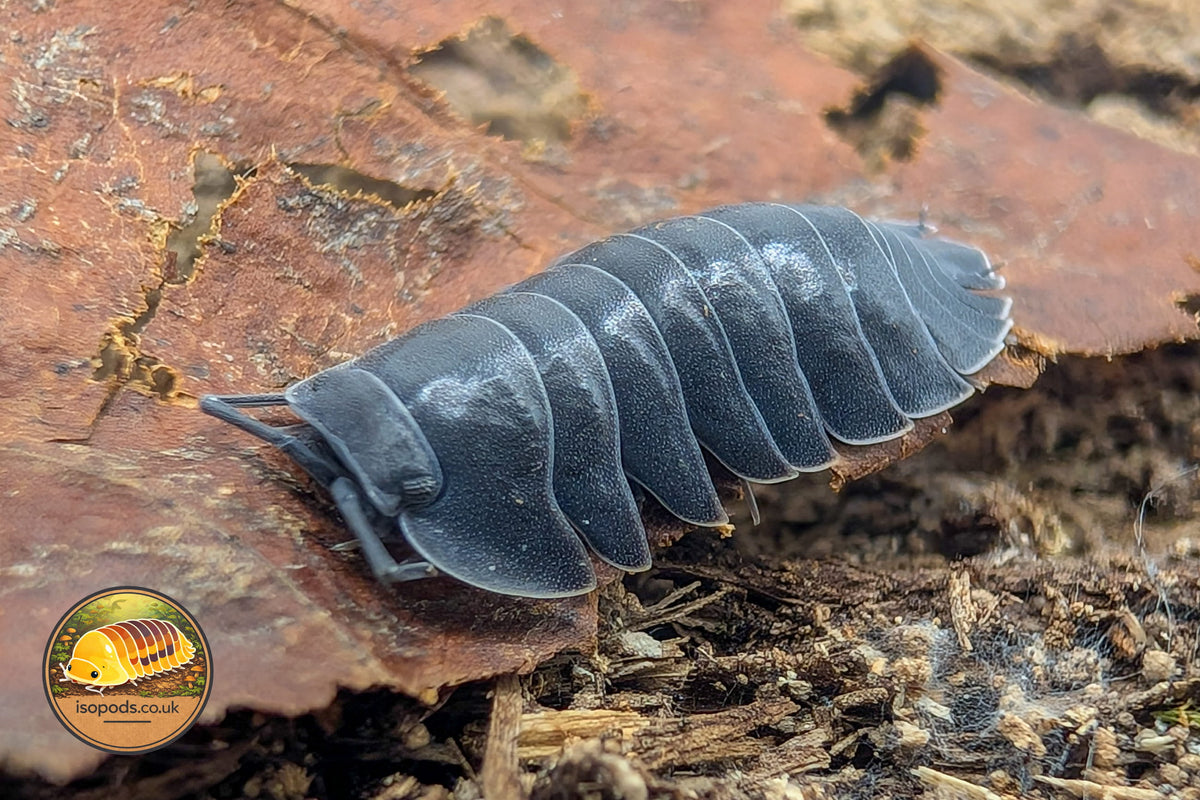
Ardentiella Blackhole stands out for its dark, velvety look: a deep black body with subtle metallic tones under light, and the kind of contrast that shows especially well against bark, moss, lichen, and pale leaf litter. If you are choosing with appearance first in mind, this is an Ardentiella that sells itself through shadow, gloss, and strong contrast rather than bright pattern.
In the enclosure, this type is best appreciated on bark, cork, branches, and other sheltered raised surfaces rather than bare open substrate. A settled colony can be more readable than many hidden tropical isopods, but it should still be approached as a humid, cover-loving species that uses bark faces, cork edges, mossy contact areas, and shaded gaps rather than giving constant open-floor activity.
What makes Blackhole different
-
Visual style: dark, velvety, contrast-led appearance with a subtle gloss under light. -
Presence: a larger-looking Ardentiella style that draws attention through shape and surface finish as much as colour. -
Where you will notice them: often around bark, cork, branches, decaying wood, and sheltered raised cover. -
Keeper appeal: a strong collector-facing choice if you enjoy darker species that stand out against natural enclosure materials.
How they use the enclosure
Blackhole is best given an enclosure that lets it climb and rest against useful surfaces. Angled bark, cork pieces, branches, and lichen-bearing cover make far more sense here than a flat tub with one hide. When settled, they may be seen moving along bark edges, resting against cork, or using sheltered surfaces above the floor while still staying close to humidity and cover.
Open-floor visibility will usually be lower than with more exposed surface runners. That is not a problem by itself. Better signs are whether the colony is using more than one covered area, appearing around bark and cork once settled, and not being forced into one damp corner. If everything is crammed into a single wet refuge, the rest of the setup may be too dry, too bare, or too stale to use properly.
Setup that suits this species
This is a better fit for a humid, breathable tropical enclosure than for a simple damp box. Start with a clear moist refuge, a drier but still covered side, and enough bark or cork bark to create shaded undersides, bark faces, and sheltered routes across the enclosure. A generous layer of leaf litter should cover much of the surface so they can feed and move without crossing bare ground.
Rotting wood matters here as well, not just as an extra. Pieces of rot wood help build long-term grazing into the enclosure while also creating darker, covered feeding spots. Moss can help keep one refuge reliably damp, but the whole tub should not be soaked. The aim is stable tropical humidity with fresh air, not a sealed wet enclosure.
Lichen-bearing cover is worth treating as part of the habitat rather than decoration. Lichen sticks or similar accessible surfaces can make the enclosure more usable for this genus, especially when placed where the isopods can graze while staying close to cover.
Before you order
Blackhole usually suits keepers who already know they enjoy bark-using tropical species more than constant display movement. Prepare the enclosure first: humid refuge ready, airflow sorted, bark and raised cover in place, and a real detritus base already established. If the setup is sparse, flat, or overly wet, this species is unlikely to show its best behaviour or appearance.
Reliable calcium access is also worth adding from the start. Limestone is a simple ongoing option alongside the main enclosure materials.
Feeding expectations
The main diet should come from the enclosure itself: leaf litter, decaying wood, mature substrate, and the microbial films that build up on natural materials. Fresh foods can be used in small amounts, but they should stay secondary. If the colony only seems interested when rich foods are added, the enclosure food base is usually too weak.
With Ardentiella, feeding and behaviour often overlap. Bark, cork, lichen-bearing surfaces, and sheltered wood are not just places to sit; they are part of how the colony grazes in captivity. That is one reason this species tends to look better and behave more naturally in a layered enclosure than in a bare, heavily cleaned tub.
Who will enjoy this most
Choose Blackhole if you want an Ardentiella with a darker, more atmospheric look and you enjoy watching isopods use bark, cover, and raised surfaces. It is likely to suit collectors who value contrast, enclosure aesthetics, and subtle surface behaviour more than buyers looking for bright colour or constant open roaming.
It may be a poorer match if you prefer very simple tubs, exposed feeding response, or species chosen mainly for bold activity on open substrate.
Compare before you choose
If you want to browse more dark and bark-led options in this genus, the Ardentiella isopods collection is the best next stop. For same-genus comparison, Ardentiella tri-colour offers a very different visual style, while Ardentiella aurora is another useful comparison if you are deciding between darker contrast-led animals and brighter Ardentiella types. If you still need to build the enclosure first, the isopod habitat setup guide explains how to balance humidity, cover, and airflow before ordering.
Ease of care
Preferred Temperature
Preferred Humidity
Popularity
Care Instructions
Care Instructions