🔥 Daily Isopod Auctions on WhatsApp! Grab species at auction prices, discover rare finds & join our growing community. Join Here
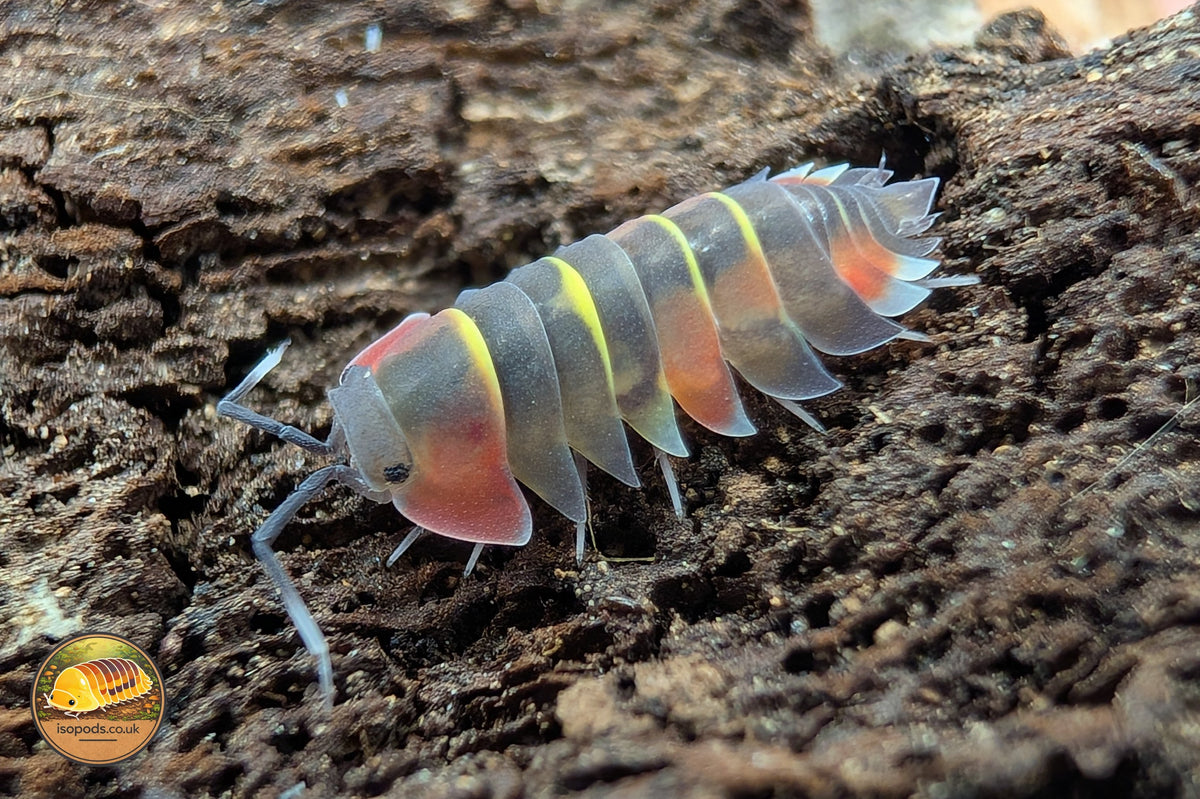
Ardentiella aurora Isopod
Out of stock
Regular price
£175.00 GBP
Sale price
£175.00 GBP
Regular price
Unit price
per
Tax included.
Shipping calculated at checkout.
Couldn't load pickup availability
- Fully secure checkout
- Trusted by thousands
- Rated and reviewed
Want next day delivery? Be quick!
You just missed it!
Sorry, it's out of stock.
But we can let you know when it's back in.
Question about this product?
We're happy to help.
Sold out
Ardentiella aurora Isopods for Sale UK
Ardentiella aurora is best chosen for its shifting, aurora-style colour effect: brighter tones, mixed contrast, and a more luminous look against bark, moss, lichen-bearing surfaces, and darker enclosure materials. Rather than reading as one flat colour morph, this Ardentiella is appealing for the way different individuals and angles can show different balances of tone once the colony is settled.
It is also one of the more visually rewarding Ardentiella types for keepers who enjoy watching isopods use bark faces, cork edges, and raised cover instead of waiting for open-floor movement. That does not mean constant visibility, and not every individual will show the same colour balance, but a well-set enclosure can make this species especially satisfying to observe.
What stands out about Aurora
-
Colour impression: brighter, mixed tones with a more shifting "aurora" effect than a single flat look. -
Best viewing surfaces: often shows well against cork, bark, mossy cover, and darker background materials. -
Behaviour style: more likely to use bark faces, cork edges, branches, and sheltered raised surfaces than sit out on bare substrate. -
Keeper expectation: more display-oriented than many hidden tropical isopods, but still dependent on cover and settling time.
How they use the enclosure
Ardentiella aurora usually makes the most sense in a setup where the upper cover is actually usable. Expect them to spend more time on angled bark, cork edges, mossy contact areas, and lichen-bearing surfaces than walking openly across the floor. When the enclosure is humid but fresh, they can be more readable around those sheltered surfaces than many lower-cover tropical species.
If they are regularly found across several bark pieces, shaded edges, or raised hiding places, that is usually a better sign than demanding constant open activity. If the whole colony disappears into one cramped pocket, the usual causes are a setup that is too flat, too stale, too exposed, or drying too hard across the bark and upper cover.
Before you order
Prepare the enclosure around usable climbing and resting surfaces, not just damp substrate. A good starting point is upright or slanted cork bark, a generous layer of leaf litter, some rot wood below, and a clear damp refuge that stays moist without turning the whole tub wet.
Mossy or lichen-bearing surfaces can make this species more interesting to watch, but they should sit within a full enclosure food base rather than replace it. The lower layer still needs mature detritus, cover, and sheltered feeding spots. If you are unsure how to balance humid cover with airflow, the isopod habitat setup guide is the most useful preparation read before ordering.
Feeding and long-term support
Like other Ardentiella, Aurora should be fed through the enclosure first. Leaf litter, decaying wood, and mature substrate should carry most of the long-term diet, while bark and lichen-bearing surfaces add extra grazing value and help explain where the colony spends time.
A dry piece of limestone is worth keeping available for steady calcium access. Fresh foods can be offered carefully, but if the colony only reacts to added foods and ignores the enclosure itself, the base usually needs improving first.
Who tends to enjoy this species most
This is a strong fit for keepers who want a brighter Ardentiella with more visual interest on bark and raised cover, and who enjoy building enclosures with cork, litter, mossy patches, shaded gaps, and breathable humidity. It suits buyers who like watching how isopods use surfaces and cover rather than judging everything by open-floor activity.
It is less likely to satisfy buyers looking for a sparse, simple tub setup or frequent exposed movement across bare substrate.
Compare before you choose
If you are browsing within the genus, the Ardentiella isopods collection is the best next step. For another genus comparison with a brighter name-led look, Ardentiella Phoenix is a natural page to open next. If you are deciding between bark-and-surface Ardentiella and more hidden tropical options, the tropical isopods collection gives a broader comparison route.
Ease of care
Preferred Temperature
Preferred Humidity
Popularity
Care Instructions
Care Instructions