🔥 Daily Isopod Auctions on WhatsApp! Grab species at auction prices, discover rare finds & join our growing community. Join Here
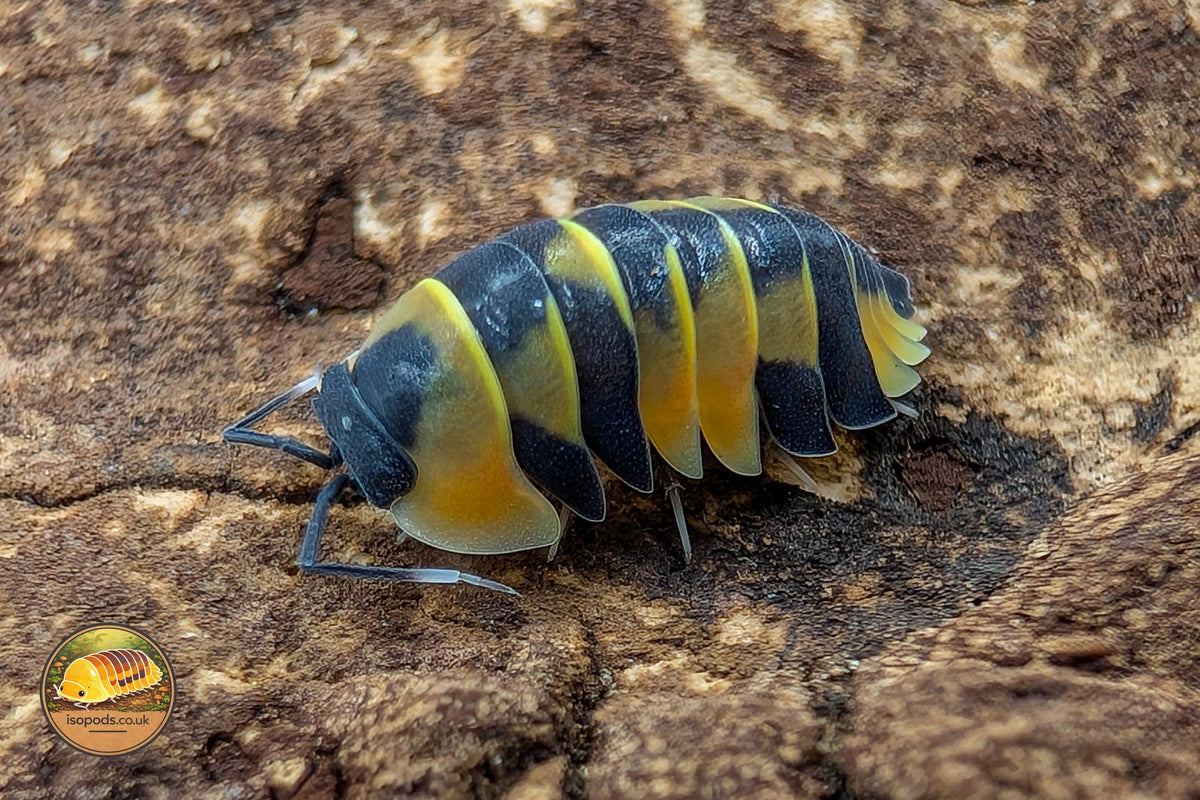
Ardentiella phoenix Isopod
Out of stock
Regular price
£75.00 GBP
Sale price
£75.00 GBP
Regular price
Unit price
per
Tax included.
Shipping calculated at checkout.
Couldn't load pickup availability
- Fully secure checkout
- Trusted by thousands
- Rated and reviewed
Want next day delivery? Be quick!
You just missed it!
Sorry, it's out of stock.
But we can let you know when it's back in.
Question about this product?
We're happy to help.
Sold out
Ardentiella phoenix Isopods for Sale UK
Ardentiella phoenix is the classic fiery Phoenix line: a bold red, yellow, and black Ardentiella with a larger presence and a more visual, bark-oriented style than many quieter tropical isopods. In a settled enclosure, this is the kind of species that can be especially satisfying when it is moving across cork, branches, decaying wood, and other shaded raised surfaces rather than staying deep in the lower substrate.
That visual appeal is a big part of the draw, but it still needs the right setup to show well. Ardentiella phoenix is best treated as a humid tropical species that likes bark faces, cork edges, lichen-bearing surfaces, and sheltered climbing routes, with strong ventilation to keep the enclosure fresh rather than stale.
What makes Phoenix stand out
-
Colour impression: classic red, yellow, and black Phoenix styling with strong contrast. -
Presence: a larger-feeling Ardentiella type with good visual impact when settled. -
Behaviour: energetic and often more readable around bark, cork, branches, and raised cover than on bare floor. -
Visibility style: better thought of as a display-worthy bark user, not a species that should be expected to roam openly all day. -
Setup bias: does best in a humid but breathable enclosure with mature detritus, usable climbing surfaces, and reliable calcium access.
Visual appeal and enclosure behaviour
Phoenix works best for keepers who enjoy watching isopods use the enclosure vertically as well as across the floor. When conditions are right, they may be noticed along cork edges, on angled bark, around decaying wood, and on sheltered raised routes where humidity stays steady but the air does not become stuffy.
That does not mean constant visibility. Like other Ardentiella, they can still tuck themselves away after disturbance or while settling in. A healthy colony is better judged by whether it uses several bark pieces and covered areas over time, whether litter and wood are being grazed gradually, and whether the enclosure smells fresh rather than sour.
Before you order
This species is a poor match for a sparse tub. Prepare the enclosure first with a substantial layer of leaf litter, climbing and hiding surfaces from cork bark, and a lower layer of bioactive substrate that can hold moisture and support a mature food base.
A humid refuge should stay reliably damp, but the enclosure also needs strong ventilation. Phoenix should not be kept as a sealed wet-box species. If the whole tub feels stale, or if the colony compresses into one damp pocket, the rest of the enclosure is usually too exposed, too dry, or too airless to use properly.
Feeding and long-term support
The diet should be built around the enclosure itself: leaf litter, mature detritus, and decomposing wood. Rot wood is especially useful here because it adds both sheltered feeding value and extra surfaces for quieter grazing under cover.
Ardentiella are also often associated in captivity with bark and lichen grazing, so accessible lichen sticks can make sense when placed where the colony can use them without sitting fully exposed. Fresh foods are best treated as extras, not the foundation of the diet.
Steady mineral access is also worth providing. A simple piece of limestone gives a reliable calcium source that fits a long-term tropical setup without relying too heavily on richer supplements.
Who usually enjoys this species most
Ardentiella phoenix tends to suit buyers who want a bold-looking tropical isopod with strong colour contrast and more visual enclosure use than very hidden lower-cover species. It makes the most sense for keepers who already enjoy building with bark, branches, litter, wood, and humid covered routes.
If you want an isopod that still rewards patience but can be especially interesting around bark and raised surfaces, Phoenix is a strong fit. If you want a species for a very bare setup or expect constant open-floor display, it may be less satisfying.
Common setup mistakes to avoid
-
Too flat: one hide and open floor space does not give this species enough useful bark and cover to move through naturally. -
Too stale: humid air without enough ventilation can suppress activity and leave the enclosure smelling sour. -
Too little food base: bark alone is not enough if litter, mature substrate, and wood are weak. -
Too wet everywhere: a damp refuge is useful, but the whole enclosure should not become swampy. -
Too much reliance on rich foods: heavy supplements in a humid setup can foul feeding areas before they help the colony.
Compare before you choose
If you like the Phoenix look but want another same-genus comparison, Ardentiella Glass Phoenix is a natural next species to view. You can also browse the wider Ardentiella isopods range if you want to compare different colour lines and patterns within the genus.
If you are still refining the enclosure, the isopod habitat setup guide is the best next step for balancing a damp refuge, bark cover, and ventilation. For a broader humid-species browse, see tropical isopods.
Ease of care
Preferred Temperature
Preferred Humidity
Popularity
Care Instructions
Care Instructions