🔥 Daily Isopod Auctions on WhatsApp! Grab species at auction prices, discover rare finds & join our growing community. Join Here
Trachelipus trilobatus Isopod
Low stock! Only 10 left
Regular price
£25.00 GBP
Sale price
£25.00 GBP
Regular price
Unit price
per
Tax included.
Shipping calculated at checkout.
Couldn't load pickup availability
- Fully secure checkout
- Trusted by thousands
- Rated and reviewed
Want next day delivery? Be quick!
You just missed it!
Question about this product?
We're happy to help.
Trachelipus trilobatus Isopods for Sale UK
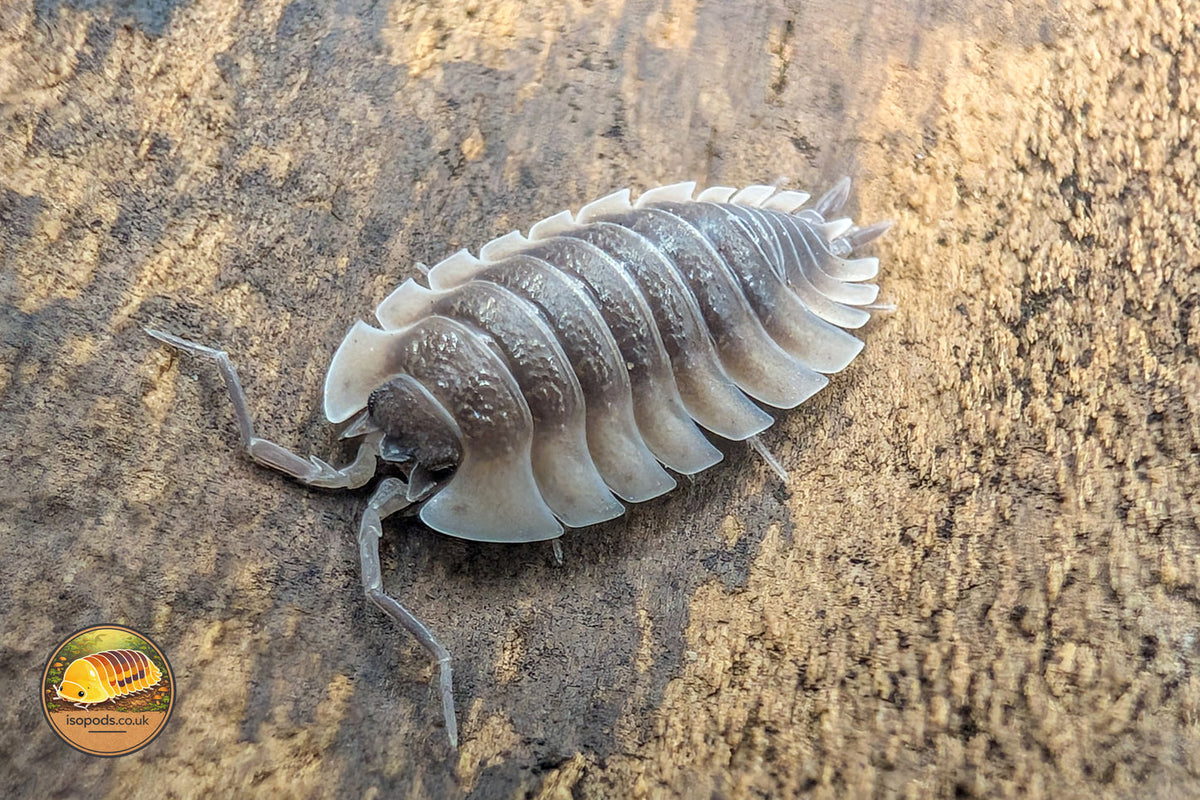
Trachelipus trilobatus stands out for its broad, trilobite-like outline and long segmented body, giving it a flatter, more shielded look than many rounder or more compact isopods. In well-marked individuals, the usual grey base colour can be lifted by a warmer orange-tinged edging or ring, which adds to the appeal without losing the natural Eastern European look that makes this species interesting to locality-minded keepers.
In the enclosure, this is usually a quicker, more surface-using Trachelipus rather than a hidden tropical type. Once settled, they may be seen moving through leaf litter, using bark edges, and feeding around sheltered areas with more regularity than secretive humid genera, but they still do best with cover, fresh air, and a proper damp-to-drier gradient.
What makes this species stand out
-
Shape: wide, trilobate body profile with an elongated segmented look. -
Pattern: usually natural greyish tones, sometimes with a faint orange-tinged edge or ring where present. -
Behaviour: fast-moving and often easier to spot than hidden tropical species. -
Collector appeal: a strong choice for keepers who enjoy temperate species with a more regional Eastern European feel.
How they tend to use the enclosure
This species is best thought of as a cover-and-surface user. Rather than spending most of its time deep below the substrate, it is more likely to work through litter, under bark, and along sheltered floor routes when conditions suit it. That can make the enclosure easier to read than with very secretive species, especially once the colony has settled and the setup offers more than one safe area.
If the whole group stays jammed into one wet corner or under one object all the time, the issue is often the enclosure balance rather than the species suddenly becoming invisible. The rest of the tub may be too dry, too exposed, or too stale to use comfortably.
Setup before ordering
Prepare this species as a temperate Trachelipus, not as a tropical wet-box isopod. Use a stable substrate with a reliable damp refuge on one side, then keep the opposite side drier on the surface but still covered and usable. Much of the top should be covered with leaf litter, with bark or cork added for shaded undersides and protected edges. A piece of cork bark works well for hides and sheltered movement.
Decaying wood helps both feeding and cover, so a piece of rot wood is worth including from the start. Calcium should also stay available over the long term, and limestone is a practical option. Airflow matters: this species usually responds better to a fresh, breathable enclosure with a moisture gradient than to a sealed tub that stays wet from end to end.
Feeding priorities
The main diet should come from the enclosure itself: leaf litter, mature substrate, decomposing plant matter, and rotting wood. Fresh foods and occasional protein can be offered as extras, but they should not replace the detritus base. If added foods are the only time you ever see activity, the enclosure may need a stronger long-term food base rather than richer feeding.
Who usually enjoys keeping them
This species tends to suit keepers who like natural patterning, fast movement, and more readable enclosure use than they would get from many hidden tropical isopods. It is also a good fit for buyers who want a temperate species with a distinctive body shape rather than one chosen mainly for bright artificial-looking contrast.
It may be less satisfying for buyers who want slow, permanently visible display behaviour in the open, or for keepers who prefer running everything very damp with little airflow and only one humid hide.
Before you blame the species
If they seem to vanish after arrival, that is not unusual on its own. Give them time, avoid overchecking, and look at where the colony is choosing to sit. If all activity stays in one refuge, add more cover across the enclosure and check that the damp side is damp rather than soggy, while the drier side still has litter and shelter instead of bare ground. For broader setup help, the isopod habitat setup guide is a useful next read.
Compare before you decide
If you want another look within the same genus, Trachelipus caucasius is the closest next comparison. If the trilobatus body shape appeals but you want a more unusual visual variant, Trachelipus trilobatus Albino Crystal White is worth comparing. If you would rather browse more temperate and tropical options before choosing, see all isopods.
Ease of care
Preferred Temperature
Preferred Humidity
Popularity
Care Instructions
Care Instructions