🔥 Daily Isopod Auctions on WhatsApp! Grab species at auction prices, discover rare finds & join our growing community. Join Here
Porcellio tortonesei Isopod
Low stock! Only 7 left
Regular price
£45.00 GBP
Sale price
£45.00 GBP
Regular price
Unit price
per
Tax included.
Shipping calculated at checkout.
Couldn't load pickup availability
- Fully secure checkout
- Trusted by thousands
- Rated and reviewed
Want next day delivery? Be quick!
You just missed it!
Question about this product?
We're happy to help.
Porcellio tortonesei Isopods for Sale UK
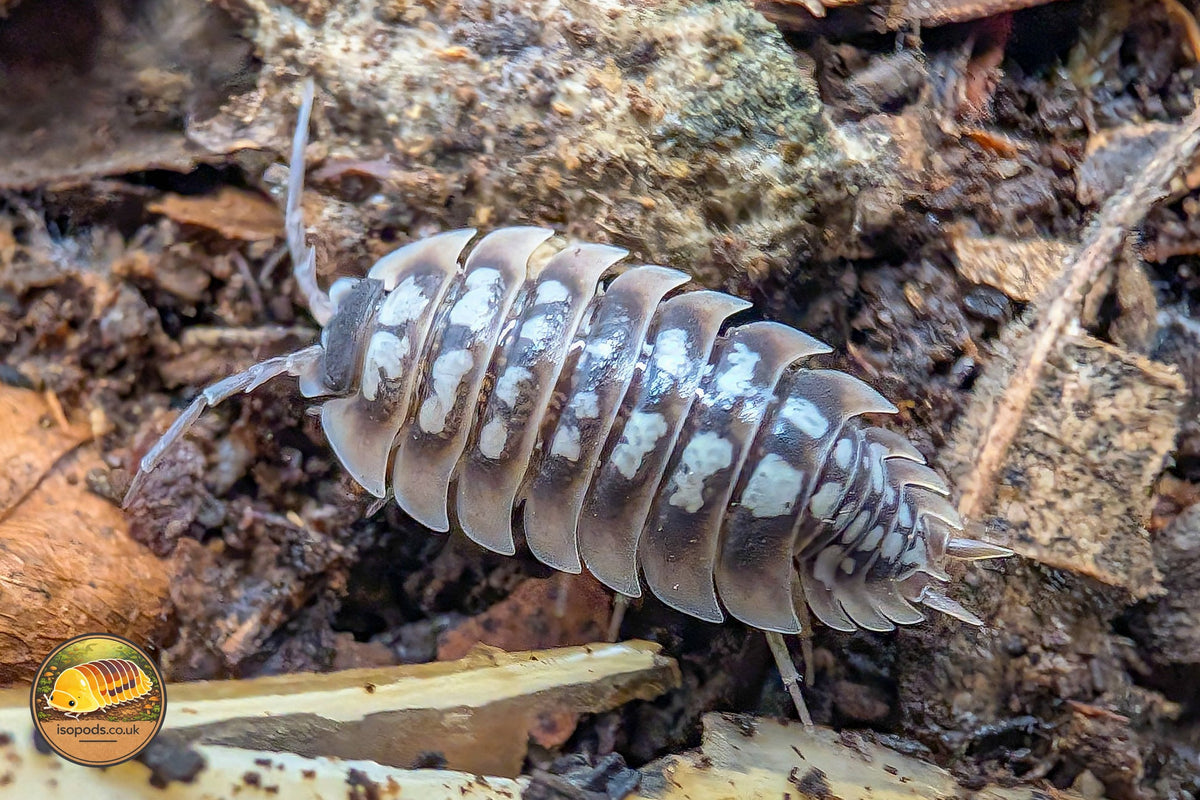
Porcellio tortonesei is a strong choice for keepers drawn to natural Mediterranean Porcellio rather than bright designer morphs. The main appeal here is its flatter, broader body shape, its northern Italian and Ligurian association, and the way a settled colony can make readable use of the enclosure surface, bark edges, and covered feeding areas.
Instead of selling itself through extreme colour, this species tends to suit buyers who appreciate locality interest, subtle pattern, and a more grounded Porcellio look. Depending on the stock, you may notice natural grey-brown tones and some yellow dotting or pattern interest, but the real hook is the overall silhouette and collector feel.
What stands out about this species
-
Collector appeal: better chosen for locality interest and body shape than for flashy morph contrast. -
Look: a flatter, wider Porcellio outline than many buyers first compare it with. -
Visibility: often easier to observe than hidden tropical genera once the colony has settled. -
Setup style: best with airflow, room to move, bark or stone-like cover, leaf litter, calcium, and a clear damp-to-drier gradient.
Why keepers choose Porcellio tortonesei
This is the sort of species that can feel more rewarding over time than in a single photo. It has the kind of natural Mediterranean presence that appeals to collectors who enjoy comparing shape, locality, and enclosure behaviour across different Porcellio. In practice, that means it can be a better fit for someone who wants a distinctive species with surface confidence than for someone choosing purely by bright colour.
When conditions suit it, the colony may be seen moving between cover, open floor, and feeding spots rather than staying buried all the time. That does not mean constant open display, but it does usually make this species easier to read than many tropical shelter-heavy isopods.
Setup before ordering
Prepare this species as you would a more ventilated Mediterranean Porcellio. The enclosure should have one dependable damp refuge and a broader drier side that is still usable, with cover spread across both areas rather than one wet corner doing all the work.
A good base includes leaf litter across much of the surface, bark or similar firm cover, and enough open floor space for normal movement. The damp area can be buffered with a little sphagnum moss, but the enclosure should not be run like a sealed tropical tub.
Calcium should be available continuously, and limestone is a practical way to keep that support in the enclosure. If you are still working out how to balance airflow, shelter, and a moisture gradient, the isopod habitat setup guide is the best preparation reading before ordering.
Feeding and enclosure use
Like other Porcellio, this species should be fed detritus-first rather than fresh-food-first. Leaf litter should always remain available, and rot wood helps add long-term grazing as well as extra sheltered contact points under cover.
A settled colony may show a clear response to food, but that should not tempt you into heavy feeding. Small portions are safer, especially in covered areas. If leftovers sit too long or the feeding zone turns sour, the issue is usually overfeeding, poor airflow, or too much moisture around the food.
What usually goes wrong
-
Keeping the whole tub too damp: Porcellio often stop using the enclosure well when there is no workable drier side. -
Too little cover away from the moist refuge: the colony may avoid otherwise usable ground if it feels too exposed. -
Sparse floor space: this species benefits from room to move, not just one hide over wet substrate. -
Weak mineral support: steady calcium access is worth building in from the start. -
Overdoing rich foods: strong feeding response does not mean supplements should replace litter and wood.
Who it tends to suit
Porcellio tortonesei may appeal most to keepers who like natural-form Porcellio with locality interest, visible enclosure use, and a more spacious, ventilated setup style. It is also a sensible pick for buyers who enjoy comparing body shape and behaviour across the wider Porcellio isopods range.
It may be less satisfying if you want a highly contrasting morph as the main attraction, or if your usual keeping style is a very humid, enclosed tub with little usable dry ground. This species is better approached as a Mediterranean-leaning Porcellio that wants choice, airflow, and cover rather than constant dampness.
If you are deciding between species
If the draw here is the broad Porcellio shape and more natural collector feel, stay with tortonesei. If you want a larger giant-style Porcellio with a striking white appearance, look at Porcellio hoffmannseggii Yeti. For broader genus-level care before choosing, see the Porcellio care guide.
Ease of care
Preferred Temperature
Preferred Humidity
Popularity
Care Instructions
Care Instructions