🔥 Daily Isopod Auctions on WhatsApp! Grab species at auction prices, discover rare finds & join our growing community. Join Here
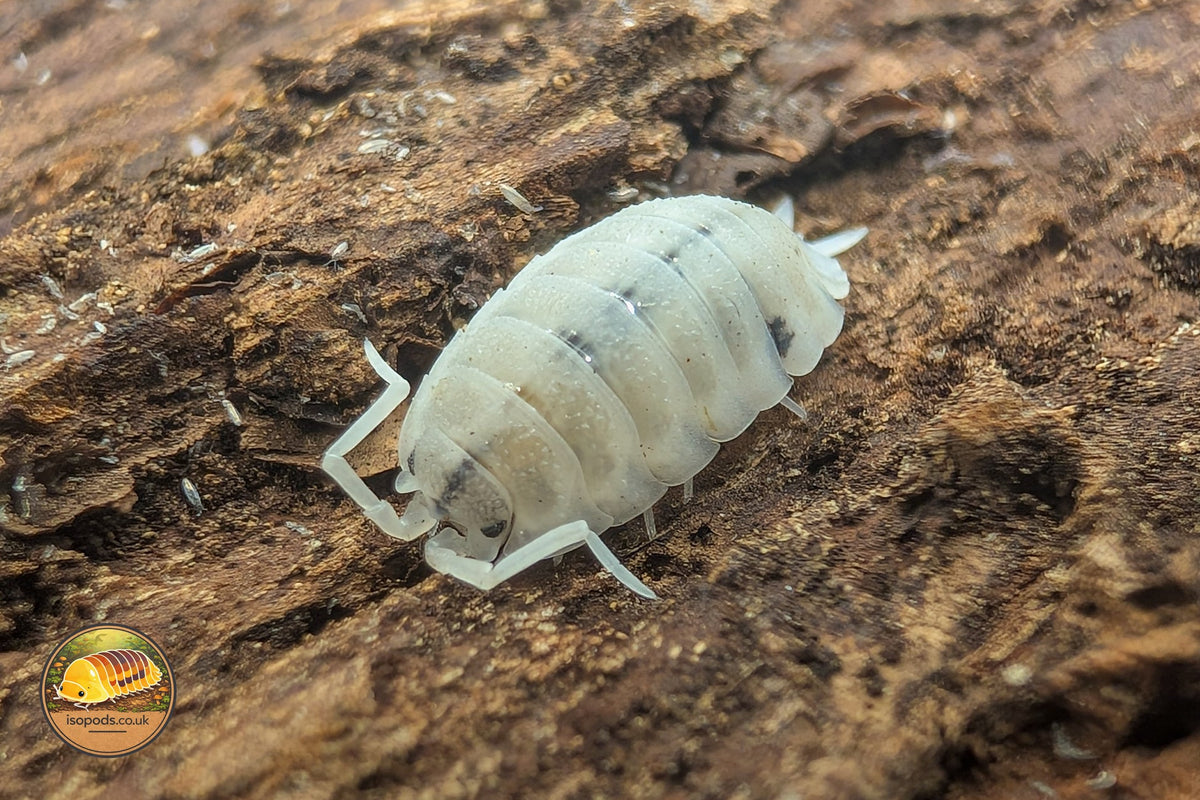
Porcellio scaber Moonstone Isopod
Low stock! Only 4 left
Regular price
£25.00 GBP
Sale price
£25.00 GBP
Regular price
Unit price
per
Tax included.
Shipping calculated at checkout.
Couldn't load pickup availability
- Fully secure checkout
- Trusted by thousands
- Rated and reviewed
Want next day delivery? Be quick!
You just missed it!
Question about this product?
We're happy to help.
Porcellio scaber Moonstone Isopods for Sale UK
Porcellio scaber Moonstone stands out for a cooler, more understated look than many brighter scaber morphs. Soft grey tones, silvery highlights, and pale marbling give this morph a moonstone-like finish that sits naturally against bark, stone, and leaf litter rather than shouting for attention.
It still keeps the practical appeal many keepers want from scaber: a hardy, rough-bodied Porcellio that is often easier to observe than quieter tropical genera, with regular movement around cover, feeding areas, and the damp-to-drier transition when settled. If you want a colony with a refined natural look but behaviour that is still readable in the enclosure, Moonstone is a strong fit.
What makes Moonstone different
-
Colour tone: cool grey and silver rather than warm, high-contrast, or loud patterning -
Overall impression: subtle, stone-like, and natural-looking -
Body style: classic rough-bodied scaber texture -
Behaviour: active, food-responsive, and usually willing to use the surface when the setup is working well -
Best appeal: keepers who want visible day-to-day behaviour without choosing a flashier morph
How they usually behave
Porcellio scaber Moonstone is best treated as an active detritus-feeding isopod with clearer enclosure feedback than many hidden tropical species. Once settled, they are often noticed around bark edges, under cover, across leaf litter, and near food. They may also use open floor space more readily than Cubaris-type isopods, especially in the evening or when feeding spots are nearby.
That said, visibility still depends on the enclosure. A colony that has enough cover often behaves more naturally than one kept too bare. If they are all pressed into one wet corner, hanging only around the dampest patch, or avoiding most of the tub, the issue is usually the setup balance rather than the morph itself.
Setup that suits scaber Moonstone
This morph does best in a Porcellio-style enclosure with airflow, cover, and clear moisture choice. Give them a reliable damp refuge on one side, but keep the rest of the enclosure drier on the surface so they can move, feed, and rest without everything turning wet. The drier side should still have shelter rather than bare exposed substrate.
A generous layer of leaf litter should cover much of the surface, with bark pieces and decaying wood added so the colony has shaded places to sit and graze. Rot wood is especially useful because it adds both food value and sheltered contact points. A steady calcium source is also worth keeping available; limestone works well as long-term mineral support.
If you are still building the enclosure, the isopod habitat setup guide is the best place to check moisture, cover, and airflow before the colony arrives.
Feeding notes
Like other scaber, Moonstone should be fed as a detritivore first. The main diet should come from leaf litter, decaying wood, and a mature organic substrate rather than constant fresh extras. Supplemental foods can be useful, and scaber often respond visibly to them, but that response should not replace the enclosure food base.
If you want a fuller feeding breakdown, including how to avoid overfeeding richer foods in a ventilated Porcellio setup, see what do isopods eat.
Worth preparing before ordering
- Set up a clear damp refuge rather than moistening the whole tub.
- Add bark or cork pieces so they have shaded undersides and hide edges to use.
- Make sure there is enough litter and wood for long-term grazing, not just fresh food.
- Keep airflow good enough to stop the enclosure becoming stale or sour.
- Leave calcium available as an ongoing support item, not an occasional extra.
Who tends to enjoy this morph most
Moonstone makes the most sense for keepers who like scaber behaviour but want a calmer, cooler visual style than brighter morphs. It suits buyers who enjoy seeing isopods working across the enclosure, reacting to food, and using bark, litter, and the moisture gradient in a way that is easy to read without constant digging around.
If your main goal is a very bold, high-contrast scaber morph, this one may feel too understated. Its appeal is the opposite: a refined silver-grey look that blends beautifully into a natural setup while still giving you the practical, active character Porcellio scaber is known for.
Compare before you choose
If you want to stay within the same genus, browse the Porcellio isopods collection. If you are deciding between subtle and high-contrast scaber morphs, compare Moonstone with Porcellio scaber Lava for a louder, more vivid alternative. For broader genus behaviour and setup guidance, the Porcellio care guide is the clearest next read.
Ease of care
Preferred Temperature
Preferred Humidity
Popularity
Care Instructions
Care Instructions