🔥 Daily Isopod Auctions on WhatsApp! Grab species at auction prices, discover rare finds & join our growing community. Join Here


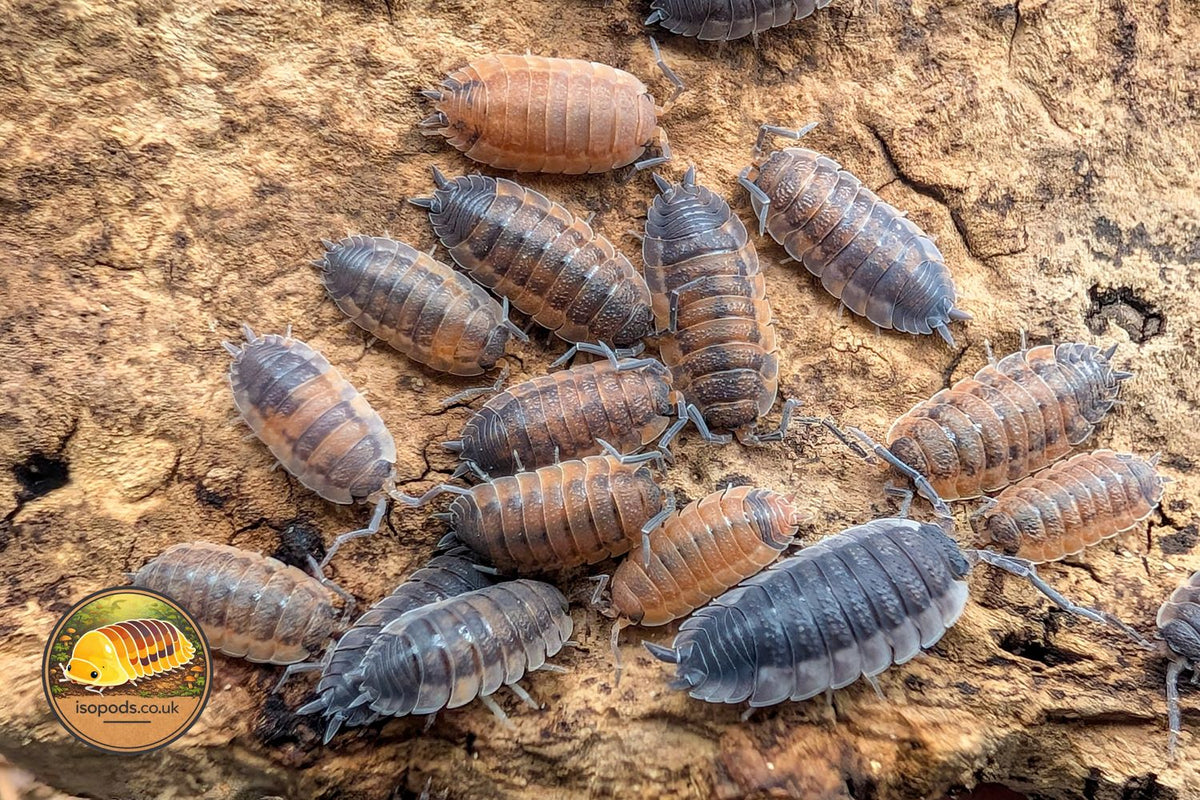
Porcellio scaber Lava Isopod
20 in stock
Regular price
£5.00 GBP
Sale price
£5.00 GBP
Regular price
Unit price
per
Tax included.
Shipping calculated at checkout.
Couldn't load pickup availability
- Fully secure checkout
- UK invertebrate specialists
- Rated and reviewed
Delivery options and costs are shown at checkout. Live dispatch depends on suitable weather. Read our shipping information.
Question about this product?
We're happy to help.
Porcellio scaber Lava Isopods for Sale UK
Porcellio scaber Lava stands out for its fiery, broken colour pattern on the classic rough scaber body. Orange, red, black, and dark grey patches can look like cooled lava with brighter magma-like colour pushing through, and one of the main appeals of this morph is that each animal can show a slightly different mix.
It is not just a colour project, though. Like other scaber types, this is usually a practical, active Porcellio that makes good use of leaf litter, bark, feeding spots, and the route between a damp refuge and a drier side. That combination of bold pattern and readable enclosure behaviour is what makes Lava appealing to keepers who want something visually striking without moving into a hidden tropical style.
What makes Lava different
-
Colour pattern: Warm orange and red areas break through a darker base, giving a lava-like mottled look. -
Individual variation: Colonies are attractive because animals can differ in how much dark, orange, or red they show. -
Classic scaber build: A rough-bodied Porcellio scaber morph rather than a very smooth or highly compact species type. -
Readable behaviour: Often easier to observe than many hidden tropical isopods, especially around cover, food, and the damp-to-drier transition.
How they usually behave in the enclosure
Porcellio scaber Lava are often more ground-readable than shelter-heavy tropical genera. Once settled, they may be seen moving around bark edges, under leaf litter, across open patches near cover, and around food. That does not mean they will stay visible all the time, but they are usually easier to follow than species that spend most of their time deep under cover.
If the whole colony is compressed into one wet corner or one hide, it often points to an enclosure issue rather than normal scaber behaviour. Common causes include a stale over-wet tub, a dry side that is too bare to use, or too little cover across the enclosure.
Setup that suits this morph
This is best treated as a ventilated Porcellio setup, not a tropical wet tub. Give them a dependable damp refuge on one side, but keep the rest of the enclosure drier on the surface and still usable with plenty of leaf litter, bark, and sheltered floor space.
A good base should include bark or cork for shaded undersides, decaying wood as part of the food base, and enough cover that they can move without being forced to cross bare open ground. Rot wood is especially useful here because it adds both long-term grazing value and another sheltered place to rest. Keep calcium available as ongoing support rather than an occasional extra, and limestone is a simple way to do that.
If you are still building the enclosure, the isopod habitat setup guide is the best companion page for getting airflow, moisture, and cover working together.
Feeding notes
Like other Porcellio, Lava should be treated as detritus-first. The main diet should come from leaf litter, decaying wood, and mature substrate rather than constant fresh feeding. They may show a stronger visible response to added foods than more hidden isopods, but that can make overfeeding easy.
Small additions of fresh food or protein can be useful, but the enclosure itself should carry most of the diet. If you want a fuller breakdown of what belongs in that food base, see what do isopods eat.
Before you order
Prepare the enclosure first rather than relying on adjustments after arrival. For this morph, the basics are simple: a damp refuge that stays usable, a drier side with cover rather than bare floor, plenty of litter, bark pieces, decaying wood, and enough airflow to stop the tub turning stale. If the whole enclosure stays wet, scaber behaviour usually becomes less natural and less readable.
Who tends to enjoy this one most
Lava usually suits buyers who want a colourful scaber form with behaviour they can actually watch from time to time. It can be a good fit if you like visible feeding response, active use of the enclosure, and variation across the colony rather than every animal looking exactly the same.
It may be less satisfying if your preferred setup style is a sealed humid tub or if you mainly want a species that spends its time tucked away in deep tropical cover. This morph makes more sense in an airy enclosure with a clear moisture gradient.
Compare before choosing
If you want to browse more of the same genus, start with our Porcellio isopods collection. If you like the scaber body shape but want a different visual direction, Porcellio scaber Ghost offers a paler alternative. If you want to step away from scaber and compare with another Porcellio style, Porcellio despaxi is a useful next look. For broader genus-level expectations around airflow, feeding, and moisture choice, the Porcellio care guide is the most relevant next read.