🔥 Daily Isopod Auctions on WhatsApp! Grab species at auction prices, discover rare finds & join our growing community. Join Here
Filipinodillo Nakar Albino Isopod
Out of stock
Regular price
£80.00 GBP
Sale price
£80.00 GBP
Regular price
Unit price
per
Tax included.
Shipping calculated at checkout.
Couldn't load pickup availability
- Fully secure checkout
- Trusted by thousands
- Rated and reviewed
Want next day delivery? Be quick!
You just missed it!
Sorry, it's out of stock.
But we can let you know when it's back in.
Question about this product?
We're happy to help.
Sold out
Filipinodillo Nakar Albino Isopods for Sale UK
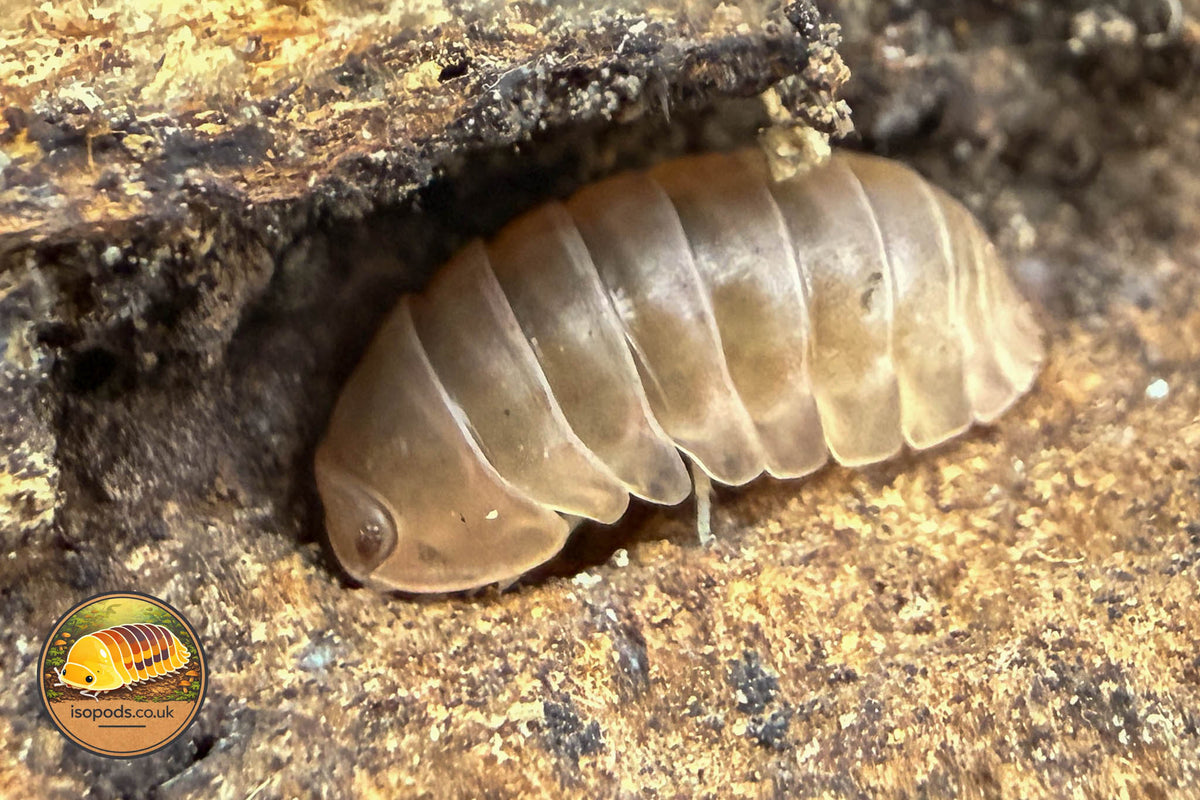
Filipinodillo Nakar Albino is a pale albino expression of the Nakar line from Quezon Province, Philippines. Compared with standard Filipinodillo nakar, this form is best known for its lighter body tones, reduced dark pigment, and a cleaner, softer take on the bold Filipinodillo patterning that makes the line stand out in a collection.
This is still a specialist tropical Filipinodillo rather than a high-visibility display isopod. A settled colony may spend much of its time under bark, deep leaf litter, and other covered humid areas, so it suits buyers who want the visual appeal of the morph and are comfortable giving it time, cover, and a stable warm enclosure to settle properly.
What makes Nakar Albino different
-
Look: pale albino expression with reduced dark pigment and softer contrast than standard Nakar -
Line context: tied to the Nakar, Quezon Province association in the Philippines -
Behaviour: usually more rewarding around bark, litter, and sheltered damp areas than on open substrate -
Keeper style: better for patient, collector-focused keeping than constant open observation
Enclosure style that suits them
Approach this as a humid, covered tropical setup with stable warmth, deep substrate, generous leaf litter, and several shaded hiding places. Bark or cork should create firm covered areas, while a damp refuge stays moist below the surface without turning the whole tub wet. If you need to add more shaded cover, cork bark is one of the simplest ways to give them secure undersides and bark edges to use.
These isopods are easier to read when the enclosure gives them more than one sheltered option. If the whole colony stays compressed into one damp corner, the rest of the tub may be too bare, too dry, or too stale. Rotting wood also helps by adding long-term grazing and extra hiding places, so rot wood is worth including as part of the enclosure rather than treating it as an optional extra.
What to prepare before ordering
Have the enclosure ready before the colony arrives: leaf litter already in place, bark or cork laid out, one clear damp refuge, and enough cover that they do not need to cross open bare ground to move around. This species is more likely to reward steady acclimation than frequent checking. If you are still building the setup, this Filipinodillo care guide is the best next read.
Feeding and colony signs
The main diet should come from leaf litter, decomposing wood, and mature substrate. Fresh foods are useful as support, but they should not replace the enclosure food base. Quiet feeding under cover is normal for this kind of isopod, so a weak open feeding response does not automatically mean a problem.
Better signs to watch for are gradual wear on leaves, food disappearing near shelter, and individuals turning up under more than one piece of cover. A steady calcium source can also help support long-term stability; a piece of limestone is an easy way to keep that available.
Who tends to enjoy this one most
This listing makes the most sense for keepers who want a softer, paler take on the Nakar line and are happy with a more patient style of observation. It is less suitable for buyers who want frequent open activity, sparse minimalist tubs, or a species that gives obvious feedback straight away.
Compare before you choose
If you like the Nakar look but want to compare the standard darker form, start with Filipinodillo nakar. If you are still browsing within the genus, the wider Filipinodillo isopods collection is the best place to compare other lines and patterns. For a larger collector-oriented alternative in the same group, you can also look at Filipinodillo R5 Giant.
Ease of care
Preferred Temperature
Preferred Humidity
Popularity
Care Instructions
Care Instructions