🔥 Daily Isopod Auctions on WhatsApp! Grab species at auction prices, discover rare finds & join our growing community. Join Here
Cubaris Pak Chong Isopod
Low stock! Only 10 left
Regular price
£25.00 GBP
Sale price
£25.00 GBP
Regular price
Unit price
per
Tax included.
Shipping calculated at checkout.
Couldn't load pickup availability
- Fully secure checkout
- Trusted by thousands
- Rated and reviewed
Want next day delivery? Be quick!
You just missed it!
Question about this product?
We're happy to help.
Cubaris Pak Chong Isopods for Sale UK
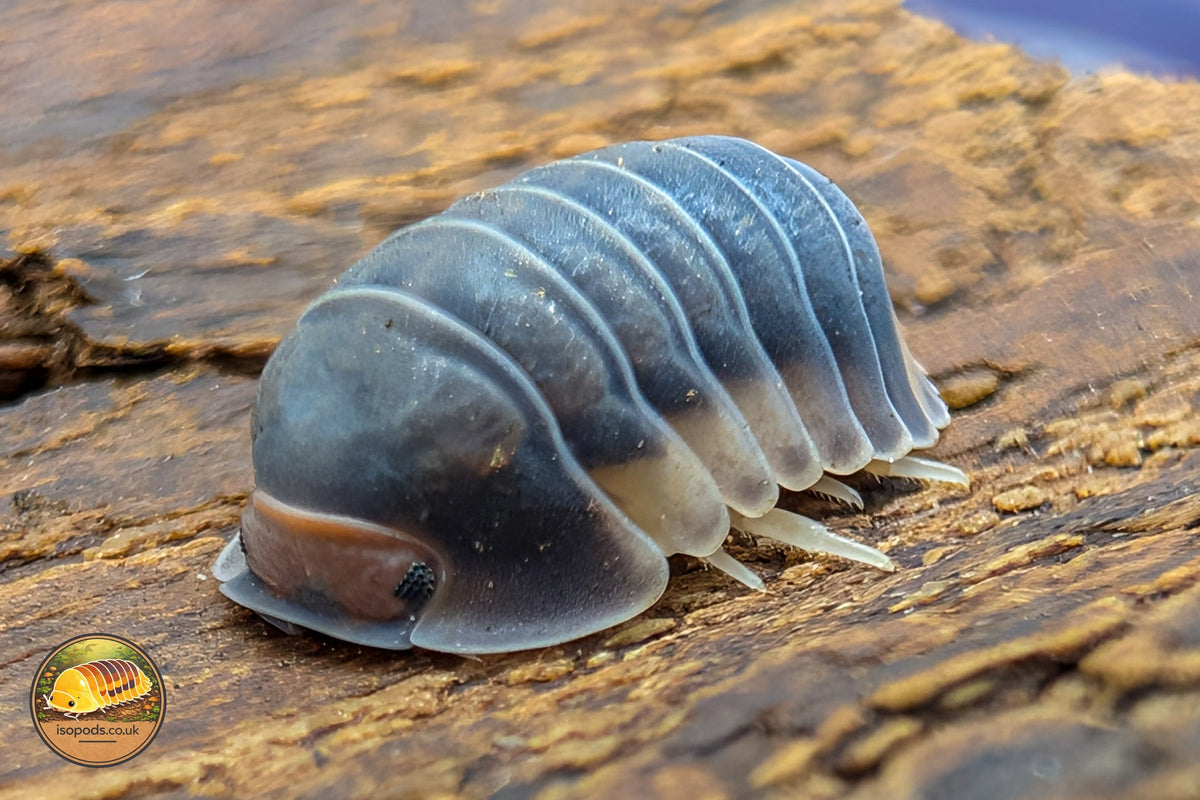
Cubaris Pak Chong stands out for its striking tricolour look and clear locality identity. Named for Pak Chong district in Thailand, this form is known for a blue-grey to bluish-black body, a pale white face and frilled edging, and warmer orange tones toward the rear. The overall effect is bold and high-contrast, sometimes compared loosely to a Bernese mountain dog pattern, but in a compact tropical Cubaris style.
In the enclosure, this is better treated as a burrowing, cover-loving Cubaris than as a species for constant open display. New arrivals may spend long periods under bark, leaf litter, or just below the surface, then become easier to spot once the setup is properly humid, well covered, and left undisturbed long enough to settle.
What makes Pak Chong different
-
Visual appeal: tricolour contrast with dark body tones, pale facial and edge detail, and orange toward the rear. -
Locality interest: associated here with Pak Chong district, Thailand. -
Behaviour style: usually more often found under cover or in the substrate than crossing open ground. -
Keeper expectation: best judged by steady enclosure use and hidden feeding rather than constant surface sightings.
How they usually behave
Pak Chong isopods often use the enclosure from below cover upward. You are more likely to find them under cork bark, beneath a good layer of leaf litter, or around damp lower pockets than sitting out on bare substrate. That is especially true just after arrival or after any major enclosure changes.
Low visibility does not automatically mean a problem. A settled colony can still be fairly secretive. Better signs are gradual litter wear, quiet feeding in sheltered spots, use of more than one hiding place, and a clean earthy smell from the enclosure. If they are all packed into one wet corner, the rest of the tub may be too dry, too exposed, or too stale to use comfortably.
Before you order
Prepare a tropical enclosure with deeper organic substrate, a dependable damp refuge, and enough cover that they can move without crossing too much bare ground. Pak Chong is not a good match for sparse tubs with one token hide. They tend to read best when the enclosure includes bark, litter, and pockets of decaying wood from the start.
The damp area should stay moist below the surface without turning the whole tub soggy. The rest of the enclosure can be drier on top, but it should still be usable and covered rather than harsh and exposed. If you want a broader setup refresher before ordering, the isopod habitat setup guide is the most useful next read.
Feeding and enclosure support
Like other Cubaris, Pak Chong should be treated as detritus-first. The real food base comes from leaf litter, mature substrate, decomposing organic matter, and sheltered surfaces they can graze over time. Rot wood is especially useful here because it adds both feeding value and more hidden resting places.
Fresh foods are best used as extras rather than the foundation of the diet. In a humid enclosure, leftovers can spoil quickly if too much is offered. Consistent calcium access is also worth providing, and limestone is a reliable option for that support. For a fuller feeding overview, see what do isopods eat.
Who tends to enjoy this species
This Cubaris is a good fit for keepers who enjoy distinctive patterning, locality-linked hobby names, and quieter enclosure behaviour. If you like checking bark undersides, watching a colony settle in over time, and building a humid covered setup properly, Pak Chong can be a very satisfying choice.
It may be less satisfying if your main priority is frequent open movement, easy day-one visibility, or a species that looks most impressive in a bare display tub.
Compare before you choose
If you want to stay within the same general group, browse the Cubaris isopods collection. For a close colour-line comparison, look at Cubaris Red Pak Chong. If you want another patterned Cubaris with a different look, Cubaris Daxin Tri-Colour is a natural next comparison.
Ease of care
Preferred Temperature
Preferred Humidity
Popularity
Care Instructions
Care Instructions