🔥 Daily Isopod Auctions on WhatsApp! Grab species at auction prices, discover rare finds & join our growing community. Join Here
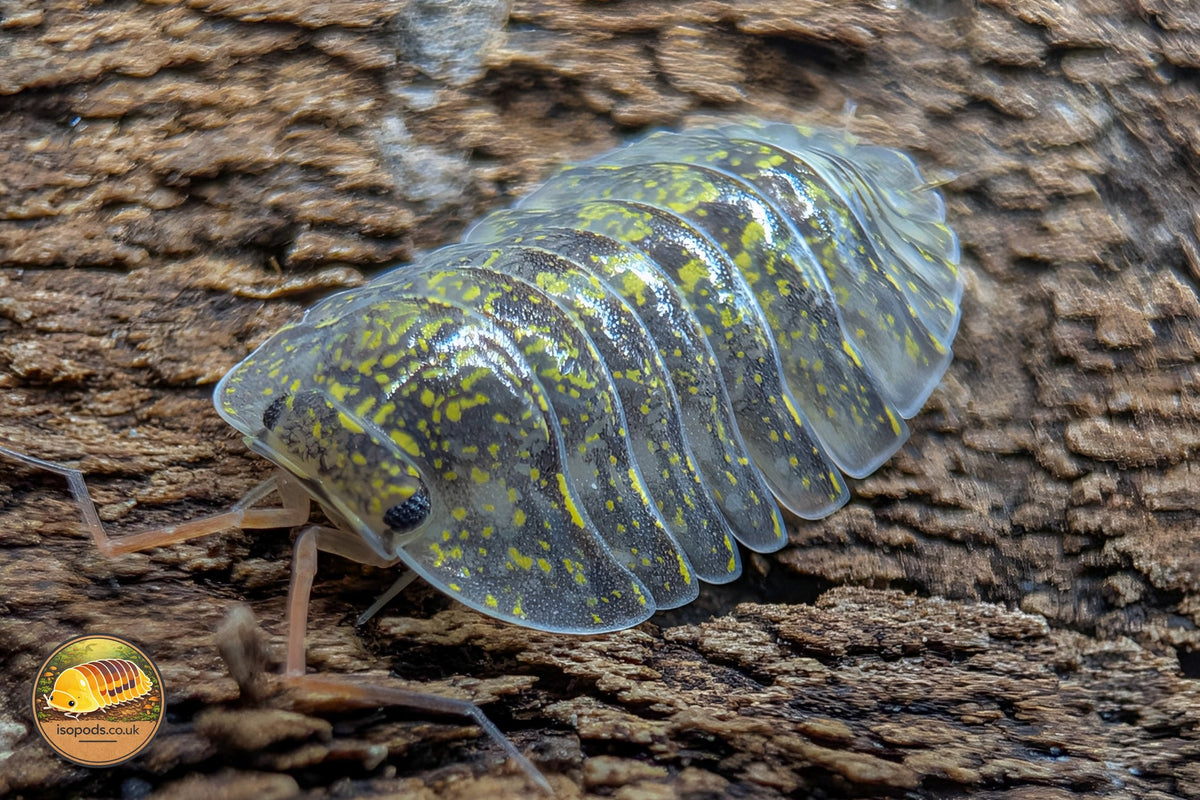
Troglodillo Green Spot Isopod
Out of stock
Regular price
£95.00 GBP
Sale price
£95.00 GBP
Regular price
Unit price
per
Tax included.
Shipping calculated at checkout.
Couldn't load pickup availability
- Fully secure checkout
- Trusted by thousands
- Rated and reviewed
Want next day delivery? Be quick!
You just missed it!
Sorry, it's out of stock.
But we can let you know when it's back in.
Question about this product?
We're happy to help.
Sold out
Troglodillo Green Spot Isopods for Sale UK
Troglodillo Green Spot stands out for the contrast between its dark cave-style body shape and the unusual green spotting or green-highlight patterning that gives this form its name. It is a strong choice for keepers who want a more visually distinctive Troglodillo type without losing the secretive, crevice-focused behaviour that makes this genus so interesting.
This is not a species to buy for constant open visibility. A settled colony is more likely to use bark edges, leaf litter, tight shaded cover, and dark humid spaces than spend long periods out on bare substrate. The appeal is in the look of the animal and the way it uses sheltered parts of the enclosure, not in frequent open roaming.
What makes Green Spot different
-
Visual hook: dark-bodied Troglodillo with distinctive green spotting or green-highlight patterning. -
General behaviour: cautious, cover-focused, and usually tied to cracks, bark gaps, and humid sheltered areas. -
Visibility: often limited in the open; more likely to be noticed under cover or around protected edges. -
Setup style: better suited to a collector-style enclosure with strong cover, stable humidity, and fresh air.
How they usually use the enclosure
Green Spot should be treated as a Troglodillo first: a species that often feels most secure in tight hiding places rather than on exposed open floor. Expect them to spend time under cork bark, within heavy leaf litter, near damp cover, and around bark or hide edges where they can stay close to shelter.
Low open activity can be normal. More useful signs are whether the colony uses more than one sheltered area, whether leaf litter and wood are gradually being worked, and whether the enclosure stays clean-smelling rather than stale. If all individuals are pressed into one wet corner, the rest of the setup may be too dry, too bare, or too stale to use comfortably.
Before you order
Have the enclosure ready in advance. This species makes more sense in a humid but breathable setup with several shaded hiding places than in a flat tub with one damp patch. Aim for a reliable moist refuge, a drier but still covered side, and enough bark, litter, and wood that they can move without crossing too much exposed ground.
A deeper organic substrate, a thick layer of leaf litter, and pieces of rot wood help provide both food and shelter. A damp pocket of sphagnum moss can help keep one refuge usable without soaking the whole enclosure. Keep calcium available with something like limestone, and prioritise fresh air over sealed, swampy humidity.
Collector fit
Green Spot suits buyers who enjoy subtle enclosure behaviour, patient observation, and species with a more specialist feel. If you like watching isopods use cracks, bark gaps, and dark sheltered routes over time, this form has strong appeal.
If you mainly want frequent open sightings or quick visual feedback from every feeding, this type may feel too quiet. Troglodillo are usually better judged by steady use of sheltered spaces than by how often they cross the surface.
Feeding notes
Keep feeding detritus-led rather than relying on frequent rich extras. Leaf litter, mature substrate, and wood should do most of the work. Fresh foods can be offered sparingly, but secretive species often feed under cover, so a muted visible feeding response does not automatically mean the colony is underperforming. If you want a broader refresher on enclosure diet, what do isopods eat covers the basics clearly.
Common setup mistakes
-
Letting the enclosure dry too far: the colony may retreat into the last damp refuge and stop using the rest of the tub. -
Keeping everything wet: humid does not mean stagnant; soaked, stale substrate is a poor fit. -
Using too little cover: one hide and a lot of bare floor usually gives them too little usable space. -
Checking too often: repeated disturbance can keep a cautious colony tucked away for longer.
Compare before you choose
If you are browsing within the same genus, the Troglodillo isopods collection is the best next step. For a nearby comparison, Troglodillo Green Oyster is worth viewing if you are specifically comparing green-toned Troglodillo types, while Troglodillo Thanos offers another same-genus option if you want to compare style and presentation across darker specialist forms.
Ease of care
Preferred Temperature
Preferred Humidity
Popularity
Care Instructions
Care Instructions