🔥 Daily Isopod Auctions on WhatsApp! Grab species at auction prices, discover rare finds & join our growing community. Join Here
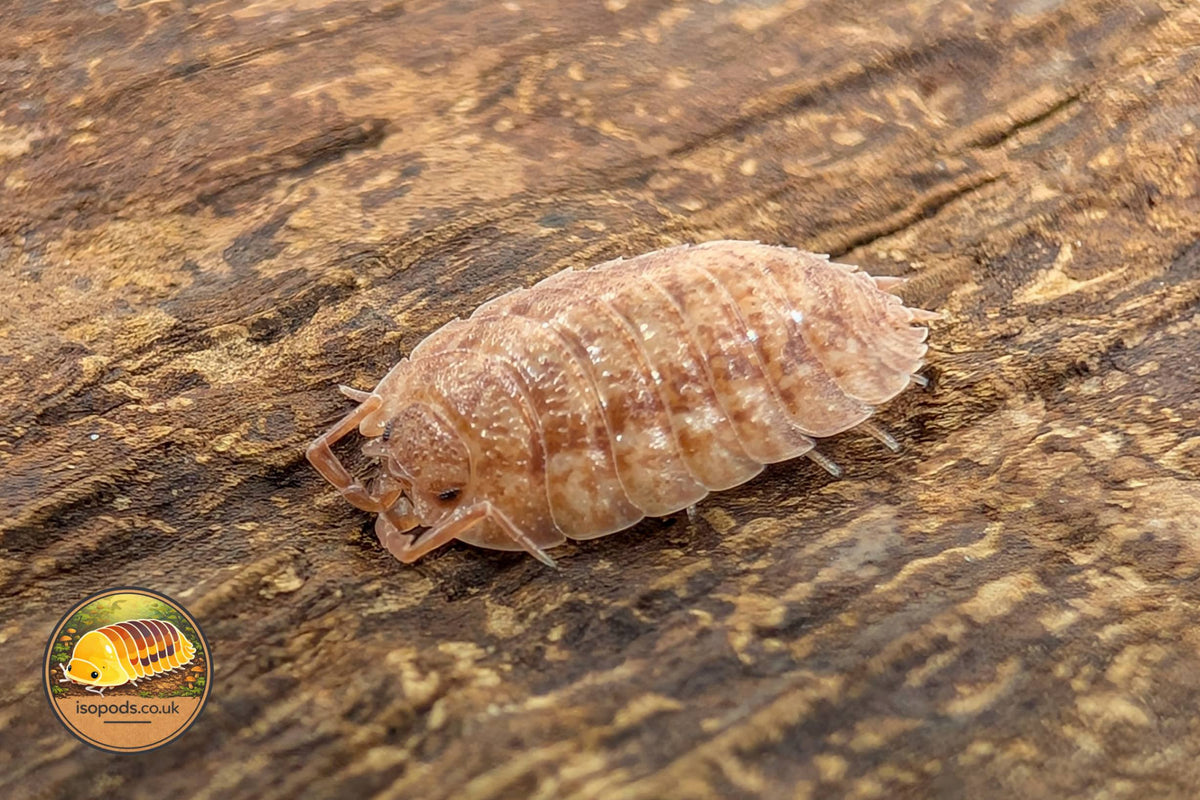
Porcellio ovalis "Red"
Low stock! Only 10 left
Regular price
£15.00 GBP
Sale price
£15.00 GBP
Regular price
Unit price
per
Tax included.
Shipping calculated at checkout.
Couldn't load pickup availability
- Fully secure checkout
- Trusted by thousands
- Rated and reviewed
Want next day delivery? Be quick!
You just missed it!
Question about this product?
We're happy to help.
Porcellio ovalis "Red"
Porcellio ovalis "Red" stands out for its compact build, quick movement, and warm colour range. In the enclosure, colonies can show rich red, orange-red, and other warm tones, with some individuals appearing duller, deeper, or slightly greyish or purple depending on the stock and how they are viewed. If you want a smaller Porcellio that still gives lively movement rather than staying hidden for long periods, this is an appealing choice.
Compared with more secretive tropical species, this form is often easier to notice moving through leaf litter, around bark edges, and near feeding spots once settled. That does not mean it should be kept bare for display. It looks and behaves best when it has enough cover to move confidently between a damp refuge and drier areas.
What makes Ovalis Red stand out
-
Colour: warm red to orange-red tones are the main visual draw, with some variation across the colony. -
Movement: small, quick, and active for a Porcellio, often giving more visible enclosure use than hidden tropical species. -
Size impression: a more compact look than larger, heavier-bodied Porcellio. -
Visibility: often easier to spot around cover, food, and litter than species that spend most of their time under the surface.
How they usually use the enclosure
This is the kind of Porcellio that can make a setup feel more animated. You are more likely to notice movement along leaf litter, bark edges, and feeding areas than with a shelter-heavy tropical genus. If the enclosure is working well, the colony will often use more than one area instead of piling into a single wet corner.
If they become much less visible, constantly crowd the dampest spot, or stop using the drier side, the setup often needs checking. With Porcellio, that usually points to stale wet conditions, a weak moisture gradient, or too much exposed floor with not enough cover.
Setup that suits this species
Porcellio ovalis "Red" is best kept in a ventilated enclosure with a clear moisture gradient. Give them a damp refuge that stays moist below the surface, plus a drier but still usable side with leaf litter and shelter. The aim is choice: they should be able to move between damp and drier areas without crossing a bare open tub.
A practical setup usually includes plenty of cork bark, a good layer of leaf litter, and enough substrate depth to hold moisture without turning muddy. If you are still building the enclosure, the isopod habitat setup guide is the best next read for balancing airflow, cover, and moisture.
Avoid keeping the whole tub evenly wet. Porcellio often use drier ground well, and when that disappears, behaviour can flatten out fast. Sour smells, food spoiling quickly, or the whole colony compressing into one corner usually mean the enclosure is too wet or too stale.
Feeding and long-term support
Like other isopods, this species should be fed as a detritus-based colony first. Leaf litter should always be available, with decaying organic material in the enclosure doing most of the long-term work. Fresh foods and protein can be useful in moderation, especially because Porcellio often show a strong response to them, but they should not replace the litter base.
Calcium is worth keeping available all the time rather than offering it occasionally. A simple source such as limestone helps support regular moulting and long-term stability. For a broader feeding overview, see what do isopods eat.
Who tends to enjoy this species most
Porcellio ovalis "Red" suits keepers who want a smaller, more active Porcellio with attractive warm colour and more readable enclosure behaviour than many hidden tropical isopods. It is a good fit if you enjoy watching how a colony uses litter, cover, and feeding zones rather than expecting every animal to stay out in the open all day.
It may be a weaker fit if your setup style is very humid, lightly ventilated, or kept wet from end to end. Buyers looking for a species for sparse tubs or uniform moisture are likely to get poorer behaviour from this one.
Compare before you choose
If you want to browse similar options, start with the Porcellio isopods collection. If you are comparing red-toned Porcellio specifically, Porcellio echinatus "Red Edge" is another useful one to look at. For broader genus-level setup and feeding differences, the Porcellio care guide is the best next step.
Ease of care
Preferred Temperature
Preferred Humidity
Popularity
Care Instructions
Care Instructions