🔥 Daily Isopod Auctions on WhatsApp! Grab species at auction prices, discover rare finds & join our growing community. Join Here
Porcellio echinatus "Red Edge" Isopod
20 in stock
Regular price
£5.00 GBP
Sale price
£5.00 GBP
Regular price
Unit price
per
Tax included.
Shipping calculated at checkout.
Couldn't load pickup availability
- Fully secure checkout
- Trusted by thousands
- Rated and reviewed
Want next day delivery? Be quick!
You just missed it!
Question about this product?
We're happy to help.
Porcellio echinatus "Red Edge" Isopods for Sale UK
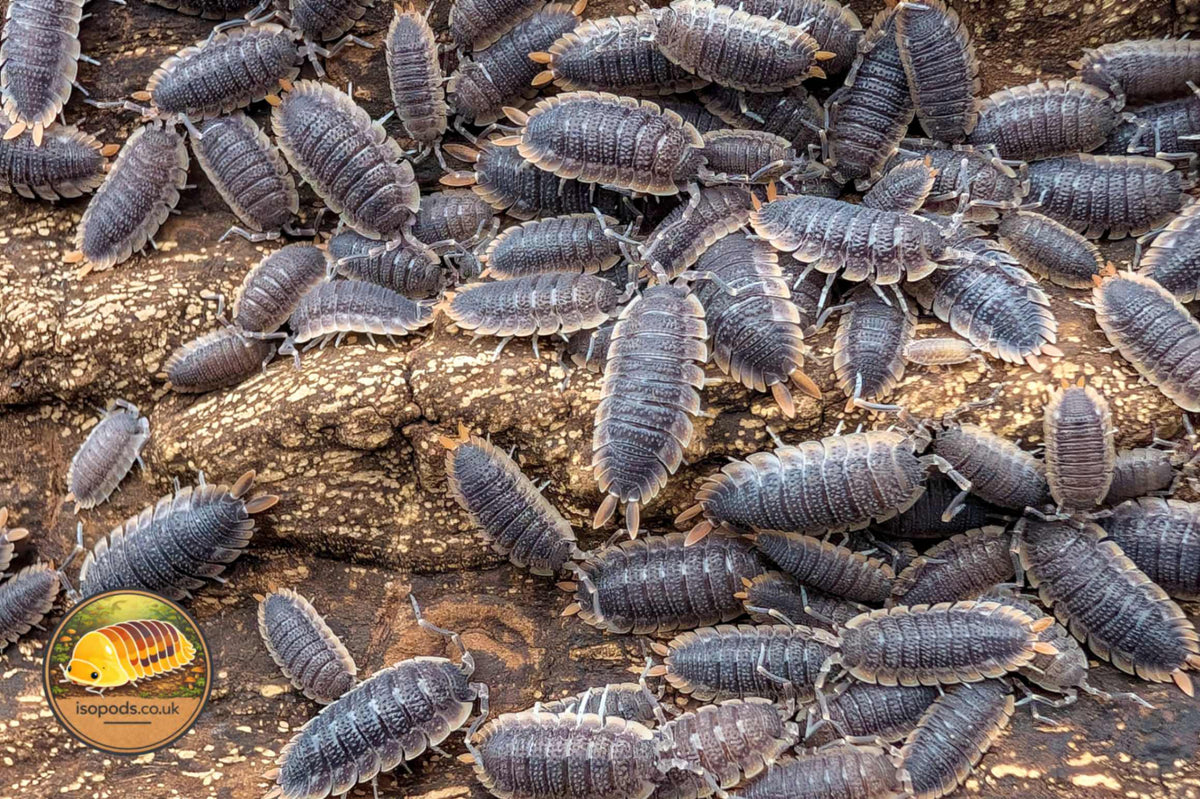
Porcellio echinatus "Red Edge" stands out for texture before anything else. This form has the rough, spiky, almost shark-skin look many keepers enjoy in echinatus types, with a darker grey-brown body set off by red to orange lateral edging that frames the segments and gives the colony a crisp outlined look.
It is also one of the more readable Porcellio styles in practice. Rather than behaving like a hidden tropical species, it is often easier to spot around bark, leaf litter, feeding areas, and the transition between the damp refuge and the drier side. That makes it a strong choice for buyers who want visible enclosure use without needing a wet tropical setup.
What makes Red Edge stand out
-
Visual hook: rough, spiny surface texture with a dark body and warm red-orange edging -
Behaviour: usually more open and food-responsive than shelter-heavy tropical genera -
Enclosure style: best treated as a ventilated Porcellio, with a damp refuge rather than wall-to-wall humidity -
Keeper appeal: suits buyers who enjoy watching movement, feeding response, and how the colony uses different parts of the tub
How they usually look in the enclosure
Once settled, this species may be seen crossing open patches, pausing under bark edges, and feeding near cover rather than staying hidden all the time under one object. That said, they still use shelter. You are more likely to see normal behaviour when the enclosure has bark, litter, and shaded resting spots than in a bare box with only one hide.
If they stop using most of the enclosure and all gather in one wet corner, that often points to a setup issue rather than "normal hiding". With Porcellio, compressed behaviour can suggest stale air, too much moisture across the whole tub, or a drier side that is too exposed to use confidently.
Setup that suits this species
Think airy and dry-to-moist, not tropical and wet. A base of invertebrate bioactive substrate, a generous layer of leaf litter, pieces of cork bark, and steady mineral access from limestone will give the colony more usable space and more natural feeding contact.
Keep one side reliably damp below the surface, but let the rest of the enclosure stay drier on top with cover still in place. The drier side should not be bare. Add litter and bark so they can move between zones without sitting fully exposed. If you are setting up this kind of enclosure for the first time, the isopod habitat setup guide explains how to balance airflow, cover, and the damp refuge.
The main mistake to avoid is treating Red Edge like a humid tropical isopod. If the whole tub stays wet, open use often drops, food fouls faster, and the colony may lose the clear moisture choice Porcellio usually use well.
Feeding notes
This species should still be fed as a detritivore first. Leaf litter, decaying plant matter, mature substrate, and wood-based material should carry most of the diet. Fresh foods can be useful as extras, but they should not replace the enclosure food base.
Because Porcellio often show a clearer response to added foods, it is easy to offer too much. Small portions are safer than rich feeding that lingers and spoils. If you want a broader guide to what should make up the long-term diet, see what do isopods eat.
Who tends to enjoy this species most
Red Edge makes most sense for keepers who want a Porcellio with strong texture, visible contrast, and behaviour that is often easier to follow than many hidden tropical species. It can be especially appealing if you like European-style Porcellio with a drier setup bias and a colony that gives clearer feeding and movement feedback.
It may be a weaker fit if your preference is for very humid, heavily enclosed tropical tubs or if you usually keep isopods in evenly wet conditions. Buyers looking for a species that should thrive in sparse, flat, or over-misted setups may find this one less forgiving.
Compare before you choose
If you want to stay within the same genus, browse the Porcellio isopods collection for other active, airflow-friendly options. If you want another Porcellio often considered by buyers looking at easier-to-read species, Porcellio tortonesei is a useful comparison. For broader genus-level care differences, the Porcellio care guide is the best next read.
Ease of care
Preferred Temperature
Preferred Humidity
Popularity
Care Instructions
Care Instructions