🔥 Daily Isopod Auctions on WhatsApp! Grab species at auction prices, discover rare finds & join our growing community. Join Here
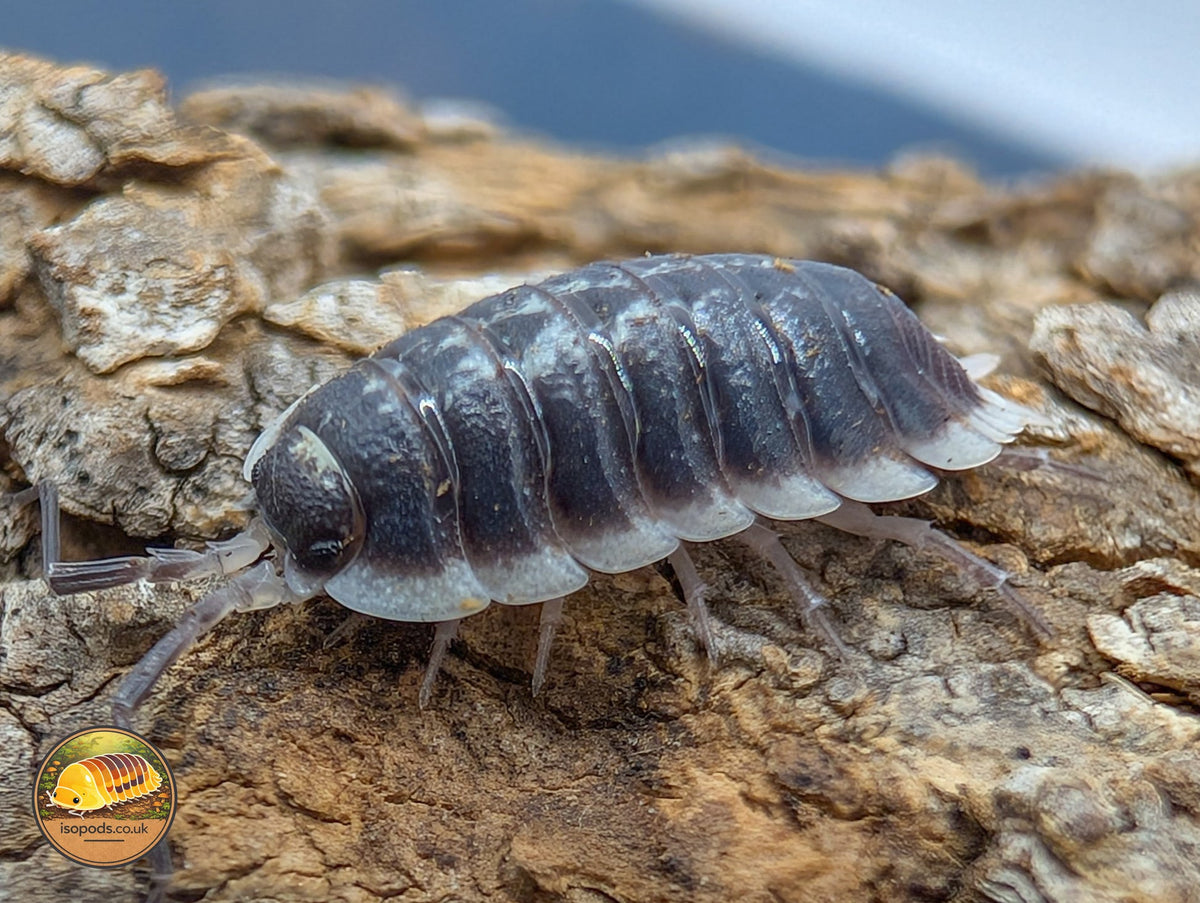
Porcellio flavomarginatus Isopod
Low stock! Only 10 left
Regular price
£25.00 GBP
Sale price
£25.00 GBP
Regular price
Unit price
per
Tax included.
Shipping calculated at checkout.
Couldn't load pickup availability
- Fully secure checkout
- Trusted by thousands
- Rated and reviewed
Want next day delivery? Be quick!
You just missed it!
Question about this product?
We're happy to help.
Porcellio flavomarginatus Isopods for Sale UK
Porcellio flavomarginatus stands out for its sharp border contrast: a darker body framed by pale, cream, white, or yellow-toned margins that give many individuals a clean outlined look. The "flavo-marginatus" name suits that effect well, even when the colony reads more black-and-cream than bright yellow. For buyers who want a Porcellio with both visual definition and easier-to-read enclosure behaviour, this is a strong species to consider.
It is also a more active, surface-readable Porcellio than many hidden tropical isopods. Once settled, you are more likely to notice it moving around bark edges, leaf litter, and feeding spots rather than staying buried for long periods. That does not mean a dry or sparse tub though. This species still needs fresh air, sheltered cover, a reliable damp refuge, and a drier side it can actually use.
What makes this species appealing
-
Outlined look: dark body colour with lighter margins that create a crisp bordered appearance. -
Readable behaviour: often easier to observe than quieter tropical genera, especially around cover and food. -
Active Porcellio style: usually makes good use of litter, bark edges, and the dry-to-moist transition when settled. -
Collector interest: the contrast pattern gives it a different look from plainer grey Porcellio options. -
Setup style: best approached as a ventilated species with space, cover, and a clear moisture gradient rather than wall-to-wall humidity.
How it tends to use the enclosure
Porcellio flavomarginatus can be a satisfying species for keepers who enjoy seeing where their colony actually chooses to sit and feed. In a well-balanced enclosure, individuals may be found working through leaf litter, resting under bark, crossing open patches near shelter, and moving between the damp refuge and the drier side.
That makes behaviour easier to interpret than with many hidden tropical species. If the colony is using several covered areas, feeding without all piling into one wet corner, and showing activity around shelter, the setup is usually on the right track. If almost everything stays in one damp pocket, avoids the rest of the tub, or seems much quieter than expected, check whether the enclosure has become too wet, too stale, or too bare between safe areas.
Before you order
Prepare an enclosure with airflow, floor space, and more than one useful hiding place. A flat wet tub does not suit this species well. Add bark or cork so there are shaded undersides and edges to rest against, and make sure the colony can move under cover rather than crossing exposed substrate all the time. A piece of cork bark helps create both shelter and usable routes across the enclosure.
Keep one side reliably damp, but do not soak the whole setup. The drier side should still contain litter and cover so it remains usable rather than harsh and empty. Porcellio generally benefits from fresh air and choice. If condensation sits across too much of the tub, the substrate feels sticky, or the enclosure smells sour, conditions are likely too wet or stale for normal behaviour.
Feeding priorities
The main food base should still come from the enclosure itself: leaf litter, mature substrate, and decaying material. Adding rot wood gives the colony another long-term grazing surface and a sheltered place to feed, instead of making all feeding depend on extras.
Porcellio often shows a clearer visible response to supplemental foods than many tropical genera, which can be helpful for observation but also makes overfeeding easier. Small amounts of fresh food or protein can be useful, but if leftovers spoil quickly or leave sour patches, scale back and strengthen the detritus base first. Steady mineral access is also worth providing, and limestone is a practical option for ongoing calcium support.
Who will enjoy this species most
This species suits buyers who want a Porcellio with both pattern appeal and more visible day-to-day movement than many hidden tropical isopods. It can be a good fit if you enjoy watching activity around litter, bark, and feeding areas, and if your preferred setup style includes ventilation and a clear damp-to-drier split.
It may be a weaker fit if you prefer sealed humid enclosures, very sparse tubs, or species chosen mainly for lower-layer tropical hiding behaviour. If your usual approach is to keep everything uniformly wet, this is better treated as a species to prepare for properly before ordering.
Comparison and next step
If you want to browse similar genus-level options, start with our Porcellio isopods collection. If you are comparing visual impact within the genus, Porcellio baeticensis "Violets" offers a different kind of colour-led appeal. For setup help before buying, the isopod habitat setup guide explains how to balance airflow, cover, and a usable moisture gradient.
Ease of care
Preferred Temperature
Preferred Humidity
Popularity
Care Instructions
Care Instructions