🔥 Daily Isopod Auctions on WhatsApp! Grab species at auction prices, discover rare finds & join our growing community. Join Here
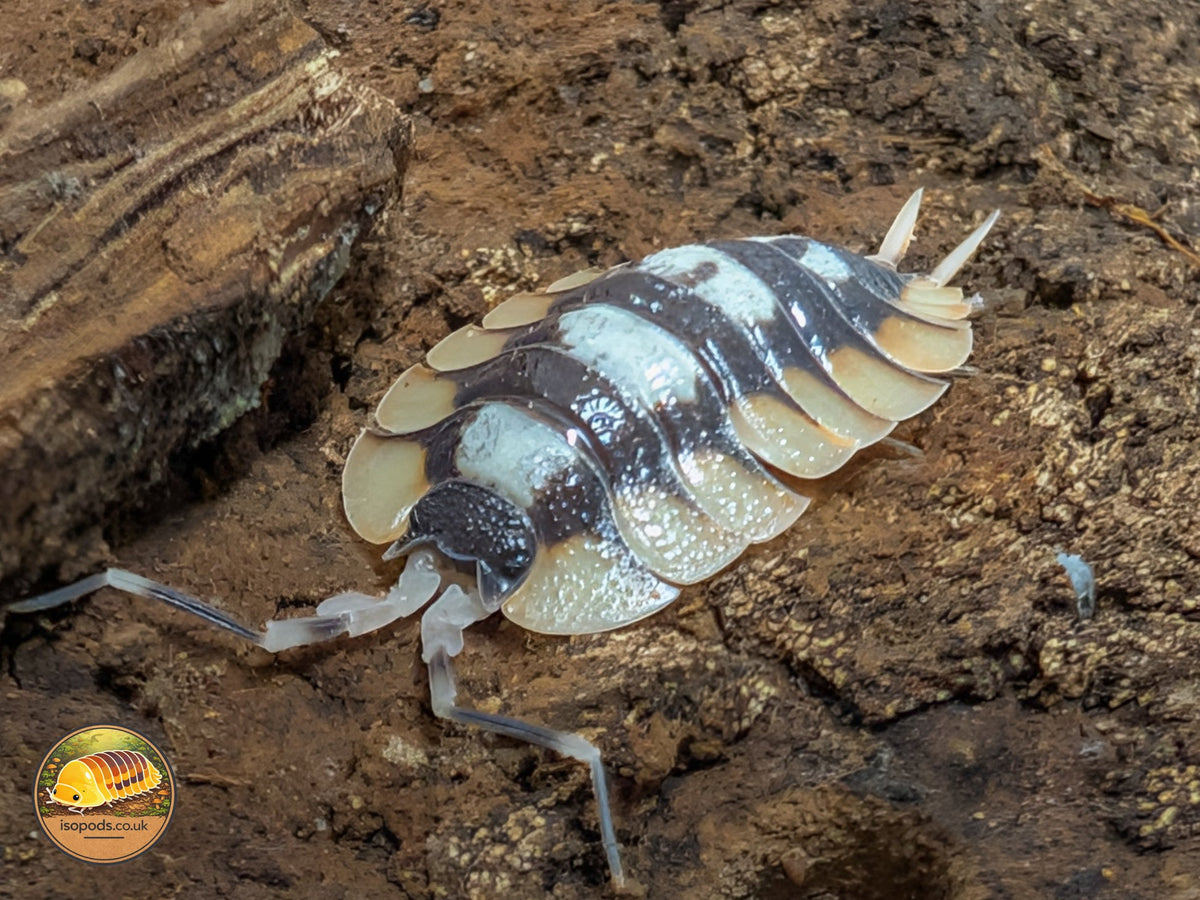
Porcellio expansus "Orange Tortosa" Isopod
15 in stock
Regular price
£22.50 GBP
Sale price
£22.50 GBP
Regular price
Unit price
per
Tax included.
Shipping calculated at checkout.
Couldn't load pickup availability
- Fully secure checkout
- Trusted by thousands
- Rated and reviewed
Want next day delivery? Be quick!
You just missed it!
Question about this product?
We're happy to help.
Porcellio expansus "Orange Tortosa" Isopods for Sale UK
Porcellio expansus "Orange Tortosa" stands out as a bold Spanish giant Porcellio with real visual weight. This Tortosa locality is best known for its vivid orange colour, broad armoured body shape, and the extra reach mature males can show in their antennae and uropods, giving the colony a striking, long-lined look once established.
In the enclosure, this is the kind of isopod people usually choose for size, shape, and presence rather than for a tiny hidden-cleanup style. It can be more noticeable than many quieter genera, especially around dusk, around food, and along bark, wood, hide edges, and open routes between the drier side and the moist refuge. That said, it still needs cover, floor space, and fresh air to show those strengths properly.
What makes Orange Tortosa different
-
Showpiece giant Porcellio look: large adults with a broad, armoured build rather than a small, compact look. -
Strong colour appeal: a vivid orange tone that gives this locality more impact than a standard grey-brown Porcellio. -
Spanish locality interest: Tortosa, Catalonia, Spain gives this listing more collector appeal than a generic orange form. -
Mature male presence: older males can develop especially long antennae and uropods, which adds to the species' dramatic outline. -
Readable behaviour: often easier to spot than hidden tropical isopods, but still not an always-out display animal.
How they usually use the enclosure
Once settled, Orange Tortosa often makes good use of open ground, bark edges, feeding spots, and sheltered routes between dry and damp areas. They can be impressive to watch because of their size alone, and larger individuals often look especially striking when moving across litter or stepping out from under bark at lower-light times.
Do not confuse that with wanting a bare enclosure. They generally look and behave better when the tub includes leaf litter, bark or cork, wood, and stone-like hides that break up the floor and let them move with cover close by. If the colony stays packed into one wet corner, avoids most of the enclosure, or only ever sits under one object, the setup is usually too wet, too exposed, or too stale.
Setup that suits this species
This Porcellio should be treated as a spacious, ventilated giant rather than a tropical wet-tub species. Give them a clear moisture gradient: one dependable damp refuge, and a larger drier area that still has plenty of cover and usable floor space. The goal is not dryness for its own sake. The goal is choice.
A thick layer of leaf litter helps with both food and cover. Add bark, cork, or similar hides so the colony has shaded undersides and edges to rest against; cork bark works well for that. Rotting wood also helps strengthen the enclosure food base and gives larger animals sheltered places to graze, so rot wood is worth including.
Airflow matters more here than in humid tropical styles. These isopods usually make better use of the enclosure when the damp area stays reliable but the rest of the tub is not saturated. If you want a fuller overview of how Porcellio setups should be balanced, the Porcellio isopods care guide is the most relevant next read.
Before you order
- Prepare an enclosure with more floor space than you would use for a small hidden species.
- Make sure there is a real drier side, not just a tub that is damp everywhere.
- Keep hides on both the drier side and near the moist refuge so they do not have to choose between shelter and moisture.
- Have a steady calcium source available; limestone is a useful long-term option for larger Porcellio types.
Feeding and long-term support
The main diet should still come from leaf litter, decaying plant matter, mature substrate, and wood-based detritus. Like many Porcellio, this species may show a clearer feeding response than more secretive tropical isopods, especially when settled, but fresh foods should stay supplemental rather than becoming the whole feeding plan.
Offer rich foods in small amounts and remove or reduce them if leftovers start spoiling. A stronger calcium presence is worth maintaining for a large-bodied Porcellio like this, and feeding tends to work best in covered spots on the drier side or around the transition zone rather than in a persistently wet corner. If you want a broader overview of detritus-first feeding, see what do isopods eat.
Who tends to enjoy this species most
Orange Tortosa makes the most sense for keepers who want a large, characterful Porcellio with real physical presence and who enjoy watching a colony use bark, litter, hides, and open floor over time. It is a better fit for someone building a roomy, airy setup than for someone wanting a uniformly humid tub or expecting constant all-day visibility.
If your main priority is a giant Porcellio look with a more classic orange Porcellio feel, Porcellio laevis Giant Orange is one comparison worth browsing. If you want to keep looking within the same broader group, the Porcellio isopods collection is the best next step.
Ease of care
Preferred Temperature
Preferred Humidity
Popularity
Care Instructions
Care Instructions