🔥 Daily Isopod Auctions on WhatsApp! Grab species at auction prices, discover rare finds & join our growing community. Join Here
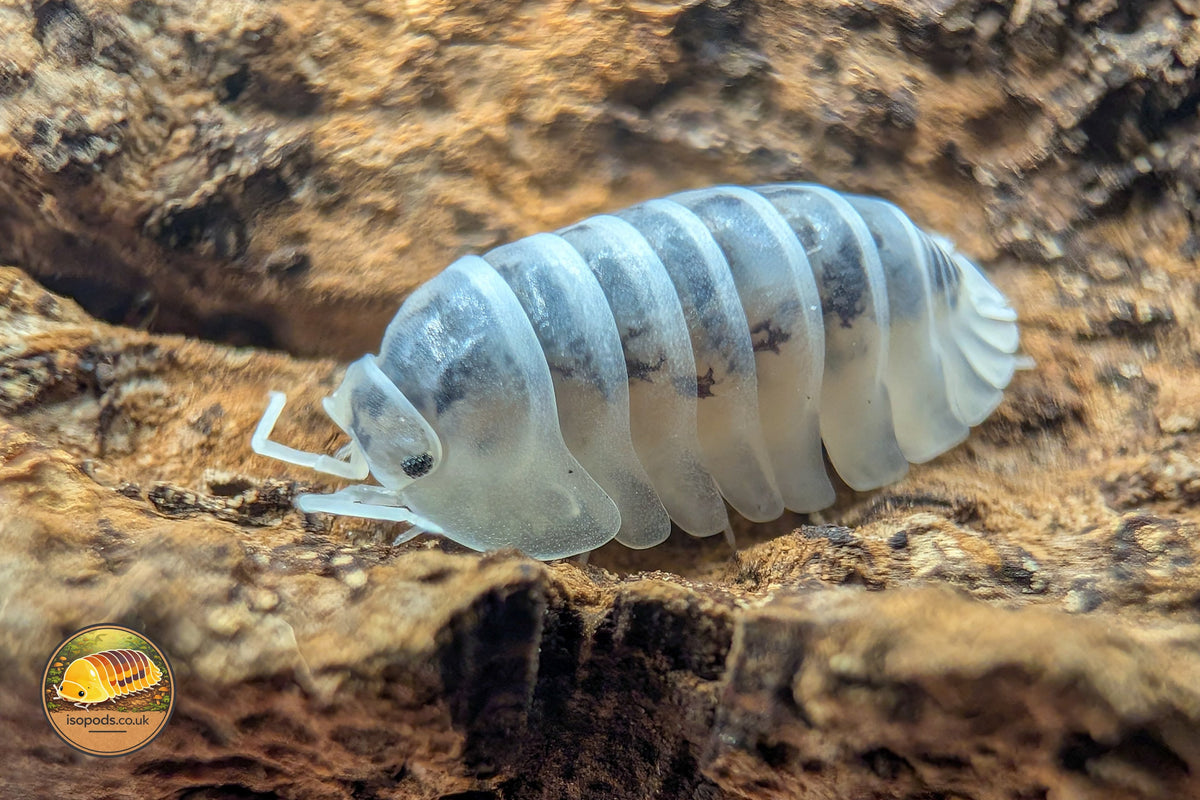
Nesodillo archangeli Shiro Utsuri Isopod
Low stock! Only 10 left
Regular price
£10.00 GBP
Sale price
£10.00 GBP
Regular price
Unit price
per
Tax included.
Shipping calculated at checkout.
Couldn't load pickup availability
- Fully secure checkout
- Trusted by thousands
- Rated and reviewed
Want next day delivery? Be quick!
You just missed it!
Question about this product?
We're happy to help.
Nesodillo archangeli Shiro Utsuri Isopods for Sale UK
Nesodillo archangeli Shiro Utsuri stands out for its crisp black-and-white contrast, with a pale base broken by bold dark markings that give the morph a marbled, koi-like look against leaf litter, bark, and natural substrate. For buyers choosing with both appearance and behaviour in mind, this is one of the more visually defined Nesodillo options when the colony is settled and moving normally.
In practice, Shiro Utsuri is best approached as a cover-using tropical Nesodillo that can still give satisfying above-cover movement. Rather than staying buried all the time, they may be seen exploring the surface, moving through bark and planted areas, and foraging more openly in the evening or when the enclosure offers enough shelter. That makes them appealing to keepers who want a more readable colony without treating them as a guaranteed constant-display species.
What makes Shiro Utsuri appealing
-
Colour contrast: white-toned base with strong black patterning for a high-definition look. -
Overall impression: marbled, koi-inspired markings rather than a flatter single-colour finish. -
Visibility style: often easier to notice than more hidden tropical types when cover, airflow, and moisture are balanced. -
Behaviour: can show lively surface exploration and regular foraging once established. -
Keeper appeal: a good fit for buyers who want a tropical roller with both visual impact and observable enclosure use.
How they usually behave in the enclosure
Shiro Utsuri may spend time under bark, leaf litter, and covered resting spots, but they are not best described as a species you only ever find buried away. Once settled, they can make good use of the enclosure surface, especially around bark edges, covered feeding spots, and evening-active routes through the litter. If the setup feels secure, you may also notice them climbing over bark and moving through planted or more naturalistic layouts.
Open movement should still be read in context. If they vanish entirely into one damp corner, the enclosure may be too bare, too dry away from the refuge, or too wet and stale in the wrong places. If they are using several covered areas, feeding steadily, and appearing around bark or leaf litter without the whole colony compressing into one hide, that is a better sign than expecting nonstop activity.
Before you order: setup that suits this morph
Prepare a warm, humid enclosure with fresh air, not a sealed wet tub. A reliable damp refuge should stay moist below the surface, while the rest of the enclosure should still include a drier but usable side with cover rather than bare open substrate. This gives them a proper choice between damper and drier areas.
Generous leaf litter, decaying wood, bark hides, and sheltered resting areas all matter here. A piece of cork bark helps create shaded undersides and climbing surfaces, while rot wood adds long-term grazing value as well as extra shelter. Keep calcium available with limestone, and use a damp patch of sphagnum moss if you need help keeping one moist refuge stable without soaking the whole tub.
If you are still refining your enclosure, the isopod habitat setup guide explains how to balance moisture, cover, and airflow in practical terms.
Feeding priorities
Like other isopods, Shiro Utsuri should be fed as a detritus-first species. The main food base should come from leaf litter, mature substrate, and decomposing wood, with fresh foods used as occasional support rather than the centre of the diet. If a colony only seems interested when extras are added, the enclosure usually needs a stronger litter and wood base.
Consistent mineral access is worth keeping available, and feeding is often easier to read when food is placed near cover rather than out on fully exposed floor space. For a broader feeding overview, what do isopods eat is the best next read.
Who is likely to enjoy this species most
This morph makes the most sense for keepers who want a visually striking tropical roller and enjoy watching real enclosure behaviour rather than judging everything by constant open-floor movement. The contrast pattern is a major draw, but the practical appeal is that a settled colony can also be quite engaging around bark, litter, and evening feeding areas.
It may be a weaker fit for buyers who want a species that tolerates broad setup drift, a sparse enclosure, or repeated disturbance without changing behaviour.
What to compare next
If you want another Nesodillo with a different look, Nesodillo archangeli Yellow Tiger is a useful same-species comparison. If you are browsing more broadly before deciding, the tropical isopods collection is the best next step for comparing similar warm-humidity setups and display style.
Ease of care
Preferred Temperature
Preferred Humidity
Popularity
Care Instructions
Care Instructions