deals ?
We have the a dedicated WhatsApp group where we make deals, giveaways, prizes, advice and photos available daily. Join here
Come join us for fun, advice, sales, and trades
Couldn't load pickup availability
Want next day delivery? Be quick!
We're happy to help.
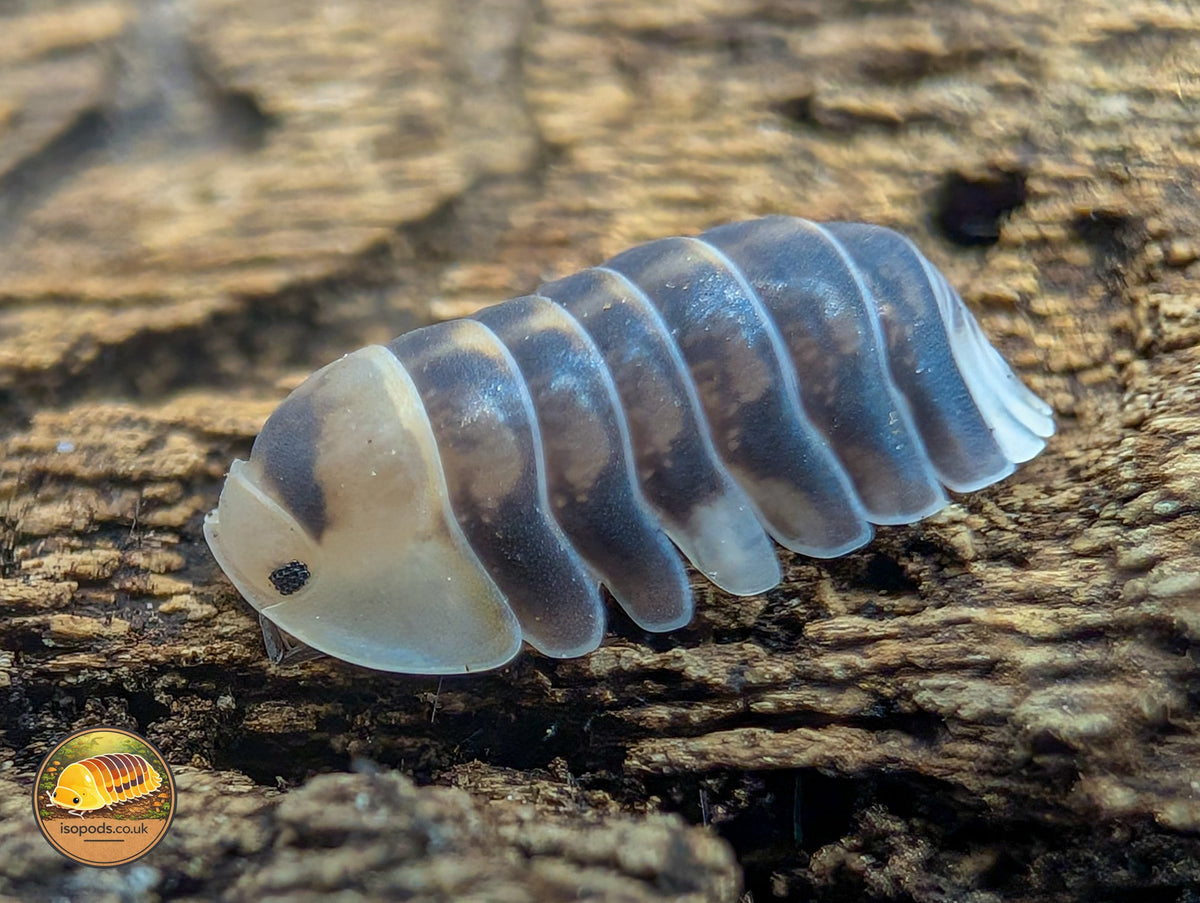
White Rubber Ducky is a pale, collector-facing Cubaris morph with the rounded “ducky” face that made this group so popular in the first place. The appeal here is the lighter white to silver-white look, often giving the colony a ghost-like appearance, sometimes with darker central contrast and occasional orange or caramel arrow-like markings adding extra detail.
In practice, this is still very much a shelter-loving Cubaris rather than a display-first isopod. Expect a shy colony that spends much of its time under cover, settles more slowly than easier species, and rewards a mature, humid enclosure with deep substrate, leaf litter, bark, and rotting wood rather than a sparse setup.
This species is usually found under cork bark, beneath heavier surface litter, around damp cover, and near feeding spots that stay shaded. Even when settled, they are more likely to appear in sheltered areas than out on bare substrate.
That lower visibility is not automatically a problem. Better signs are gradual wear on leaf litter, quiet feeding under cover, and animals turning up in more than one hidden area rather than being crammed into a single wet corner. If the whole colony only uses one refuge, the rest of the enclosure may be too dry, too exposed, or too stale.
White Rubber Ducky tends to do best when the enclosure is already prepared rather than assembled after arrival. A deeper layer of bioactive substrate, generous litter cover, bark hides, and rot wood give them the sheltered feeding and resting spaces they usually use most.
Keep one humid refuge reliable below the surface, but do not soak the whole tub. A patch of sphagnum moss or damp moss can help hold that humid zone, while the rest of the enclosure should still have cover and a usable drier side. Cubaris usually do better in humid enclosures with fresh air exchange than in sealed tubs that stay wet and sour.
The main food base should come from the enclosure itself: litter, rotting wood, mature substrate, and the microbial films that build up over time. Fresh foods can be offered sparingly, but they should stay secondary. If the colony only seems interested when rich food is added, the enclosure food base is often too weak.
Steady calcium access is also worth keeping available. Limestone is a practical long-term option, and the broader isopod feeding guide is useful if you want to build the enclosure diet around detritus first rather than relying on extras.
This morph suits buyers who want the White Rubber Ducky look specifically and are happy to keep a quieter Cubaris well. It makes more sense for someone who enjoys checking bark undersides, reading subtle enclosure use, and letting a colony establish at its own pace.
It is less likely to satisfy anyone looking for bold feeding response, frequent open movement, or a species that copes well with repeated setup changes.
If you want to browse more sheltered tropical options, the Cubaris isopods collection is the best next step. For a nearby ducky comparison, Cubaris R13 Rubber Ducky keeps you in the same general style. If you want another pale white Cubaris with a different overall look, Cubaris Panda King Solid White is a useful contrast.
If you are still preparing the enclosure side first, the isopod habitat setup guide is the most useful next read before ordering.