deals ?
We have the a dedicated WhatsApp group where we make deals, giveaways, prizes, advice and photos available daily. Join here
Come join us for fun, advice, sales, and trades
Couldn't load pickup availability
Want next day delivery? Be quick!
We're happy to help.
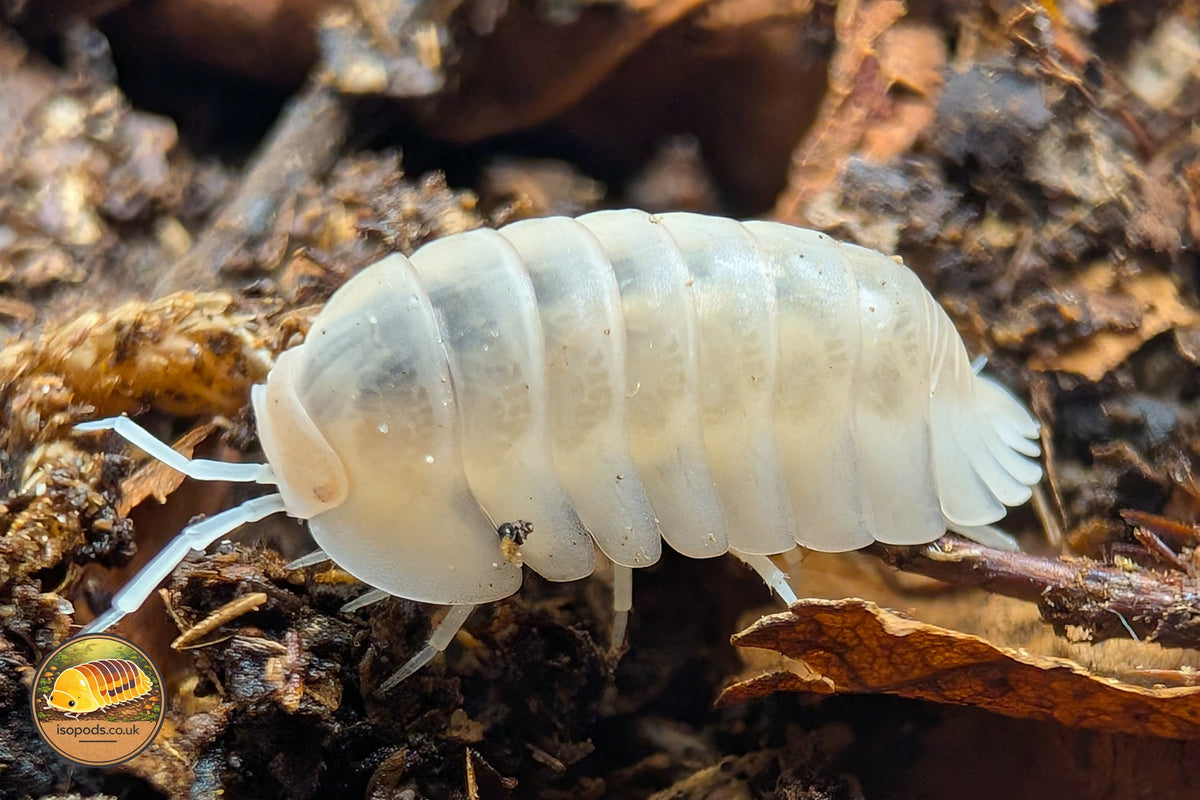
Cubaris Snow Queen (Blind Saturn) stands out for its ghost-like look: pale white to cream tones, a translucent Snow Queen appearance, and the reduced visual features that give this morph its distinctive cave-style character. This is the kind of Cubaris buyers usually choose for its unusual collector appeal rather than for frequent open display.
In keeper terms, Snow Queen Blind Saturn is best treated as highly secretive even by Cubaris standards. Expect most activity to happen in dark humid cover, under bark, through leaf litter, and around sheltered lower layers rather than out on bare substrate. If you enjoy occasional careful sightings and subtle enclosure behaviour, that can be part of the appeal. If you want a colony that is regularly out in the open, this is likely to disappoint.
The attraction here is the contrast between appearance and behaviour. Snow Queen Blind Saturn has a striking pale, almost spectral look, but it is usually appreciated in brief, careful observations rather than constant surface activity. In a settled enclosure, you may notice them tucked beneath cork, pressed into humid shaded gaps, or moving quietly through litter and wood rather than sitting out under the light.
That hidden style does not automatically mean the colony is struggling. For this type of Cubaris, it is more useful to look for steady litter use, quiet feeding under cover, and animals turning up in more than one protected area over time.
This species needs more than a simple damp tub. Start with a deeper substrate layer, plenty of leaf litter, and pieces of cork bark or similar dark cover so they have shaded undersides and tight hiding places. Add rot wood as part of the enclosure itself rather than as an occasional extra, since it supports both shelter and long-term grazing.
The humid side should stay reliably damp below the surface, with a dark refuge that does not dry too quickly. A pocket of sphagnum moss can help hold that moisture, but the whole enclosure should not become swampy. Snow Queen Blind Saturn is safer to treat as a species that wants stable warm humidity with fresh airflow, not a sealed wet box.
Mineral access is worth keeping available continuously. Limestone or cuttlebone fits this setup well as long-term calcium support in a sheltered tropical enclosure.
Most sightings will be around covered humid areas rather than open floor. They may stay under bark, inside litter pockets, or against damp lower surfaces for long periods, especially after disturbance. The reduced visual features noted for this morph also fit the low-light cave aesthetic buyers are usually looking for, so it makes sense to keep the enclosure calm, shaded, and low disturbance rather than repeatedly checking hides.
If the whole colony is jammed into one wet corner, the rest of the enclosure may be too dry, too exposed, or too stale to use. If they disappear after frequent adjustments, the problem is often instability rather than a lack of food.
Like other Cubaris, this species should be treated as detritus-first. The main diet should come from litter, rotting wood, mature substrate, and the microbial films that develop in a settled enclosure. The broader feeding logic is explained in what do isopods eat.
Fresh foods can be offered sparingly, but they should stay secondary. In a humid setup like this, overfeeding is more likely to foul the feeding area than improve colony performance. Quiet feeding under cover is normal, so do not judge the colony only by whether it rushes to exposed food.
Snow Queen Blind Saturn is a better match for keepers who like collector Cubaris, subtle enclosure behaviour, and unusual pale morphs with a specialist look. It makes more sense for someone who enjoys patient observation and careful setup work than for someone choosing their next colony mainly for open visibility.
Buyers who usually prefer more readable day-to-day movement may want to compare other options first, including the wider Cubaris isopods range or the broader tropical isopods collection.
If you want another Cubaris comparison with a different look and keeper experience, Cubaris rosea is a useful same-genus contrast. If you are still deciding whether a hidden collector colony suits your style, the Cubaris care guide is the most relevant next read before ordering.