🔥 Daily Isopod Auctions on WhatsApp! Grab species at auction prices, discover rare finds & join our growing community. Join Here
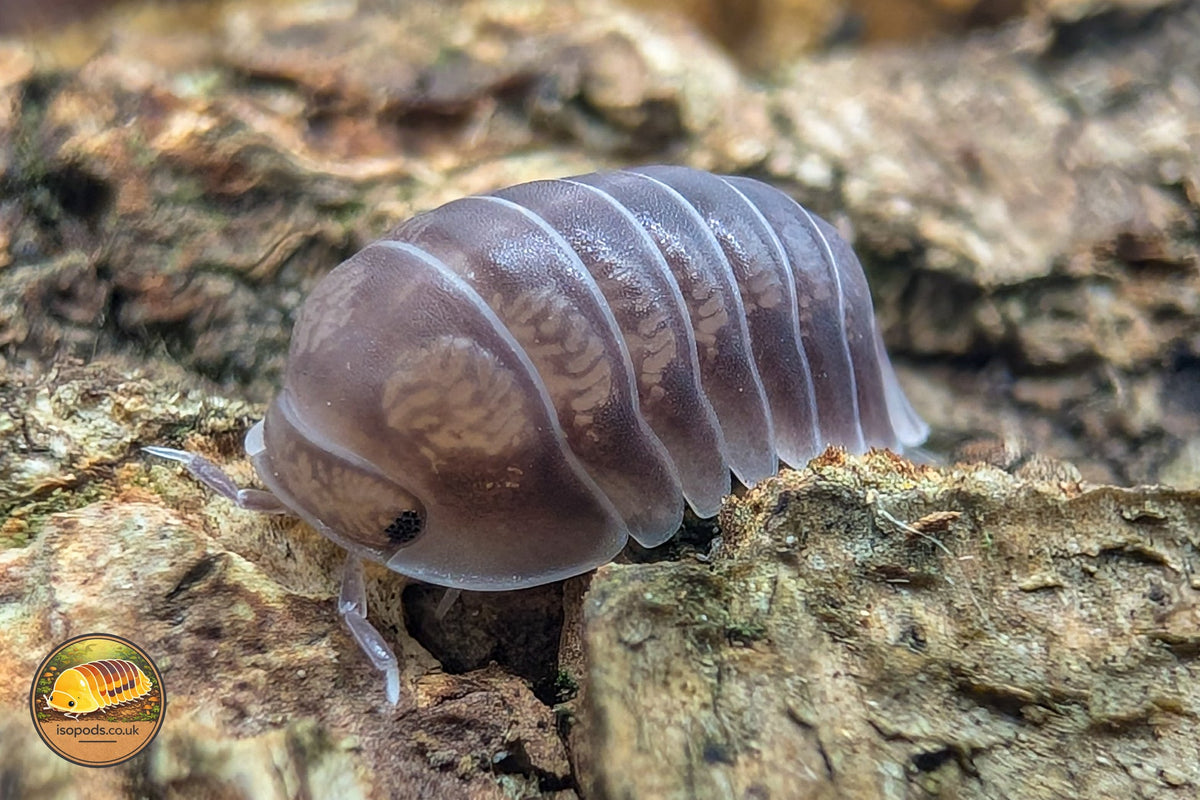
Cubaris Panda King Solid Black Isopod
Low stock! Only 10 left
Regular price
£15.00 GBP
Sale price
£15.00 GBP
Regular price
Unit price
per
Tax included.
Shipping calculated at checkout.
Couldn't load pickup availability
- Fully secure checkout
- Trusted by thousands
- Rated and reviewed
Want next day delivery? Be quick!
You just missed it!
Question about this product?
We're happy to help.
Cubaris Panda King Solid Black Isopods for Sale UK
Cubaris Panda King Solid Black is a darker Panda King-derived form with the usual pale panda-style banding reduced or, in some individuals, largely absent. The appeal is the cleaner, more minimal look: a deeper overall tone than classic Panda King, but still with the rounded Cubaris shape and sheltered behaviour Panda King keepers already expect.
This is best treated as a morph-focused tropical Cubaris rather than a high-visibility display isopod. Once settled, they are often found under bark, within leaf litter, and around damp covered areas, especially by day. If you want a darker Panda King look and do not mind checking under cover instead of expecting constant open activity, this form makes sense.
What makes this form stand out
-
Look: a darker Panda King-type appearance with less of the usual black-and-white contrast. -
Pattern: often cleaner and more minimal than standard Panda King forms, though not every individual should be expected to look uniformly black. -
Behaviour: typical Cubaris habits, with more time spent under cover than in the open. -
Collector appeal: a good choice for buyers who specifically want a darker panda-style morph rather than the classic banded look.
How they usually behave in the enclosure
Like other Cubaris, this form is usually more noticeable around bark edges, under cork, within lower leaf litter, and near sheltered damp spots than out on bare substrate. They may also become more active after dark or once the enclosure has been left undisturbed for a while. Low open visibility is not automatically a problem if the colony is using several covered areas and the enclosure still smells fresh and earthy.
If everything stays packed into one wet corner, that usually points to a setup issue rather than a personality trait. The rest of the enclosure may be too dry, too exposed, or too stale for them to use comfortably.
Before you order
Prepare a humid Cubaris enclosure with depth, cover, and choice. A good starting point is deep substrate, a generous layer of leaf litter, shaded bark hides, rotting wood, and one reliable damp refuge that stays moist below the surface without turning the whole tub wet.
Rot wood is worth treating as part of the enclosure rather than an extra, because it adds both grazing value and sheltered contact points. Limestone or another steady calcium source is also worth keeping available for long-term support. For broader genus-level setup expectations, the Cubaris care guide is a useful next read.
Feeding and long-term setup value
The main diet should come from the enclosure itself: leaf litter, rotting wood, mature substrate, and the microbial growth that builds up over time. Fresh foods can be offered in small amounts, but they should stay supplemental. A hidden feeding response is common in Cubaris, so food disappearing under cover is often more meaningful than dramatic surface feeding.
If you are unsure what should make up the real food base, see what do isopods eat.
Who tends to enjoy this morph most
This form suits buyers who are choosing primarily for appearance and are happy with quieter enclosure behaviour. It works better for keepers who enjoy darker morphs, patient observation, and stable tropical setups with plenty of bark, litter, and humid cover.
It may be less satisfying if you want frequent open sightings, a fast obvious feeding response, or an enclosure kept on the dry and exposed side.
Compare before you decide
If you prefer a lighter opposite take on the same Panda King style, compare with Cubaris Panda King Solid White. If you want another panda-type Cubaris with a different visual direction, Cubaris Pink Panda is another useful comparison. For a broader browse of similar sheltered tropical species, see the Cubaris isopods collection.
Ease of care
Preferred Temperature
Preferred Humidity
Popularity
Care Instructions
Care Instructions