🔥 Daily Isopod Auctions on WhatsApp! Grab species at auction prices, discover rare finds & join our growing community. Join Here
Cubaris Pink Panda Isopod
Low stock! Only 9 left
Regular price
£12.50 GBP
Sale price
£12.50 GBP
Regular price
Unit price
per
Tax included.
Shipping calculated at checkout.
Couldn't load pickup availability
- Fully secure checkout
- Trusted by thousands
- Rated and reviewed
Want next day delivery? Be quick!
You just missed it!
Question about this product?
We're happy to help.
Cubaris Pink Panda Isopods for Sale UK
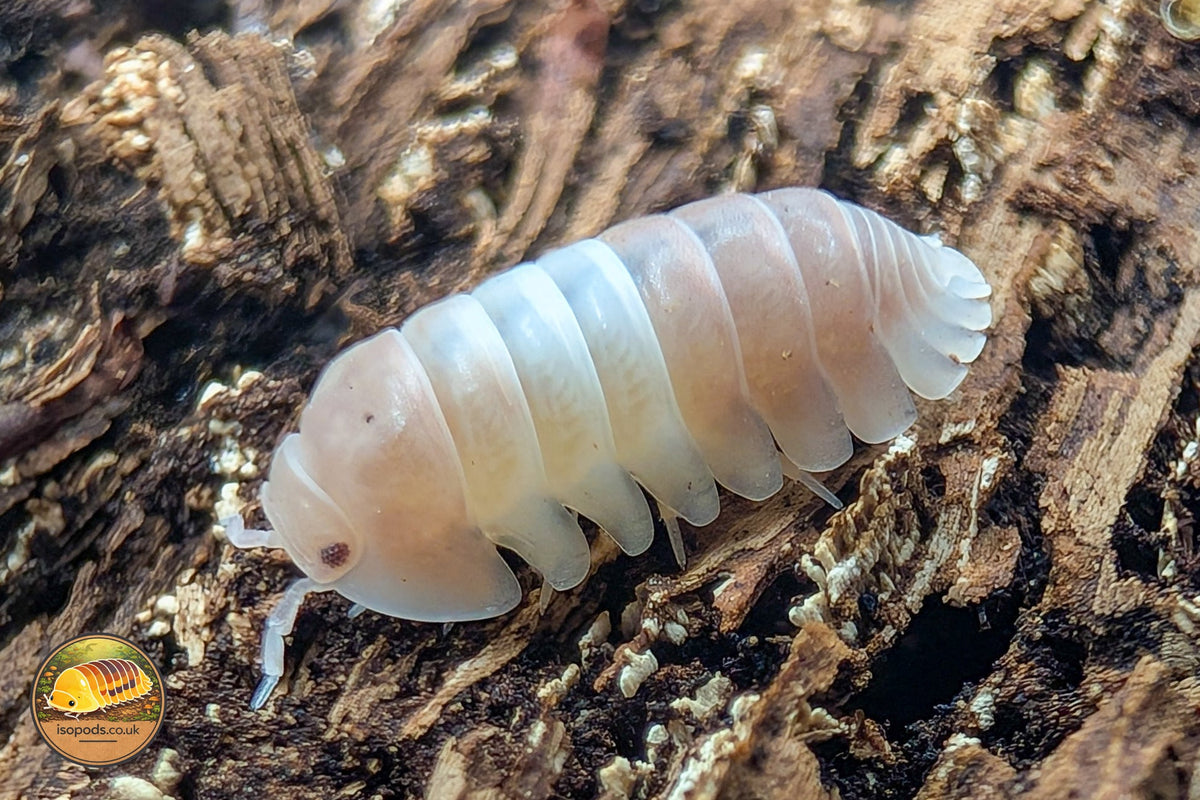
Cubaris Pink Panda is a softer-looking Panda-style Cubaris, prized for pale pink and white contrast rather than the bolder black-and-white look many buyers associate with Panda forms. The appeal here is subtle: light tones, distinctive face markings, and a calmer collector feel that stands out best when you enjoy close observation rather than constant open display.
In keeper terms, this is still very much a Cubaris. Expect it to spend much of its time under bark, within leaf litter, and around sheltered humid areas, especially while settling. Once the enclosure is stable, well covered, and not overly disturbed, you may see more activity around bark edges, covered feeding spots, and other protected areas.
What makes Pink Panda different
-
Colour tone: softer pale pink-and-white contrast instead of a harsher black-and-white Panda look. -
Visual style: distinctive markings give it a gentler collector appeal than many stronger-contrast Panda types. -
Behaviour: usually quiet and cover-oriented, with most activity happening around bark, litter, and humid shelter. -
Visibility: better judged by where it hides and feeds than by open-floor movement. -
Setup fit: best treated as a sheltered tropical Cubaris that needs humidity, cover, and clean air exchange.
How they usually use the enclosure
Pink Panda is more likely to be found under cork bark, under leaves, or tucked into the upper substrate than sitting out on bare ground. That does not automatically mean the colony is struggling. For many Cubaris, low open visibility is normal, especially in a newer enclosure or after recent disturbance.
A healthier sign is when the colony uses several covered places instead of packing tightly into one emergency refuge. If all of them stay in one damp corner, the rest of the tub may be too dry, too exposed, or too stale to use comfortably.
Before you order
Prepare a humid enclosure with a reliable damp refuge, a drier but still covered side, and enough leaf litter and bark that the colony can move without crossing too much exposed substrate. Pink Panda usually does better in a setup with depth, cover, and a steady food base than in a sparse tub that is kept wet just to hold humidity.
A useful starting point is mature substrate, plenty of leaf litter, some decaying wood, sheltered hiding places, and a damp moss pocket buffered with sphagnum moss. If you are still planning the enclosure, the isopod habitat setup guide is a practical place to check moisture, cover, and airflow before the colony arrives.
Feeding and long-term stability
Like other Cubaris, Pink Panda should be treated as a detritus-first species. The enclosure itself should do most of the feeding work through leaf litter, decomposing organic matter, and pieces of rot wood that double as both food and shelter.
Fresh foods can be offered in small amounts, but they should stay secondary. If the only obvious feeding happens when supplements are added, the enclosure may need a better litter and wood base. Consistent calcium access is also worth providing, and limestone is a simple way to keep that support available.
Who tends to enjoy this species
Pink Panda is a strong fit for keepers who enjoy tropical Cubaris with a softer, more unusual visual style and who do not mind checking under cover rather than expecting constant surface activity. The Vietnamese association often mentioned around this form may add to its appeal for collectors, but in practical care terms it is still safest to approach it as a sheltered, humidity-loving Cubaris rather than a display-first species.
If you mainly want frequent movement across open substrate, faster visible feeding, or a colony that gives constant feedback, this one may feel quieter than expected.
Things that commonly go wrong
-
The whole tub is kept wet: this can leave the enclosure stale and muddy instead of comfortably humid. -
Too little cover: one hide and lots of bare substrate often makes the colony seem more inactive than it really is. -
Weak food base: a few decorative leaves are not enough for long-term grazing. -
Too much checking: repeated lifting of bark and hides can slow settling and reduce normal enclosure use.
Compare before you choose
If you want to browse similar sheltered species, start with the wider Cubaris isopods collection. For another Panda-style comparison with a related look, Cubaris Citrus Panda is a sensible next view. If you prefer a softer pink-leaning comparison within the broader Panda style, Cubaris Rose Panda is also worth considering.
Ease of care
Preferred Temperature
Preferred Humidity
Popularity
Care Instructions
Care Instructions