🔥 Daily Isopod Auctions on WhatsApp! Grab species at auction prices, discover rare finds & join our growing community. Join Here
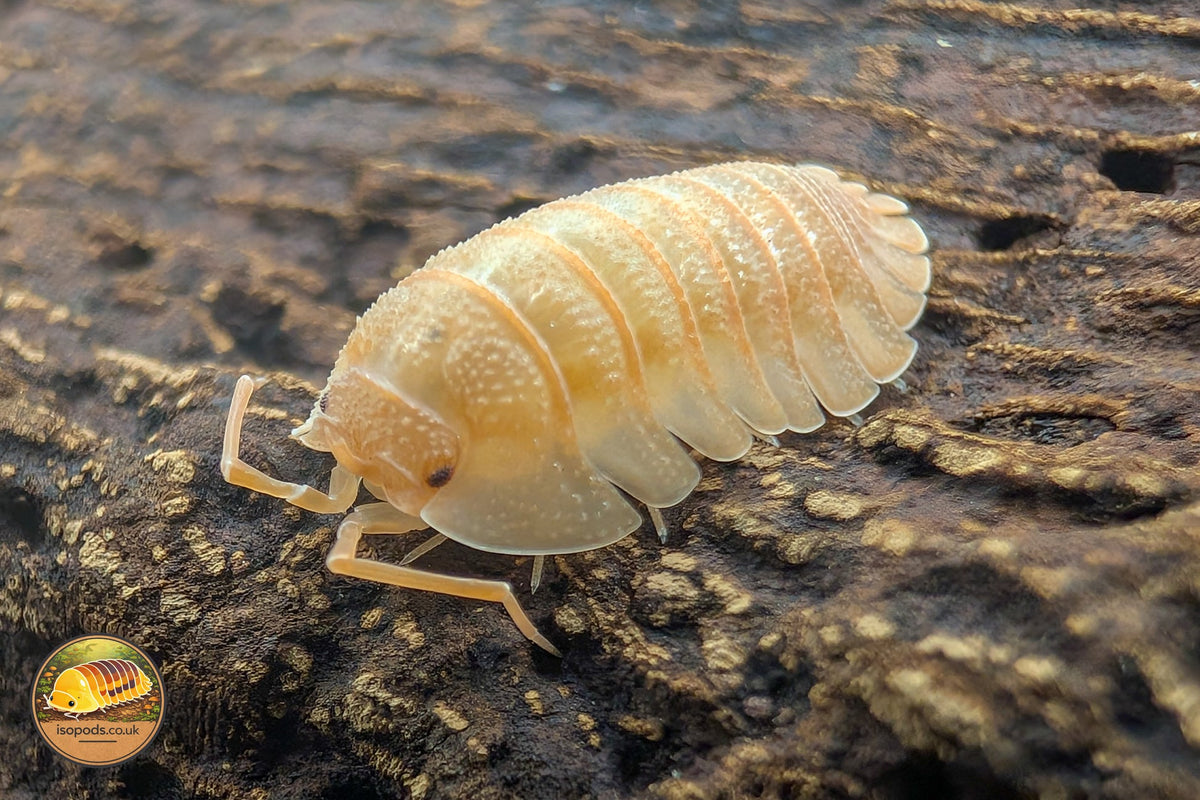
Armadillidium pallasii Orange Isopod
20 in stock
Regular price
£8.00 GBP
Sale price
£8.00 GBP
Regular price
Unit price
per
Tax included.
Shipping calculated at checkout.
Couldn't load pickup availability
- Fully secure checkout
- Trusted by thousands
- Rated and reviewed
Want next day delivery? Be quick!
You just missed it!
Question about this product?
We're happy to help.
Armadillidium pallasii Orange Isopods for Sale UK
Armadillidium pallasii Orange stands out for its warm orange to orange-brown tones on a classic rounded roller body. It suits keepers who want an Armadillidium with natural-looking colour, a neat conglobating shape, and behaviour that is often easier to read than many hidden tropical isopods.
Once settled, this species is often noticed around leaf litter, bark edges, and flat hides, especially where the enclosure offers a proper damp refuge and a usable drier side. It is not an always-out display animal, but it can be a satisfying choice if you enjoy seeing isopods move at ground level and roll up when disturbed.
What makes Pallasii Orange appealing
-
Colour: warm orange and orange-brown tones rather than stark high-contrast patterning -
Shape: classic rounded Armadillidium form with the familiar rolling defence behaviour -
Visibility: often easier to observe than more hidden tropical genera, especially around cover and feeding areas -
Enclosure use: tends to make good use of leaf litter, bark, hide edges, and the damp-to-drier gradient when settled
How they usually behave in the enclosure
This species is best treated as a cover-loving roller rather than an open-floor roamer. You are more likely to find it under bark, within leaf litter, or moving along sheltered edges than sitting out on bare substrate. That more readable ground-level activity is part of the appeal, but they still show themselves best when the enclosure feels secure.
If the colony spreads across more than one area, uses both sheltered damp spots and drier covered ground, and feeds near cover, the setup is usually working well. If everything stays packed into one moist corner, the rest of the enclosure may be too dry, too exposed, or too stale to use comfortably.
Before ordering: what to have ready
Prepare this species like an airy Armadillidium setup, not a tropical wet tub. A generous layer of leaf litter should cover much of the surface, with bark or flat shelter pieces creating shaded undersides and hide edges. One side should stay reliably damp, often with a small patch of sphagnum moss, while the other side stays drier on the surface but still covered enough to use.
Fresh air matters. They usually do better with a clear moisture gradient than with wall-to-wall dampness. If the enclosure smells sour, stays heavily condensed, or the wet side turns muddy, that usually points to stale moisture rather than a lack of humidity. If you want a broader refresher before buying, the isopod habitat setup guide explains how to balance cover, airflow, and moisture.
Feeding and calcium support
The main diet should come from the enclosure itself: leaf litter first, then mature substrate and decomposing wood. Adding rot wood helps build in long-term grazing and gives them another sheltered place to sit against rather than relying only on offered foods.
Fresh foods can be used in small amounts, but they should stay supplemental. For Armadillidium, steady calcium access is worth providing as a normal part of the setup, and limestone is a simple way to keep that available.
Who tends to enjoy this species most
Pallasii Orange can be a good match for keepers who like warmer natural colours, classic roller behaviour, and an enclosure that shows activity around litter, bark, and hide edges instead of only deep hiding. It is likely to be less satisfying for someone expecting constant open display or planning to keep everything uniformly wet.
Compare before you choose
If you want to browse similar rollers first, the wider Armadillidium isopods collection is the best next step. If you want another same-genus comparison with a different overall look, Armadillidium gestroi Milky Way offers a very different visual style. For broader genus-level care, see the Armadillidium care guide.
Ease of care
Preferred Temperature
Preferred Humidity
Popularity
Care Instructions
Care Instructions