🔥 Daily Isopod Auctions on WhatsApp! Grab species at auction prices, discover rare finds & join our growing community. Join Here
Ardentiella Wingwing Isopod
Low stock! Only 5 left
Regular price
£100.00 GBP
Sale price
£100.00 GBP
Regular price
Unit price
per
Tax included.
Shipping calculated at checkout.
Couldn't load pickup availability
- Fully secure checkout
- Trusted by thousands
- Rated and reviewed
Want next day delivery? Be quick!
You just missed it!
Question about this product?
We're happy to help.
Ardentiella Wingwing Isopods for Sale UK
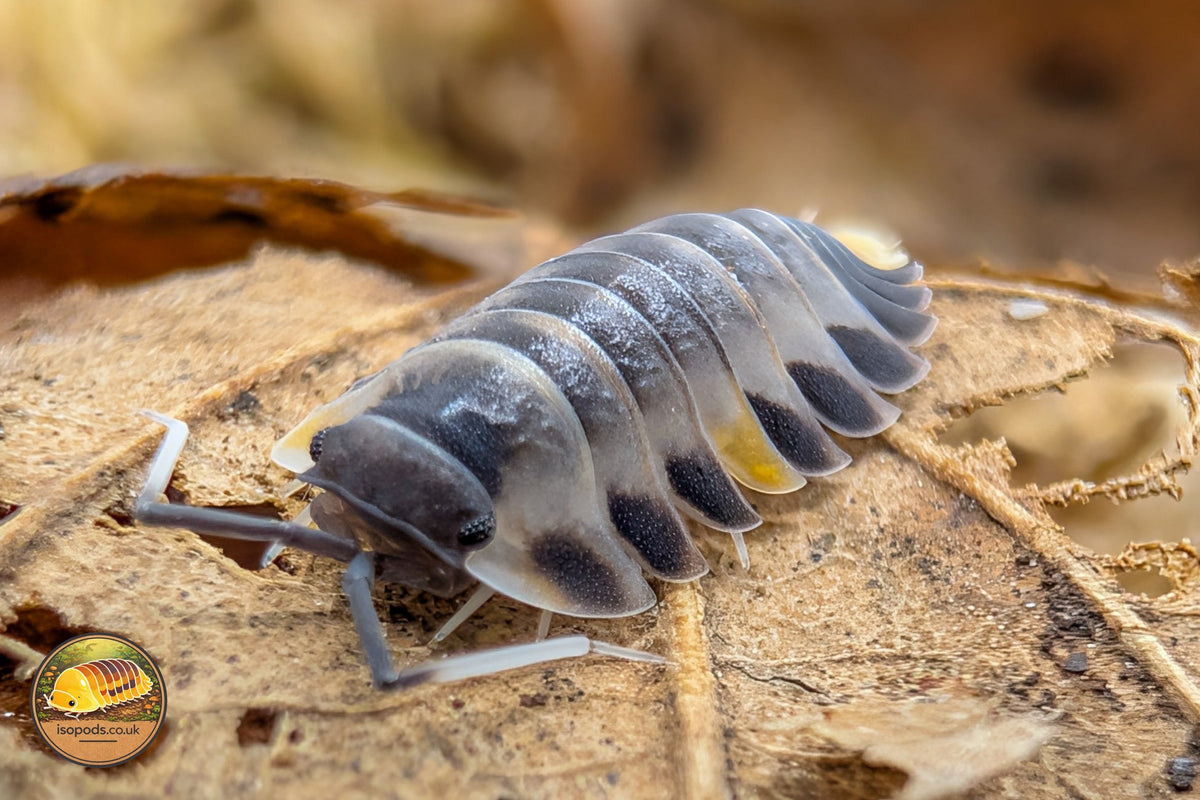
Ardentiella Wingwing is best chosen for its distinctive wing-tip style contrast: brighter, lighter rear-edge markings that give this morph its "WingWing" identity, especially when the animals are viewed against bark, cork, and other raised surfaces. This is a collector-led Ardentiella listing, with the appeal coming from pattern, outline, and how the markings catch the eye in a well-built enclosure.
In practice, this is not a species to buy for constant open-floor activity. Ardentiella are usually more interesting around bark faces, cork edges, branches, mossy cover, and lichen-bearing surfaces than on bare substrate. If you enjoy watching isopods use sheltered climbing routes and raised cover, WingWing makes more sense than if you want a colony that is always out in the open.
What gives WingWing its identity
The main draw here is the contrast at the rear and outer edges of the body, which creates the named WingWing look rather than reading as just another bright Ardentiella. In a suitable enclosure, that effect tends to show best when individuals are settled on angled cork, bark faces, or sheltered raised wood rather than buried in a plain floor-only tub.
-
Visual hook: lighter or brighter wing-tip style highlights at the rear edges of the body -
Best viewing context: bark, cork, branches, and other covered raised surfaces -
Behaviour style: often more readable around vertical or angled cover than on open ground -
Keeper expectation: shape-and-pattern appeal over constant visibility
How they use the enclosure
WingWing is best approached as a bark- and surface-oriented Ardentiella rather than a simple floor detritivore. A settled colony may rest against cork bark, move along branches, use bark edges, and feed where lichen-bearing surfaces, moss, wood, and leaf litter meet. They can be more visually rewarding than very hidden tropical genera, but they still rely on cover and usually retreat quickly after disturbance.
If they seem to vanish after rehousing, that is not automatically a problem. More useful signs are whether they are using several sheltered areas, whether feeding is happening under cover, and whether they spread across bark, wood, and litter over time rather than packing into one damp emergency corner.
Setup that suits this species
A good setup for Ardentiella Wingwing needs more than a damp substrate layer and one hide. Give them usable cork bark, angled wood, sheltered bark faces, branch-like climbing routes, and a floor layer with plenty of leaf litter underneath. The enclosure should feel humid and secure, but not flat, sparse, or stale.
One damp refuge should stay reliably moist, while the rest of the enclosure stays covered and breathable rather than wet everywhere. Small pockets of sphagnum moss can help hold that refuge steady, but it is better used as one buffered humid area than as a reason to soak the whole tub.
Rotting wood matters here as well. Adding rot wood helps build a better long-term food base and gives the colony more shaded places to sit and graze near bark and litter.
Strong ventilation is part of the care, not an optional extra. Ardentiella usually do better in humid enclosures with fresh air than in sealed wet tubs. If you need a broader refresher before ordering, the isopod habitat setup guide is the most useful starting point.
Feeding and support
The main diet should come from the enclosure itself: leaf litter, aged bark, mature detritus, biofilm, and decomposing wood. Lichen-bearing surfaces can be useful as part of the habitat and feeding pattern for Ardentiella, especially when they are placed where the colony can use them under cover rather than out in the open.
Calcium should be available consistently. A steady source such as limestone is worth adding so mineral access is always there without relying on richer foods. Fresh foods can be offered as supplements, but they should stay secondary to the litter-and-wood base.
Before you order
- Prepare bark or cork they can sit against, climb on, and hide behind.
- Make sure the enclosure has a real damp refuge, not a fully wet tub.
- Build in airflow so the setup stays humid without becoming stale or sour.
- Use deep litter and wood so feeding does not depend on constant fresh extras.
- Expect better observations around cover than on bare open substrate.
- Plan to leave the colony alone to settle rather than checking under every hide.
Who usually gets the most from WingWing
This morph makes the most sense for keepers who enjoy collector-focused Ardentiella, raised-surface behaviour, and subtle but distinctive patterning. It is a stronger fit for someone building a deliberate tropical enclosure with bark, wood, leaf litter, calcium support, and good air exchange than for someone wanting a forgiving first colony.
It may be less satisfying for buyers who prefer constant display activity, sparse enclosures, or species that regularly cross open floor in full view.
Compare before you decide
If you are browsing within the genus, the Ardentiella isopods collection is the best next step. For a same-genus comparison with a different visual route, Ardentiella Yellow Panda Caerulea is worth a look. If you want another Ardentiella option with a different overall feel again, Ardentiella Glass Phoenix gives you another useful point of comparison.
Ease of care
Preferred Temperature
Preferred Humidity
Popularity
Care Instructions
Care Instructions