🔥 Daily Isopod Auctions on WhatsApp! Grab species at auction prices, discover rare finds & join our growing community. Join Here
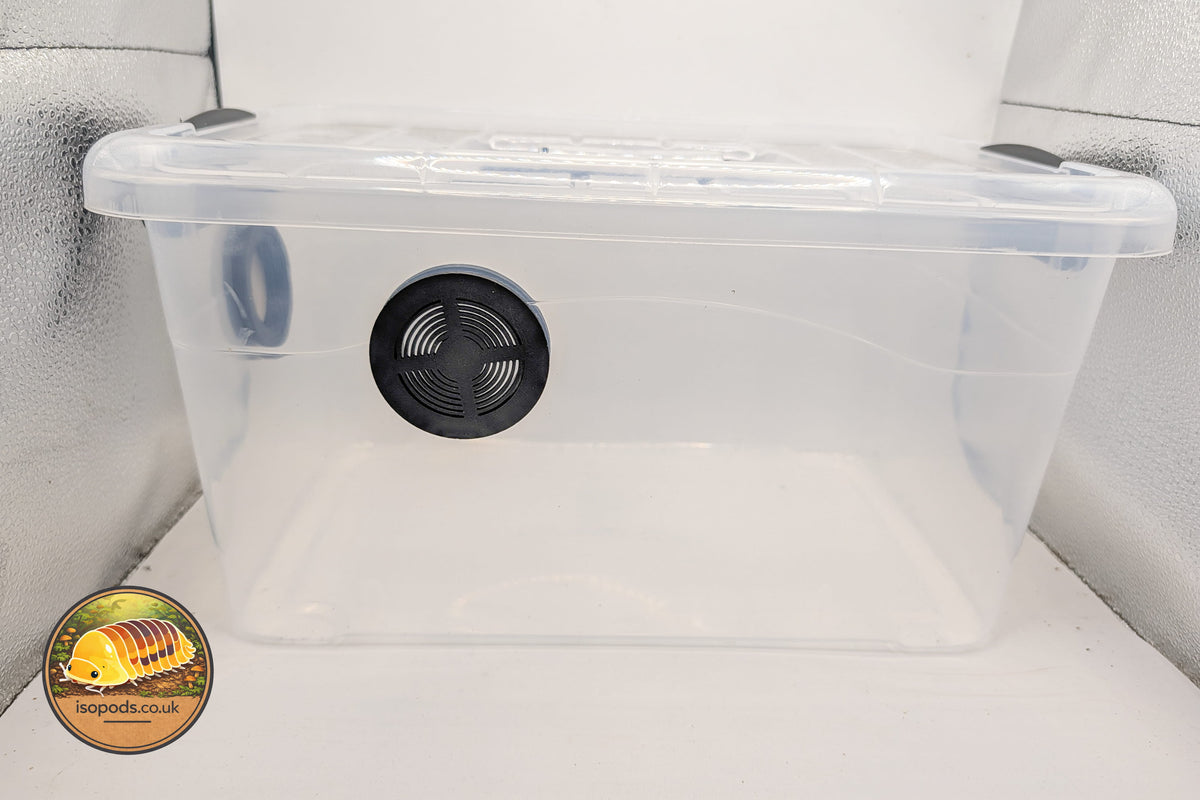
Vented Isopod Enclosure for Controlled Airflow
Out of stock
Regular price
£15.00 GBP
Sale price
£15.00 GBP
Regular price
Unit price
per
Tax included.
Shipping calculated at checkout.
Couldn't load pickup availability
- Fully secure checkout
- Trusted by thousands
- Rated and reviewed
Want next day delivery? Be quick!
You just missed it!
Sorry, it's out of stock.
But we can let you know when it's back in.
Question about this product?
We're happy to help.
Sold out
Vented Isopod Enclosure for Controlled Airflow
A vented isopod enclosure helps make airflow easier to manage from one setup to the next. When a tub holds too much damp, still air, condensation can sit on the walls, food can foul faster, and the substrate can start to smell sour. Better ventilation makes it easier to keep a proper damp refuge while still leaving a drier covered area the colony can use.
What It Does
The main job of this enclosure is to make air exchange more predictable. Rather than trapping heavy, stale humidity, it supports steadier ventilation that can reduce lingering condensation and wet patches that never seem to dry back.
That matters because isopods do better when they have a real moisture gradient instead of one uniformly wet tub. They still need a moist retreat, but they also benefit from a drier side with cover for feeding and movement. If the whole enclosure stays stuffy and wet, colonies often bunch into one area and the setup becomes harder to read.
How It Fits Into a Working Setup
This is the main habitat tub for the colony, not just a container. Set it up so one side stays damp enough to act as a refuge, while the other stays drier on the surface but still usable under cover.
A practical layout often includes leaf litter across much of the surface for cover and long-term grazing, plus bark or cork so the colony can rest, feed, and move without crossing too much bare open substrate. If you want the moist side to stay more stable, sphagnum moss can help hold moisture in one refuge instead of pushing you to water the whole enclosure evenly.
How to Use It
Start with substrate deep enough to hold moisture without turning muddy, then build in a clear damp side and a drier side. Keep the moist refuge damp below the surface rather than soaked, and avoid placing the enclosure where a fan, radiator, or open window will push direct airflow across it all day.
Once the colony is settled, watch for a few simple signs:
- light condensation that comes and goes can be normal
- constant heavy condensation may mean the enclosure is staying too wet or too stale
- a fast dry-down on the surface may mean moisture is being lost too quickly for the species you are keeping
- if the whole colony crowds into one corner, the balance between airflow, cover, and moisture may need adjusting
If you are unsure how to build that balance, the isopod habitat setup guide explains how damp areas, drier areas, cover, and airflow work together.
When You Need a Vented Enclosure
This kind of enclosure is especially useful if your current tubs tend to stay stale, hold heavy condensation, or swing between soggy and dry with very little middle ground. It is also helpful if you want a more repeatable enclosure style across several colonies.
It may matter less if you already have a container that gives reliable airflow and a stable moisture gradient. The point is not ventilation for its own sake. The point is giving the colony more than one usable zone.
Common Mistakes
-
Blocking or covering vents: this traps damp air, so wet patches linger and the enclosure can start to smell stale. -
Letting the whole tub dry evenly: ventilation only helps when a damp refuge is still maintained. If everything dries back together, the colony loses its reliable moist area. -
Keeping the drier side bare: a dry side without leaf litter or cover often goes unused, even if the moisture level itself is right. -
Putting the tub in direct room airflow: a fan, sunny windowsill, or draughty spot can dry the enclosure faster than the vents were meant to.
Who This Is For
This enclosure suits keepers who want better control over stale moisture and more predictable day-to-day conditions. It can be a sensible choice for newer keepers learning to read condensation, smell, and colony clustering, as well as for experienced keepers trying to keep multiple setups more consistent.
It is less useful if you expect the enclosure alone to solve husbandry problems. Ventilation helps, but it still works as part of a wider setup that needs suitable substrate, cover, food base, and a proper damp refuge.
Why Choose This Product
A vented enclosure gives you a clearer starting point for balancing moisture retention with fresh air. That makes it easier to avoid two common extremes: sealed stale tubs on one side and over-drying tubs on the other. If you are comparing enclosure options more broadly, see Best Containers for Isopod Colonies.
Must have?