🔥 Daily Isopod Auctions on WhatsApp! Grab species at auction prices, discover rare finds & join our growing community. Join Here
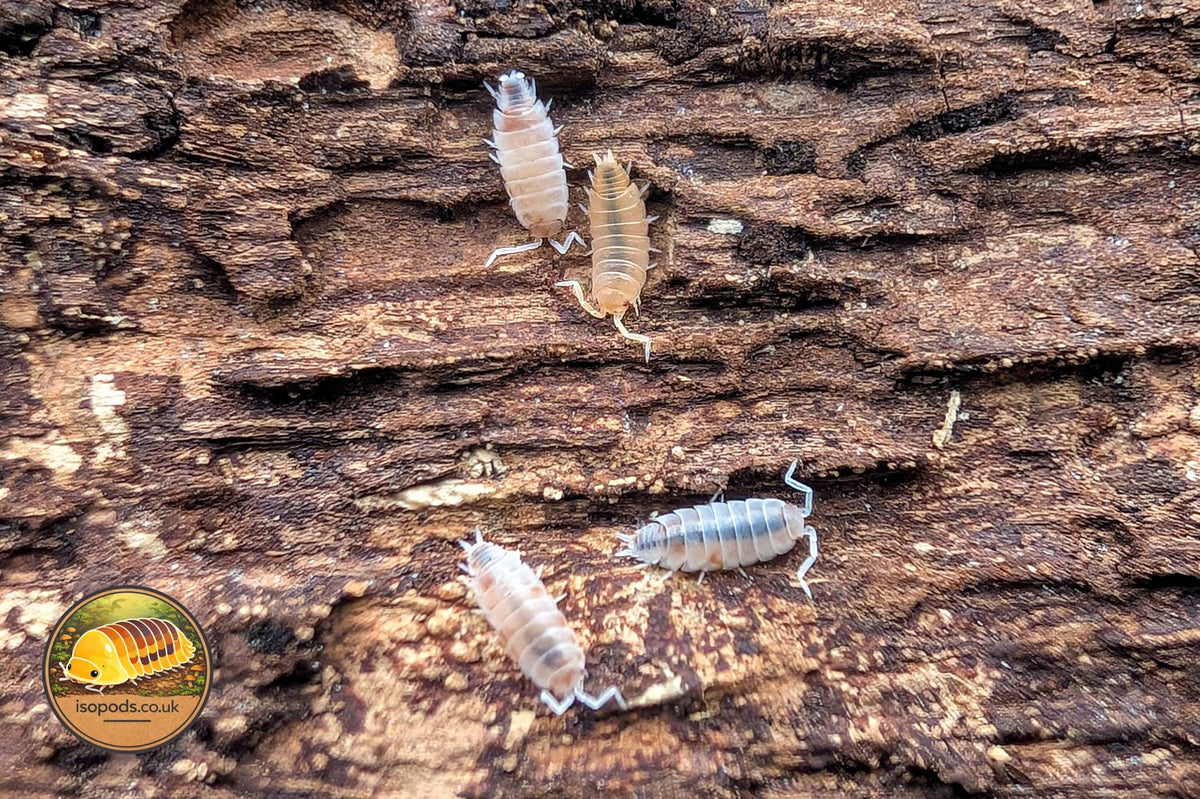
Porcellionides pruinosus "Powder Orange Pied" Isopod
50 in stock
Regular price
£6.00 GBP
Sale price
£6.00 GBP
Regular price
Unit price
per
Tax included.
Shipping calculated at checkout.
Couldn't load pickup availability
- Fully secure checkout
- Trusted by thousands
- Rated and reviewed
Want next day delivery? Be quick!
You just missed it!
Question about this product?
We're happy to help.
Porcellionides pruinosus "Powder Orange Pied" Isopods for Sale UK
Porcellionides pruinosus "Powder Orange Pied" is the orange pied form of the fast-moving powder isopod, combining the familiar quick, productive behaviour of pruinosus with brighter pattern variation. Instead of a more uniform orange look, this morph shows a vivid orange base broken by pale cream to white pied patches, so colonies tend to look more mixed and visually lively than standard Powder Orange.
In the enclosure, this is usually a readable, surface-active species rather than one that vanishes for long periods. Once settled, they are often seen moving through leaf litter, around food, and along bark or hide edges, which makes them appealing to keepers who want a colony that is easier to observe than many quieter tropical isopods.
What stands out about Powder Orange Pied
-
Colour and pattern: bright orange broken by pale pied patches for a more varied look than a standard orange colony. -
Enclosure behaviour: quick, active, and often visible around the litter layer and feeding spots. -
General use: useful as part of bioactive clean-up support when the enclosure is already sensibly managed. -
Reading the colony: often gives clearer feedback through movement and feeding response than more hidden species.
How they usually behave
This morph should still be approached as Porcellionides pruinosus first: fast to move, quick to find food, and often spread through the upper layer instead of staying buried all the time. That does not mean they should be expected to sit out constantly in the open, but many keepers will notice more regular movement than they would from secretive humid genera.
Healthy colonies often use more than one part of the tub. You may find them under cover, in the top layer of substrate, around feeding areas, and travelling between the damp refuge and the drier side. If almost the whole colony stays packed into one wet corner, the rest of the enclosure may be too dry, too bare, or lacking enough covered routes to use confidently.
Before you order: setup that suits them
Prepare an enclosure with a real damp refuge and a drier usable side rather than keeping the whole tub evenly wet. They do well with plenty of cover, but they are usually easier to observe when that cover is spread across the enclosure instead of limited to one hide.
A practical setup includes decaying wood such as rot wood, bark or cork for shaded undersides and edges, and reliable calcium access from something like limestone. A patch of sphagnum moss can help keep the damp refuge steady, but the enclosure should still have enough airflow to stop food and substrate turning stale. If you want a fuller breakdown of moisture, cover, and ventilation, the isopod habitat setup guide is the best next read.
Feeding and upkeep
The main diet should still come from the enclosure itself: leaf litter, decaying wood, and mature detritus should do most of the work. Fresh foods and supplements can help, and this species often responds to them quickly, but that feeding response can tempt keepers to add too much.
If food is repeatedly left to mould or smell sour, reduce the portion size before adding richer items again. This species can help process waste in a bioactive setup, but it should not be treated as a shortcut around sensible feeding, airflow, or routine enclosure maintenance. For a broader refresher on what should form the main diet, see what do isopods eat.
Who tends to enjoy this morph most
Powder Orange Pied makes sense for buyers who want a more colourful pruinosus colony without losing the active, practical behaviour that makes powder isopods popular. It can be a strong fit for keepers who enjoy visible litter-layer movement, quicker feeding feedback, and a colony that can contribute to ongoing detritus breakdown in warm setups.
It may be less satisfying for buyers who want a slower, more tucked-away species for quiet observation, or for anyone planning a sparse tub with little litter, little cover, and rich foods added heavily into damp areas.
Compare before you choose
If you like the same species but want a different overall look, Tropical Grey offers a more subdued pruinosus appearance. If you want another high-contrast Porcellionides option, Oreo Crumble is the closest comparison. If your main goal is browsing similar options across the site first, you can also explore all isopods.
Ease of care
Preferred Temperature
Preferred Humidity
Popularity
Care Instructions
Care Instructions