deals ?
We have the a dedicated WhatsApp group where we make deals, giveaways, prizes, advice and photos available daily. Join here
Come join us for fun, advice, sales, and trades
Couldn't load pickup availability
Want next day delivery? Be quick!
But we can let you know when it's back in.
We're happy to help.
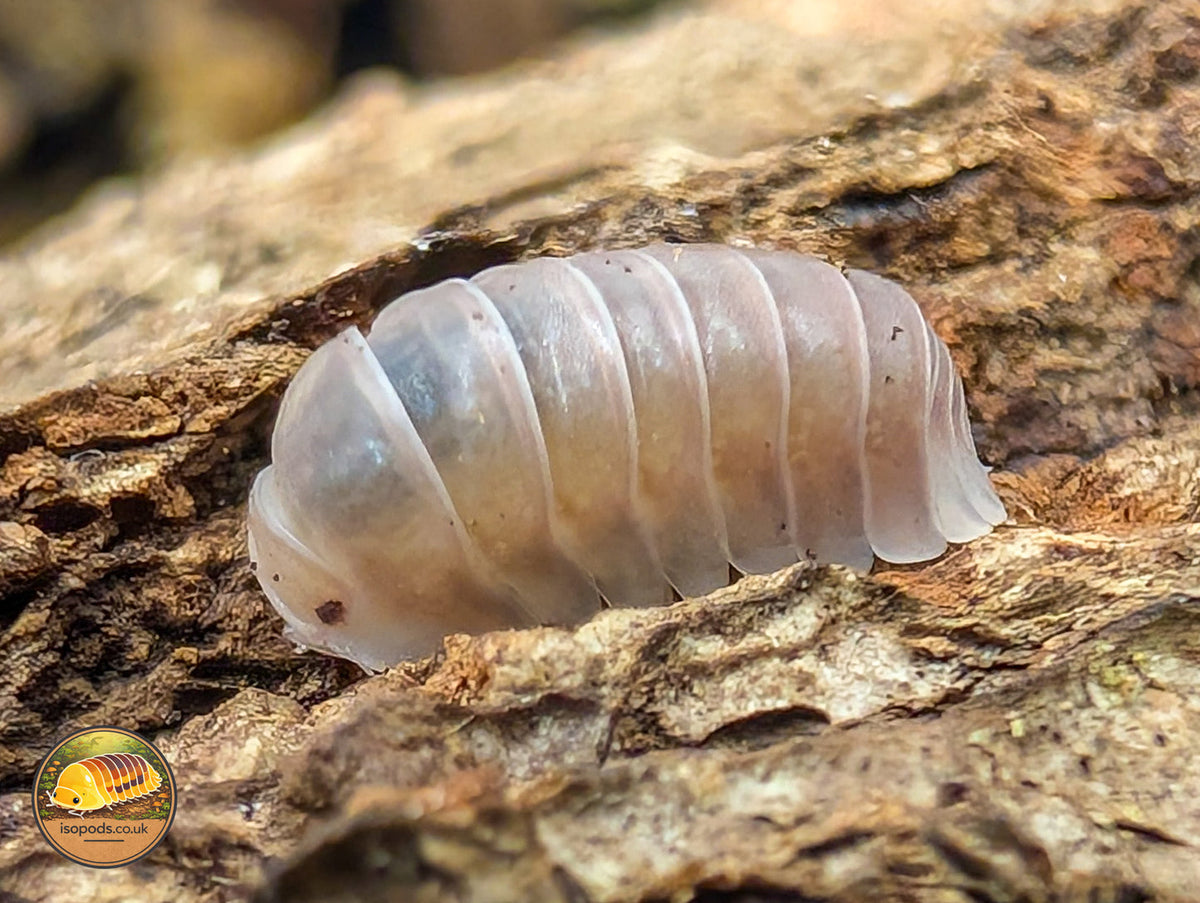
Cubaris Panda Rose Red Eye stands out through layered detail rather than loud contrast: a soft rose base colour, gentle panda-style patterning, and the red-eye feature that gives this morph its strongest collector appeal. If you are comparing pink or rose-toned panda-style Cubaris, that eye colour is the clearest point of difference.
In the enclosure, though, this is still best treated as a hidden or semi-hidden Cubaris rather than a constant display species. Expect more time under bark, leaf litter, and damp covered areas than out on open substrate, especially while the colony is settling.
This type is more likely to be found under cover than crossing bare open ground. A settled colony may spend long periods under cork bark, within deeper leaf litter, or around damp lower pockets where it can stay humid without sitting in a wet enclosure.
Low open visibility does not automatically mean something is wrong. For Cubaris, the better signs are gradual litter use, quiet feeding under cover, and animals turning up in more than one sheltered spot rather than all being packed into one failing corner.
This morph does best in a stable tropical setup with deep cover, not a sparse tub. Aim for a deeper substrate, plenty of leaf litter, bark or cork hides, and some rot wood so the colony has both shelter and long-term grazing surfaces.
The damp refuge should stay reliably moist, while the rest of the enclosure stays covered and usable rather than soaked from end to end. Moss can help hold that refuge steady, and sphagnum moss is a practical choice for one humid corner or sheltered pocket.
If the whole colony stays compressed into one damp patch, the rest of the enclosure may be too dry, too bare, or too stale to use comfortably. If you need a broader moisture-and-cover walkthrough before ordering, the isopod habitat setup guide is the best next read.
This is a stronger fit for keepers who like subtle collector detail and do not mind lifting bark occasionally to appreciate the colony properly. It suits buyers who already understand that many Cubaris are judged by stable enclosure use, not by constant surface movement.
It may be less satisfying if your main goal is frequent open activity or quick, obvious display behaviour.
Keep feeding detritus-first. Leaf litter, wood, and mature substrate should carry most of the diet, with fresh foods used as extras rather than the foundation. A quiet feeding response on the surface is not unusual if the colony is grazing under cover instead. For a fuller breakdown of the food base, see what do isopods eat.
Consistent mineral access is also worth providing for Cubaris, and limestone can be a useful long-term calcium source in the enclosure.
For a close same-style comparison, look at Cubaris Rose Panda if you want to compare against another rose-toned panda-style look, or Cubaris Red Panda if you want a stronger red-led alternative. You can also browse more Cubaris isopods or return to all isopods if you are still deciding between genera.