deals ?
We have the a dedicated WhatsApp group where we make deals, giveaways, prizes, advice and photos available daily. Join here
Come join us for fun, advice, sales, and trades
Couldn't load pickup availability
Want next day delivery? Be quick!
We're happy to help.
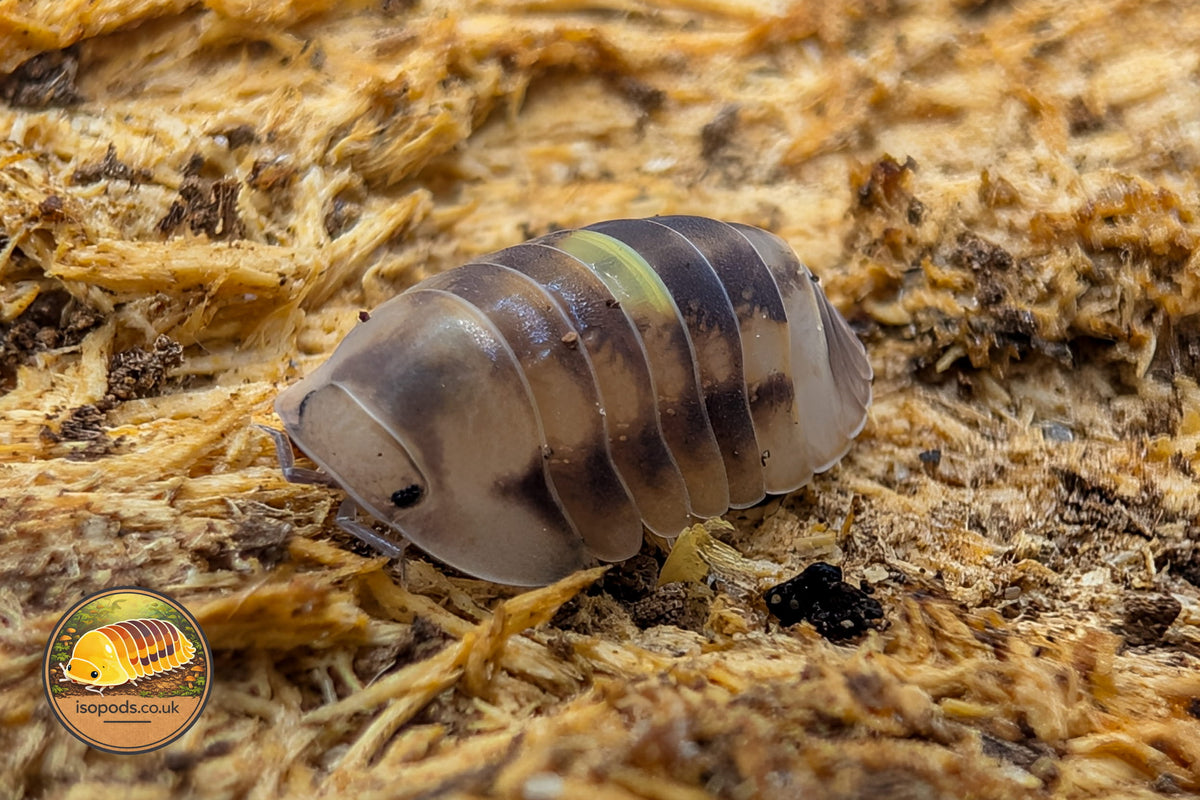
Cubaris Amber Firefly stands out for warm amber tones set against deeper, darker shading, giving this morph a softer glow than a loud high-contrast pattern. In a well-settled enclosure, that colour can look especially striking against dark substrate, bark, and leaf litter, which is where many keepers are most likely to notice it.
This is still very much a Cubaris-style isopod: often hidden, usually more at home under bark, within leaf litter, and around protected damp areas than out on open ground. If you want a tropical species with collector appeal built around colour depth rather than constant display behaviour, Amber Firefly is a much better fit than a species chosen for frequent surface activity.
Amber Firefly may spend long periods under cover, especially while settling. That does not automatically mean the colony is struggling. For many Cubaris, normal use looks more like animals appearing under bark edges, in leaf litter layers, near damp moss, or around sheltered feeding spots than crossing bare substrate in full view.
A healthier sign is broad hidden use rather than open activity. If you find them in several covered places and the enclosure smells clean and earthy, the setup is usually on the right track. If the whole colony ends up packed into one wet corner or one cramped hide, the rest of the tub may be too dry, too exposed, or too stale to use well.
Amber Firefly is best approached as a humid, shelter-loving Cubaris. Prepare a deeper substrate, plenty of leaf litter, rotting wood, bark hides, and one reliable damp refuge, while still leaving a drier side with cover rather than bare open floor. The goal is not a wet tub from end to end. The better result is a colony that can stay humid, hidden, and secure without being forced into one soggy patch.
Rot wood helps build long-term grazing into the enclosure as well as giving the colony another sheltered place to rest. A piece of cork bark or similar firm cover gives them shaded undersides and tighter hiding gaps, while sphagnum moss can help keep one damp refuge stable without soaking the whole setup.
These tend to reward prepared setups more than last-minute tubs. It is worth having the leaf litter, bark cover, moisture-retaining refuge, and calcium source in place before the colony arrives. If you are still choosing between enclosure styles for tropical species, tropical isopods is a useful comparison page for the broader keeping style.
Like other Cubaris, Amber Firefly should be treated as detritus-first. Leaf litter, decomposing wood, and mature substrate should carry most of the diet, with fresh foods used as extras rather than the foundation. Feeding may happen quietly under cover, so visible food response is not the only useful sign to watch.
Consistent calcium access is usually worth providing. Limestone can be kept available as steady mineral support, and the wider feeding logic is explained in what do isopods eat.
Amber Firefly makes the most sense for keepers who enjoy darker, warmer-toned Cubaris and do not mind lifting bark or checking leaf litter to appreciate them properly. It is less likely to satisfy buyers looking for bold open activity, constant sightings, or a species chosen mainly for quick display value.
If the amber depth is what appeals most, Cubaris Amber Panda is a sensible comparison within a similar naming style. If you want to browse more hidden tropical options first, the Cubaris isopods collection is the best next step.